Allegations of torture, custodial deaths and extrajudicial killings continue to dog the country’s police force despite a change of government and sweeping reform pledges by the interim administration. Human rights groups say the pattern of abuse has remained largely unchanged since the student-led uprising that toppled the previous Awami League government.
Deaths in police custody, killings during raids and recurring torture allegations remain frequent, with critics accusing authorities of relying on the same “narratives” long used to deflect responsibility.
‘No meaningful change’
The interim government earlier this year formed a police reform commission, which has submitted recommendations for an independent oversight body. As part of early reforms, police uniforms have already been changed.
But rights activists say the measures have done little to shift entrenched behaviour.
“The kind of significant change we had hoped for has not taken place,” Saidur Rahman, chief executive of the Manobadhikar Songskriti Foundation (MSF), told TIMES of Bangladesh. “Enforced disappearances have stopped, but extrajudicial deaths by gunfire continue. Deaths in prisons have increased. The statements from the Home Ministry remain as conventional and unsatisfactory as before.”
MSF data shows that between November 2024 and 31 October 2025, 21 people died in police custody, 26 were killed by alleged extrajudicial police gunfire, and 119 died inside prisons, with several additional cases reported in November as well.
A pattern familiar from Hasina-era policing
Human rights records from the final three years of Sheikh Hasina’s government show broadly similar trends.

ASK recorded 19 extrajudicial killings in 2022 and 20 in 2023. MSF documented 17 police-custody deaths in 2022 and 17 in 2023. ASK reported 21 deaths in 2024 linked to extrajudicial killings or custody — six from torture. Some 12 of those 21 died after the interim government took office.
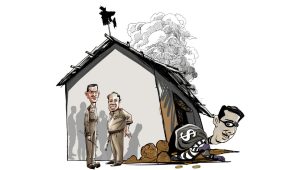
These statistics indicate that while the political authorities have changed, the policing culture has not undergone meaningful reform.
Recent deaths spark fresh anger
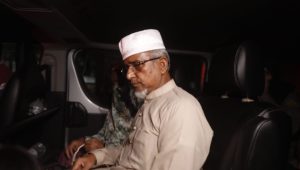
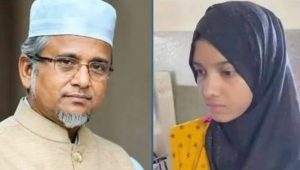
Among the most recent fatalities is Moktar Hossain, a suspect in the killing of a Jubo Dal leader in Dhaka’s Pallabi area, who died in Detective Branch (DB) custody on Friday. His family alleges he was tortured.
His wife, Mukta Shikder, claims he was handcuffed, placed in a tinted-window vehicle and beaten. After his death, she says, “a story of mob beating was fabricated.”
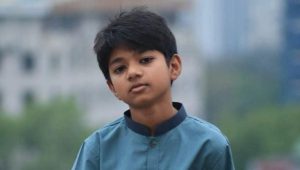
His son, Mridul, told a press briefing at the Crime Reporters Association of Bangladesh (CRAB) that he saw officers assaulting his father inside the vehicle before they were both taken to Pallabi Police Station’s conference room.



“DB members severely beat my father there. They beat me too. My father screamed and cried a lot…I could hear him. He died in the DB custody cell from torture,” he said.
Sirajganj death mirrors Dhaka case
The Dhaka allegations echo events elsewhere. In Sirajganj, 45-year-old Shahadat Hossain died in DB custody on Friday evening, also amid torture allegations.
Police claimed he had long-standing respiratory issues and fell ill during interrogation.
But Mimi Khanom, a senior nurse at Sirajganj General Hospital, contradicted that account. She said four or five men identifying themselves as police brought Shahadat in with “clear marks of abuse on his body.” After he died, she added, police collected his medical file “to discuss it with the doctor.” His body remains at the hospital.
Rights groups say incidents are systemic
Other organisations report similar patterns of deaths and abuses in custody. ASK (Ain o Salish Kendra) recorded 17 deaths in law-enforcement custody during the first five months of the interim government, including 10 cases involving joint forces.
The Human Rights Support Society (HRSS) reports 29 deaths in the first 10 months of the year linked to clashes, torture, or custody. An additional seven people died while fleeing “in fear of police.”
Among the high-profile cases, Firoza Ashrafi, a private university teacher, died inside Vatara Police Station lock-up on 11 July.
Police deny wrongdoing
Police headquarters maintain the human-rights situation is improving.
AHM Shahadat Hossain, AIG (Media & PR), said the force “seriously reviews” rights reports, but argued that deaths during clashes inflate the statistics:
“Unwanted deaths occur during operations. These are added to the data, which is not accurate.”
He said deaths occurring under joint forces are sometimes wrongly attributed solely to the police.
Investigations launched — but trust remains low
Dhaka Metropolitan Police has formed a three-member probe body to investigate Moktar’s death. Investigators say they are reviewing CCTV footage and interviewing DB and police-station personnel.
But rights activists remain sceptical.
“These deaths have continued for years, under different governments,” one monitor said. “The system protects itself.”
A reform agenda under pressure
As the interim government seeks legitimacy at home and abroad, its pledge of human-rights-centred policing faces a critical test.
For families of victims, reforms so far feel superficial.
“The behaviour of the police has not changed,” said MSF’s Saidur Rahman. “Only the numbers have changed.”