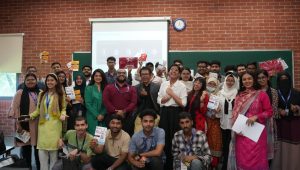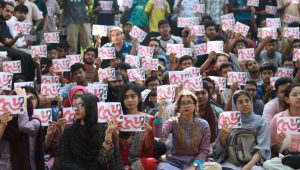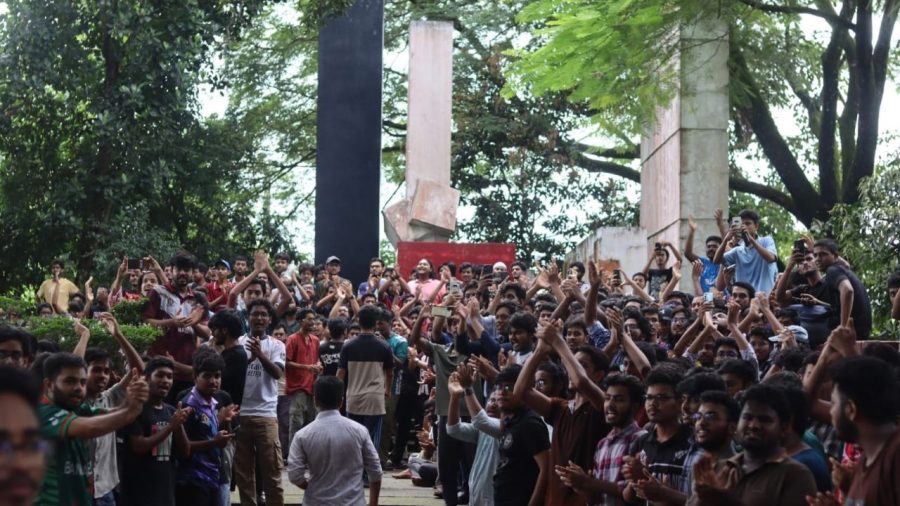



Academic activities at Chittagong University of Engineering and Technology (Cuet) have been disrupted due to the ongoing student protests. Classes and exams remain suspended at the university, which has five faculties and 18 departments with around 6,367 students and 361 teachers.
Several departmental exams have already been postponed, raising concerns about delays in the academic calendar. Students now face uncertainty not only over exams but also theses and research work.
Jahirul Islam Ratin, a second‑year student of the Water Resources Engineering Department, told TIMES that his department was already weeks behind others in the academic calendar.
While students of the 23rd batch in other departments had completed Level‑2, Term‑2 exams, his department had not yet sat for theirs. Just two days before their exams were scheduled, the decision to change the vice‑chancellor altered the campus situation.
Students joined the protests, disrupting academic activities. He said decisions by those in charge had thrown their academic lives into uncertainty, and they wanted a quick resolution.

Pranto Nath, a third‑year student of Electrical and Electronic Engineering, said their DL classes began on 17 September. Two exams were scheduled for 24 September and 1 October, followed by four more before the Puja holidays and one after.
Fourth‑year classes were to begin in December. Compared to peers at Buet, Ruet and Kuet, they were academically ahead and hopeful of finishing university earlier. But the vice‑chancellor’s removal just two days before the first exam has thrown those plans into doubt.
He said, “We don’t know if our exams will be held, or when. After preparing for exams, everything changed midway, disrupting the normal pace of study. We’ve had to accept this situation.”

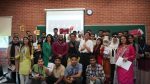


Samihah Fatema, a third‑year Biomedical Engineering student, said they had been following a set academic plan. After preparing fully for an exam, they now don’t know when it will be held. Such uncertainty has made it difficult to focus on studies, she said, adding that they are going through a difficult time overall.
Thesis and research concerns
Not only classes and exams, but thesis and research work have also been affected.
Sabihah Shabnam, a fourth‑year Biomedical Engineering student, said many students’ thesis work has fallen into uncertainty.
Wet‑lab‑based research requires samples prepared through long effort to be preserved under specific conditions. In the current situation, if those samples cannot be properly preserved, they risk being ruined.
Many students may have to restart their research from the beginning, wasting both time and money. She demanded a quick return to normal academic and research activities.
Sabihah said, “Our demand is that Sayem Sir be reinstated as vice‑chancellor. Until our demand is met, our protest will continue. But we want to return to our classes and research work as soon as possible.”
Plans to recover academic losses
Cuet’s Controller of Examinations (additional charge) and Professor of Civil Engineering Md Moinul Islam told TIMES that after the protests end, efforts will be made to minimise academic losses. While it may not be possible to reduce losses to zero if the protests are prolonged, steps will be taken to limit them.
“We have several holidays that can be adjusted,” he said. “For example, winter vacation and many days off during Ramadan. If necessary, classes can continue until the 20th or 21st of Ramadan. Saturday classes may also be considered if the protests drag on. Exam breaks can be shortened, with gaps reduced to five days if needed.”
“However, these plans will not be implemented in a way that creates excessive pressure on students. We will also consider how much pressure students can reasonably bear,” he added.
Alongside suspension of classes and exams, thesis and research work remain uncertain. Once the situation normalises, the major issue will be how quickly suspended academic activities can be coordinated and how far the delayed academic calendar can be managed.
On 21 September, the Ministry of Education issued a notification relieving Professor Abu Sadat Muhammad Sayem of his duties as vice‑chancellor and appointing Professor Sheikh Shariful Alam as the new vice‑chancellor. In protest, students began demonstrations that night.
From the following day, a complete shutdown programme was launched, which continues.