Hello CTG, welcome back. But I wonder whether you will actually get the chance to defend our votes or simply become a decorative face in the future. I also wonder whether you are still too young today and will need more time to grow before you can truly protect the proper exercise of our democratic rights. Still, a warm welcome to you once again.
While welcoming you, I would say to my readers that the return of the caretaker government system has indeed reopened one of the most defining factors in Bangladesh’s voting politics. For many citizens, it is an emotional issue tied to trust, hope, and the long struggle to keep the people’s voice alive in a system repeatedly shaken by rivalry and power games, mainly between the Awami League and the Bangladesh Nationalist Party. The caretaker government, known simply as the CTG, once carried enormous public confidence because it promised a neutral breathing space between two rival political blocs. Now, decades later, that longing has resurfaced as the Appellate Division of the Supreme Court reinstated the system by declaring the 2011 abolition verdict illegal.
The court ruling technically restores the caretaker system to the constitution, yet the next national election will be conducted under the interim government headed by Dr Muhammad Yunus. This means, the caretaker system will fully take effect again only from the fourteenth parliamentary elections, until then the country remains suspended between past expectations and future uncertainty.
To understand the emotional and political weight of this return one must revisit the turbulent years that created the caretaker model in the first place in December 1990; the very first transition that resembled a neutral administration emerged after the downfall of General H M Ershad when Justice Shahabuddin led an election process acceptable to all major political actors. That experience planted the idea that in a deeply polarised environment only a non-partisan arrangement could ensure credible polls, especially after the system was destroyed by the military-crowned president.

The institutional form of this idea was solidified through the Thirteenth Amendment in 1996, following a period of intense political turmoil both inside and outside the parliament, marked by a fierce standoff between the BNP and all other parties led by the Awami League. The amendment was crafted entirely to safeguard the people’s voting rights by keeping political parties away from the administration responsible for conducting elections. A caretaker government would assume authority for only ninety days and then hand power back to the elected representatives. The model gained legitimacy because it aligned with the simple aspiration of ordinary voters who wanted to walk freely to polling centers without fear or manipulation.
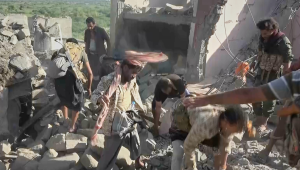
By the early 2000, however, the rivalry between the Awami League and the BNP had grown fiercely bitter. During those years, while working as a political advisor at the German Embassy in Dhaka, I witnessed firsthand how this confrontation spread from the streets to institutions, and from political platforms into people’s homes. The BNP government, in 2006, increased the retirement age of the chief justice from 65 to 67 so that Chief Justice K M Hasan could become the head of the next caretaker government. The opposition accused BNP of trying to ensure a favourable referee before the game had even begun. The streets exploded with protests and clashes. The capital Dhaka lived through a season of violence that shook the entire nation.



When the time came to form the caretaker government in late 2006, Justice Hasan declined to take charge, and BNP-panel President Professor Dr. Iajuddin Ahmed stepped in as the Chief Adviser. Although an election date was set for 22 January 2007, the political environment had become so poisoned by mistrust between the ruling party and the rest that the entire process ultimately collapsed. The two major parties failed to find a common ground on electoral reforms. The streets once again erupted into violent clashes, leaving many dead, in a movement still remembered as the Awami League’s ‘Logi Boitha’ protests.
Faced with a national crisis, the President declared a state of emergency under military pressure and cancelled the proposed polls. Soon after, a military-backed caretaker government under Dr Fakhruddin Ahmed took charge and eventually conducted the ninth parliamentary elections in December 2008, paving the way for the Awami League’s rise, which has continued in power for sixteen years under Sheikh Hasina’s iron hand.
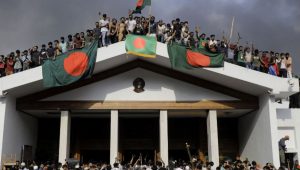
The political disputes of those years created the argument used in 2011 to abolish the caretaker system. The then Prime Minister Sheikh Hasina insisted that the model had become vulnerable to manipulation. The Supreme Court’s advisory opinion also suggested that the system was inconsistent with the basic structure of the constitution. But many citizens and political observers believed that the real motive was to remove the only mechanism that guaranteed neutrality. Consequently, the elections of 2014, 2018, and 2024, which kept Sheikh Hasina in power, were heavily criticised, with the BNP boycotting two of them while demanding the restoration of the caretaker system. Without a neutral stand, public trust eroded, and democracy in the country became lip service.
Now that the caretaker system is returning the question is not only about legality, it is also about protection of the people’s voice. The people of Bangladesh have long desired a system that guarantees their uninhibited access to polling centers. They want a national environment where every citizen can perform the simplest democratic act without fear. But the restored system also raises difficult questions. If the upcoming election is held under an interim government without full caretaker authority as well as caring attitudes to ‘ensure voter safety and accommodate every single voter’ with confidence, how can the public trust the process and democracy will see the light?
Some propose that the military should be given independent operational authority during elections. Others argue that the Election Commission must be rebuilt with individuals of proven neutrality. In reality both are necessary and all political stakeholders must accept that protecting voting rights as a duty to the nation.
While the interim ruling may have restored the spirit of neutrality, the immediate effect of CTG leaves a temporary gap. This gap fuels anxiety and raises a crucial question, – will the fourteenth parliamentary elections, several years from now, still offer genuine protection for voters? If the political climate continues to follow familiar patterns of chaos, who can guarantee that it will unfold in constructive ways?
Beyond question, if these institutions fail, the caretaker government system will once again be undermined by mistrust. It will be seen as a symbolic clause rather than a living mechanism. The harsh reality rests on the willingness of political parties to honor the people’s right to choose. If they do not, the cycle of crisis will inevitably return.