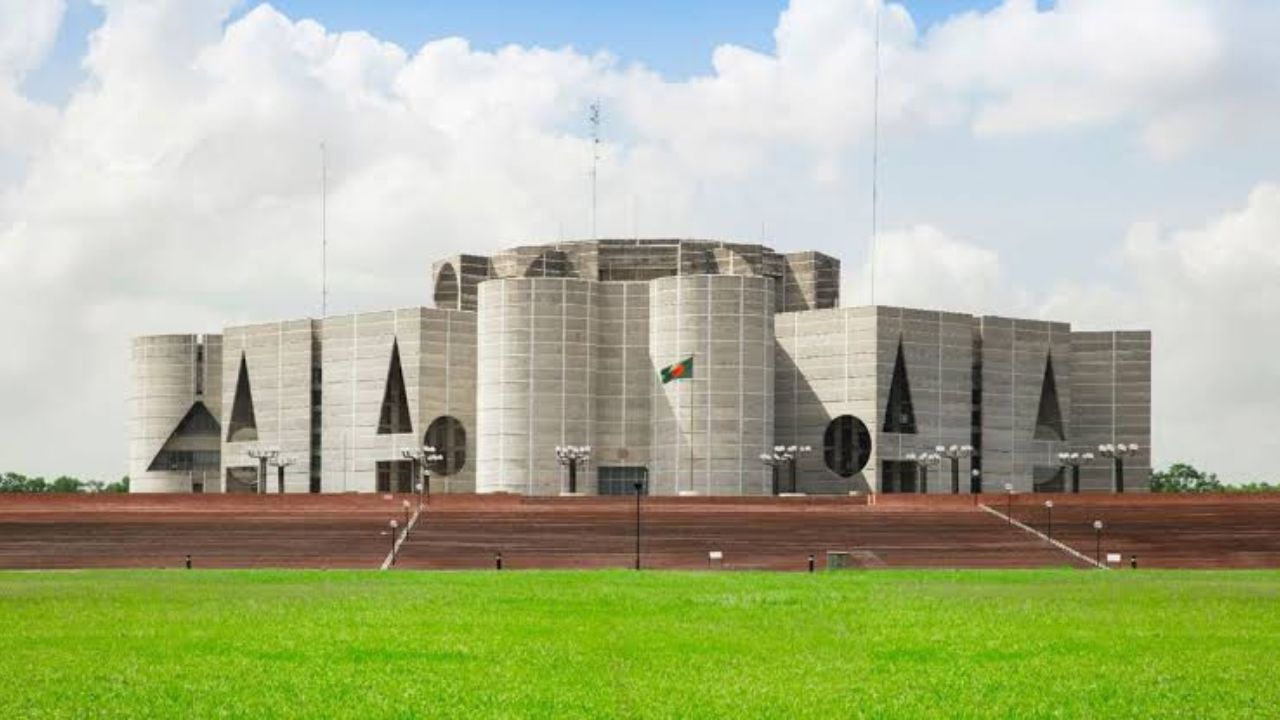

Parliament born from the ashes of the July Uprising on a solemn promise of a discrimination-free Bangladesh is already facing allegations of institutional inequality from within its own ranks.
Opposition MPs claim they are being systematically frozen out of state development funds and public resource allocations, triggering a fierce political backlash over whether the ruling BNP has betrayed its own election manifesto and the foundational ideals of the student-led revolution.
A TIMES of Bangladesh investigation has found that since the BNP government took office, opposition constituencies have consistently received significantly smaller allocations under a range of government programmes, including Test Relief (TR), Kabikha (Kajer Binimaye Khadya – Food for Work), Kabita (Kajer Binimaye Taka – Cash for Work), disaster relief, grants for repairing educational institutions, and local development schemes.
The latest controversy centres on an almost Tk800 crore Local Government Engineering Department (LGED) project for bridge construction and infrastructure works.
Opposition lawmakers allege that the overwhelming majority of the new projects have been earmarked for constituencies represented by ruling party MPs. They also allege discrimination in grants for mosque development and welfare assistance.
According to them, under a recent Ministry of Social Welfare programme, ruling party MPs were each allocated funds to support 50 to 60 beneficiaries, while opposition-held constituencies covered only 20 to 25 recipients, each receiving Tk10,000.
Similarly, under LGED’s Universal Social Infrastructure Development Project, lawmakers from treasury bench were allocated funds to renovate 30 mosques in their constituencies, receiving Tk3,00,000 each, while opposition MPs were allocated funding for only 10 institutions.

Speaking on the issue, Transparency International Bangladesh (TIB) Executive Director Iftekharuzzaman told TIMES that if true, this suggests Bangladesh has merely exchanged one form of authoritarian governance for another.
He said that the previous government also monopolised development spending, creating widespread inequality, which the July movement sought to end. “If development discrimination re-emerges, it will prove self-defeating as both the BNP’s manifesto and the July Charter promised equitable resource distribution.”
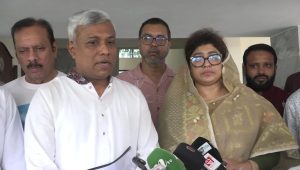
BNP Standing Committee member Selima Rahman and an MP of women reserved seat rejected the allegations, claiming projects are selected based on need rather than political affiliation.
Jamaat-e-Islami central executive council member Saiful Alam Khan Milon disputed her, arguing that the government says one thing but practices another, directly contradicting the vision of a discrimination-free nation.


Disparities since govt’s formation
Disparities emerged almost immediately after the government assumed office when during Eid-ul-Fitr, ruling party MPs were reportedly allocated Tk10 lakh each from the Prime Minister’s Special Fund alongside 700 sarees for distribution.
Following media criticism, the government later extended the same allocation to opposition MPs, setting a pattern critics call damage control rather than fair governance.
A similar disparity is alleged under the TR, Kabikha, and Kabita programmes. While initial allocations of Tk55 lakh and 40 tonnes of food grain were equal, ruling party MPs reportedly received additional special allocations in May of up to Tk1 crore and 90 tonnes of grain. Opposition MPs received nothing until raising the issue during the budget session of parliament, after which they were granted a mere Tk13 lakh and five tonnes of rice.
Funding for educational institutions and disaster relief follows this skewed trajectory. Although school repair grants were due by June, opposition MPs say their constituencies received zero funding, while several ruling party MPs secured between Tk1 crore and Tk2 crore.
In flood-hit Jessore-4, Jamaat MP Golam Rasul reported that 40 villages remained stranded without relief, while less affected ruling-party areas received ample assistance. “Discrimination exists,” he said. “Even after raising this in parliament, no relief was allocated.”
Furthermore, opposition lawmakers argue the government is actively undermining their constitutional roles by assigning local project oversight to ruling-party reserved-seat women MPs.
Jamaat MP Nazibur Rahman of Pabna-1 warned that this bypassing of directly elected opposition MPs insults the public mandate. “Those who came to power through an anti-discrimination movement are now creating a new form of discrimination,” he told TIMES, highlighting a troubling departure from the ideals that birthed the post-uprising parliament.
Tk800cr bridge project under scrutiny
The largest example of institutional inequality is an LGED bridge project worth Tk795.5 crore, proposing 204 bridges across 108 upazilas.
However, an analysis reveals that 105 of these upazilas are represented by ruling party MPs.
The remaining three are opposition-held areas selected only for minor administrative facilities, leaving underdeveloped districts like Satkhira, Rangpur, and Kurigram completely excluded.
The Planning Commission has raised serious concerns. Under existing rules, projects exceeding Tk50 crore require a feasibility study, but officials confirm no assessment was conducted.
The Commission also questioned inflated expenditures, including Tk9 crore to replace six lifts at LGED headquarters and Tk10 crore for computers.
However, Babul Mia, head of the Planning Commission’s Rural Institutions Division, said the proposal had not yet reached his desk for final scrutiny.
TIB’s Iftekharuzzaman emphasised that transparency is non-negotiable, warning that without clear selection criteria and feasibility assessments, the risks of waste and corruption remain significant.
Highlighting the disparity, NCP MP Atikur Rahman Mujahid of Kurigram-2 lamented his district’s total exclusion, “The project has been designed primarily around ruling party MPs, even though we were all elected by the people.”
Treasury bench Whip Ruhul Quddus Talukdar Dulu firmly rejected these claims, saying that Prime Minister Tarique Rahman is committed to a prosperous country and tolerates no inequality, promising swift intervention if credible disparities surface.
Nevertheless, the controversy has reignited intense debate among the opposition MPs over whether the “discrimination-free Bangladesh” promised by both the BNP and opposition parties during the July movement is being delivered, or if parliament is already abandoning its foundational ideals.