
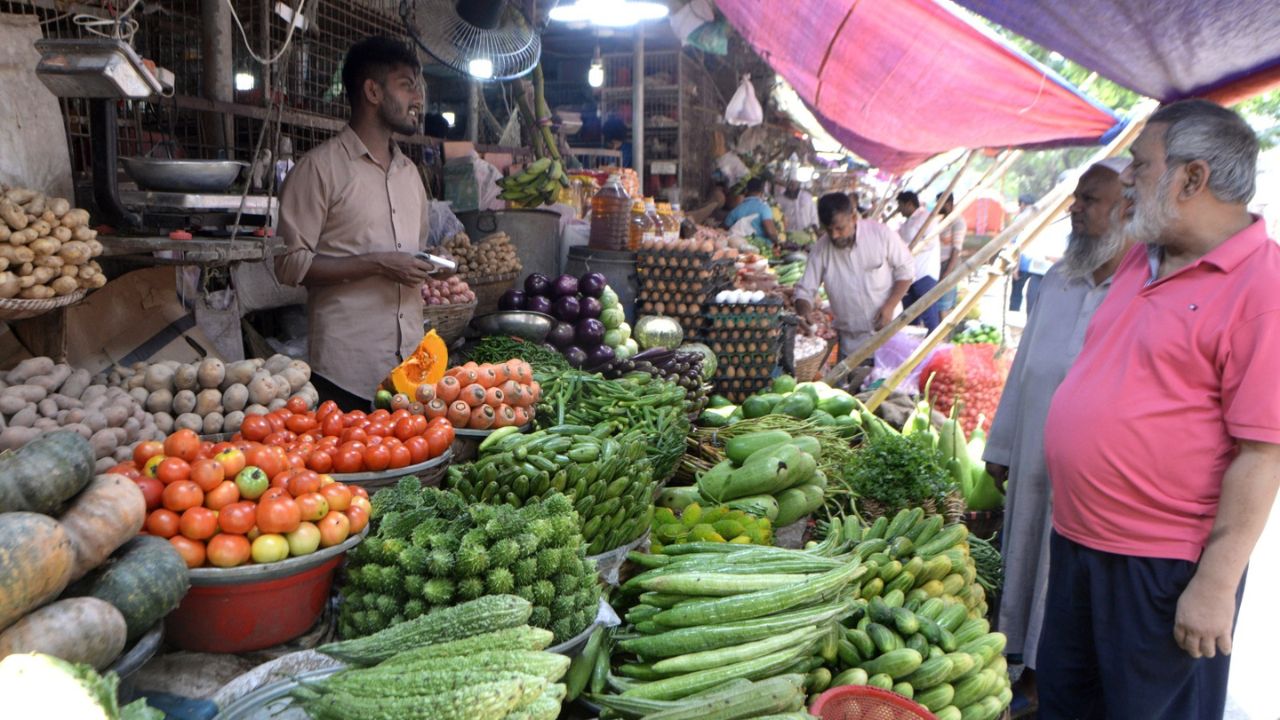



Shopping for daily food items in Chattogram has suddenly become much more expensive following the government’s decision to increase fuel oil prices.
Just four days after the new fuel rates took effect, retail markets across the port city have recorded a sharp rise in the prices of essentials, including vegetables, eggs, chicken, and fish.
The price pressure follows a government notification issued on the night of 20 September, revising fuel oil prices upward with effect from 21 September. Under the order, the price of diesel was increased by Tk20 per litre to Tk135, kerosene rose to Tk155, petrol to Tk160, and octane to Tk165 per litre.
A spot check on Friday, across key trading hubs – Reazuddin Bazar, Bahaddarhat, and Chawkbazar – revealed rising price pressures across various commodities compared to rates recorded on 18 September.
Sharp jumps in vegetable prices
Vegetables recorded notable price spikes over the week. Carrots registered the highest jump, soaring from Tk80 per kg on 18 September to between Tk150 and Tk180 per kg, representing an increase of up to Tk100 per kg in seven days.
Green chillies, which sold at Tk160 per kg on 18 September, rose to between Tk160 and Tk200 per kg. Cucumbers increased from Tk50–60 to Tk80–100 per kg.

Yardlong beans were priced at Tk80–120 per kg, country beans at Tk140–200, tomatoes at Tk100–160, aubergines at Tk80–110, and ladies’ finger and pointed gourd at Tk70–120 per kg, whilst coriander leaves reached nearly Tk200 per kg.
Fish, poultry, and meat trends
Fish markets also maintained high prices. On Friday, Rui and Katla sold at Tk380–430 per kg, Tilapia at Tk250–280, Pangas at Tk180–250, and Koral at Tk630–700 per kg, while Hilsa ranged between Tk800 and Tk1,800 per kg depending on quality.
By comparison, on 18 September, Pangas sold at Tk230 per kg, Tilapia at Tk260, Pabda at Tk350–450, and large Rui at Tk450–500 per kg. Traders noted that fish prices depend not only on transport costs, but also on supply, wholesale commission agent rates, and seasonal availability.




In the poultry segment, broiler chicken prices rose by Tk10–15 per kg over the week to Tk180 per kg. Sonali chicken sold at Tk320–350, Layer chicken at Tk280–320, and indigenous chicken at Tk600–800 per kg.
Farm-farmed red eggs went up by Tk10 per dozen to Tk150–155, while white eggs sold at Tk145–150 per dozen. Meanwhile, beef was selling at Tk850–950 per kg, and mutton was priced at Tk1,200–1,250 per kg.
Transport costs and wholesale pressure
Traders linked the price increases to higher transport costs following the fuel price hike. Md Jasim Uddin, a trader at Reazuddin Bazar, said carrying goods by truck from distant regions has become more expensive, forcing retailers to adjust retail prices after purchasing at higher wholesale rates.
Vegetable seller Shamsul Alam explained that retail stands depend heavily on supply and pricing at the Pahartali wholesale market, where price increases immediately affect retail rates.
Market insiders added that overall supply changes and wholesale market trends must be considered alongside transport costs.
Consumers expressed deep frustration over escalating living expenses.
Mohammad Arif Uddin, a private job holder shopping at Bahaddarhat, said while prices of essential items rise uncontrollably, fixed salaries remain unchanged, meaning money that previously covered a full week’s grocery shopping now barely lasts a few days.
A shopper at Kazir Dewri market added that high fish, meat, and vegetable prices had forced families to rely on eggs for protein, but egg prices have now risen as well.
Calls for monitoring and enforcement
Commenting on the situation, Nazer Hossain, vice president of the Consumers Association of Bangladesh (CAB), argued that traders must not be permitted to raise prices at will using transport costs as an excuse.
He urged authorities to verify the actual increases in production, wholesale purchasing, and transport costs to ease the heavy burden on low- and middle-income families, stressing that market oversight must be stepped up.
Mohammad Fayez Ullah, Chattogram divisional deputy director of the Directorate of National Consumer Rights Protection (DNCRP), assured consumers that no trader would be allowed to hike prices irrationally.
He said officials are inspecting purchase prices, retail rates, stock levels, and supply situations, adding that traders must maintain proper documentation and charge reasonable prices.
He warned that strict legal action would be taken if evidence of unnatural price hikes, artificial shortages caused by hoarding, or overcharging were found, confirming that market monitoring operations will continue.