Outside the morgue of Chittagong Medical College Hospital, Ejaz Ahmed waited for a body that should never have been there. On Thursday afternoon, the grocer prepared to take home his 11-year-old sister, Reshmi, for the last time.
The tragedy began with an ordinary errand. On 7 May, Reshmi left her home in Raufabad Bihari Colony in the port city to buy betel leaves. She never returned.
Caught in the crossfire of an attack targeting Hasan Raju, a guest at her neighbour’s house from Raozan who was also an accused criminal, Reshmi was struck by a stray bullet that pierced her left eye.
After eight days on life support, the girl, who had been born in the same hospital 11 years ago, succumbed to her wounds.
“Now we only want justice for my sister,” Ejaz said, his voice breaking with grief.
Reshmi’s death is not an isolated incident in Chattogram, as the city is now gripped by a wave of targeted killings and gang warfare that is no longer confined to the criminal underworld.
In Bangladesh’s bustling port city, armed violence has cast a shadow over everyone, from political figures to schoolchildren.
The geography of the violence is alarmingly concentrated. Only a short distance from where Reshmi was shot, a political programme turned into a crime scene late last year when lawmaker Mohammad Ershad Ullah was injured in indiscriminate gunfire in Bahaddarhat.

In Chandanpura of Chawkbazar, the home of prominent businessman Mujibur Rahman was riddled with bullets in broad daylight amid extortion threats.
These are not isolated incidents in distant corners of the city. They are brazen attacks unfolding in densely populated neighbourhoods.
For Chattogram’s population of nearly seven million, the most terrifying reality may be that such violence is beginning to feel routine.
Most attacks have specific targets, but Reshmi had none. A young student with no connection to the city’s criminal rivalries, she became the clearest symbol yet of a grim truth: in Chattogram, no one is beyond the reach of a stray bullet.
More than 250 people have been killed in violence across Chattogram since August 2024. Police say much of the bloodshed is driven by organised crime syndicates armed with sophisticated weapons.
These groups exploit the region’s rugged hills and remote border zones as operational bases, disappearing into difficult terrain after attacks before launching fresh assaults.

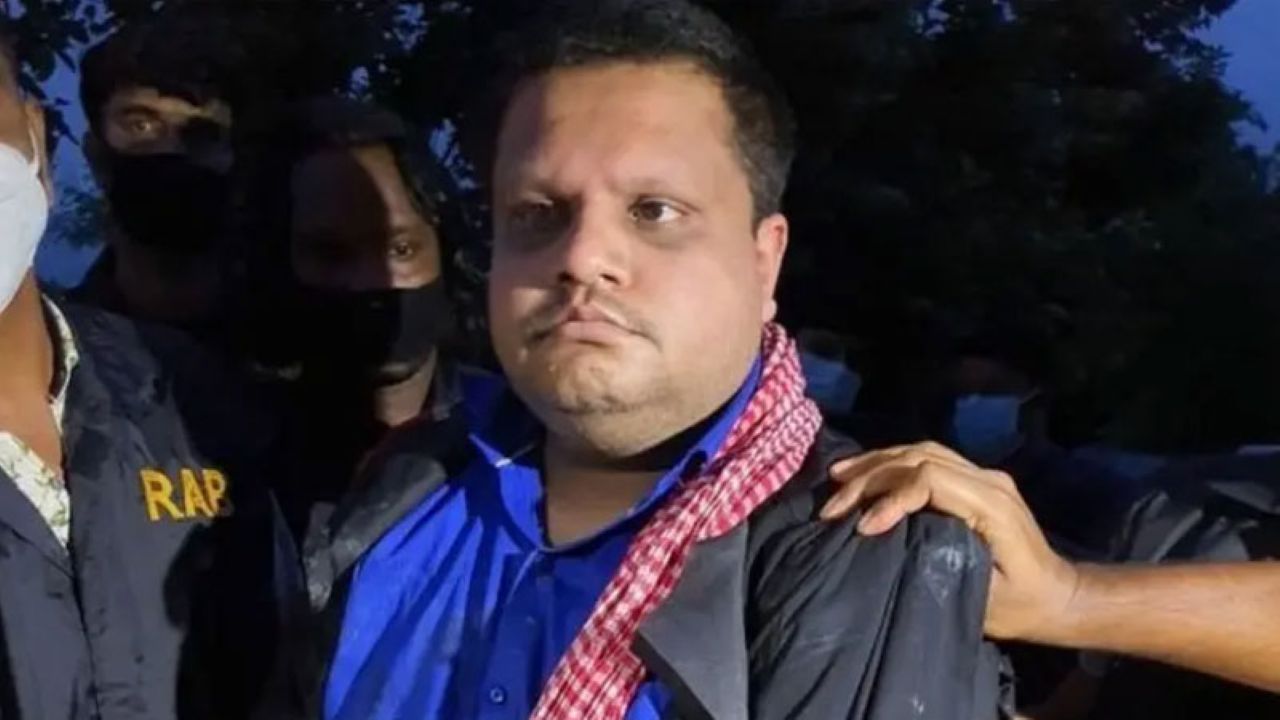


The killing of Reshmi reflects how far the violence has spread.
Chattogram Metropolitan Police Commissioner Hasan Md Shawkat Ali told TIMES of Bangladesh that the shooting stemmed from a feud originating in Raozan that spilled into the city.
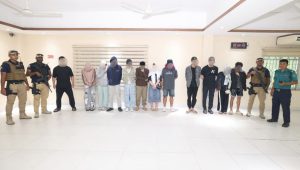
Although six suspects, including the alleged mastermind, have been arrested, the wider crisis remains unresolved.
Authorities have launched sweeping anti-crime drives and even barred 330 listed criminals from entering the metropolitan area.
Officials also announced a “shoot-on-sight” stance against armed offenders.
Yet despite those drastic measures, questions persist over why criminal groups continue to operate with such confidence.
Between 5 August 2024 and 13 May 2026, Chattogram Metropolitan Police arrested 209 suspects in 100 illegal arms cases.
During the operations, police seized 30 locally made guns, 45 pistols, five revolvers, an SMG, 10 rifles, more than 700 rounds of ammunition and 82 cartridges.
At the same time, Chattogram district police recovered more than 100 additional firearms, some of which investigators described as unprecedented for the region.
Chattogram district Additional Superintendent of Police (Media) Mohammad Russell said several weapons were so technologically advanced that investigators could not determine their country of origin.
Among them were modern single-barrel firearms designed to resemble submachine guns, underscoring fears of sophisticated and potentially transnational arms networks operating in the region.
Security analysts warn that Chattogram’s dense forests, hills and coastal routes severely limit law enforcement capabilities.
The terrain provides ideal escape corridors and hideouts for organised gangs and traffickers, enabling attackers to vanish quickly after carrying out assaults.
CMP Commissioner Hasan Md Shawkat Ali acknowledged that traditional policing is no longer enough to confront the city’s evolving criminal landscape.
“Conventional policing is not enough against the current structure of organised crime in Chattogram,” he said, signalling a shift towards technology-based surveillance and intelligence-led operations.
While declining to reveal operational details, the commissioner said investigators identified suspects in both the killing of Hasan Raju and the shooting of Reshmi through technological tracking.
Meanwhile, a joint force of between 3,200 and 4,000 personnel from the Army, Rapid Action Battalion and police carried out a day-long combing operation in the remote hills of Jangal Salimpur after a Rapid Action Battalion (RAB) member was killed there by armed criminals.
Despite the crackdown, political leaders continue to question whether law enforcement efforts are enough to restore order.
BNP Chattogram city unit Member Secretary Nazimur Rahman said the worsening crime situation raises serious concerns about policing effectiveness.
“Any lack of sincerity or failure in enforcement must be addressed immediately,” Nazimur said, adding that “criminals have no political identity. Justice must be served regardless of affiliation.”
Similarly, Jamaat-e-Islami Chattogram city unit Secretary Muhammad Nurul Amin warned that armed violence could intensify ahead of Eid-ul-Adha without swift preventive measures.
“Such terrorist activities cannot continue,” Nurul Amin said. “Law enforcement must become more proactive and should receive cross-party support to restore order.”