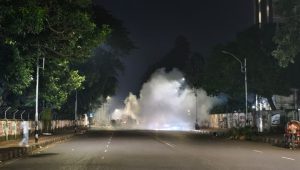
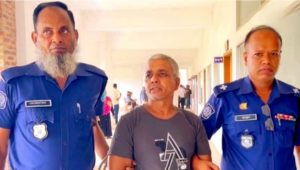
In the upazila of Raozan in Chattogram, a steady rise in killings has raised serious concerns about law and order, with residents and officials describing a situation that is becoming increasingly difficult to control.
Since the political transition on 5 August 2024, at least 23 people have been killed in the area. This week alone, two people were killed within 24 hours, highlighting the pace at which violence is escalating.
Local people say the repeated incidents have created fear, while questions are being raised about the ability of both the administration and political leadership to respond effectively.
Although some of the incidents appear politically motivated, local leaders say financial interests are a key driver behind the violence.
Leaders of ruling BNP allege that illegal extraction of sand and soil has created a profitable underground economy, which in turn is fuelling armed groups.
Abu Zafar Chowdhury, former president of the Raozan Municipal BNP, said the situation is worsening.

“We are helpless. Killings are becoming normal. If the administration had the will, these networks could be dismantled within 24 hours,” he told TIMES of Bangladesh.
Raozan has long been shaped by the influence of the Chowdhury family, with political control remaining within the same lineage for years despite changes in national power.
The current member of parliament, Gias Uddin Quader Chowdhury, is a vice chairman of BNP’s central committee. He succeeded his cousin Fazle Karim Chowdhury, who held the seat for three consecutive terms as a senior Awami League leader.
Of the 23 people killed since August, 15 were BNP activists. However, people close to the current MP say the conflict is no longer purely political.




Earlier rivalries, including those between supporters of Gias Uddin Quader Chowdhury and former BNP convener Golam Akbar Khondkar, have now given way to competition over business interests and control of territory.
Speaking from abroad, where he is undergoing medical treatment, Gias Uddin Quader Chowdhury blamed the administration for the situation.
“The administration is responsible for the current disorder in Raozan. Why are the perpetrators still free? Authorities must act quickly to arrest them and restore public safety.”
Police say the geography of Raozan is making operations more difficult. The area’s hilly terrain allows criminal groups to evade arrest and regroup.
Superintendent of Police Nazir Ahmed Khan said additional checkpoints have been set up following recent killings, including those of two Juba Dal activists.
“Raozan presents a unique challenge because of its hills. Criminals use these areas as safe havens,” he said.
He added that authorities are planning a joint operation involving multiple forces, similar to the operation previously carried out in Jangal Salimpur, which involved police, RAB, BGB and army.
The impact of the violence is no longer limited to Raozan. Law enforcement officials say networks linked to the area are also operating in parts of Chattogram city.
A group based in Panchlaish is reportedly being controlled by individuals hiding in the hills of Raozan.
Authorities link this group to several incidents in the city, including the shooting of BNP leader Ershad Ullah and an attack on the home of businessman Mujibur Rahman after he refused to pay extortion demands.
Mujibur Rahman said many business owners had received similar threats.
“Extortion demands were sent to many businessmen across Chattogram. Very few of us had the courage to speak out,” he said.
Police say they are preparing to target known criminals and illegal arms holders. However, repeated incidents suggest that armed groups continue to operate with relative freedom.
Residents say they remain uncertain about their safety as violence continues.
Officials warn that without a strong and coordinated response, Raozan could become a lasting source of instability in the wider region.