US President Donald Trump concluded the first day of high-stakes meetings with Chinese President Xi Jinping in Beijing on Thursday, with both leaders signalling a willingness to maintain dialogue despite deep divisions over trade, Taiwan, technology and the Middle East crisis.
The two-day summit between the leaders of the world’s two largest economies reflected more divergence than convergence, yet both sides projected a carefully calibrated message of stability and strategic engagement.
Trade disputes, tariff tensions, technology restrictions, rare earth minerals, Taiwan and the conflict involving Iran all featured prominently during the opening round of talks.
The summit comes at a time of heightened geopolitical uncertainty and growing concern over the direction of global trade, energy security and military competition between Washington and Beijing.
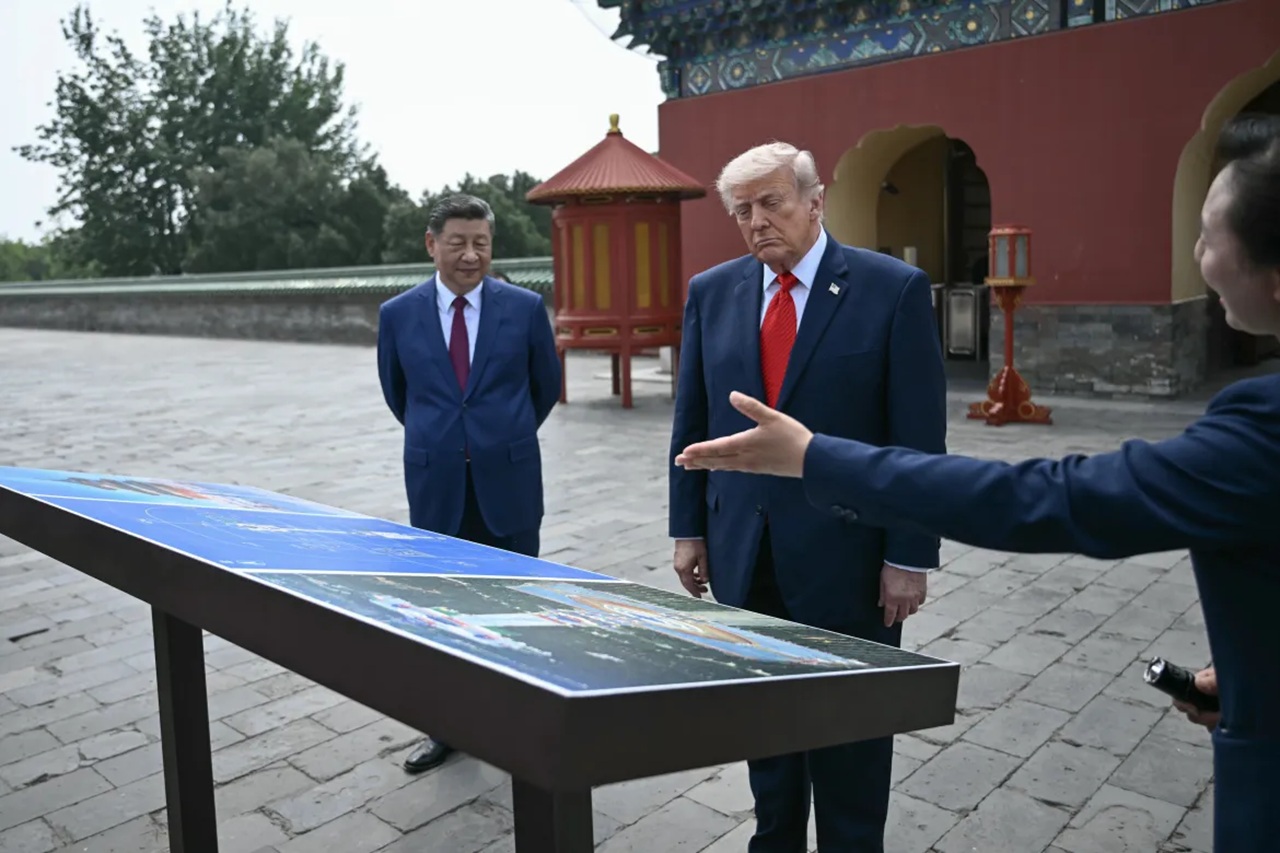
The elaborate reception arranged for Trump in Beijing highlighted China’s diplomatic choreography and Beijing’s desire to project itself as a global power equal to the United States.
Chinese officials organised a grand welcome ceremony marked by military honours, formal state rituals and carefully managed symbolism designed to appeal to Trump’s well-known appreciation for spectacle and high-profile diplomacy.
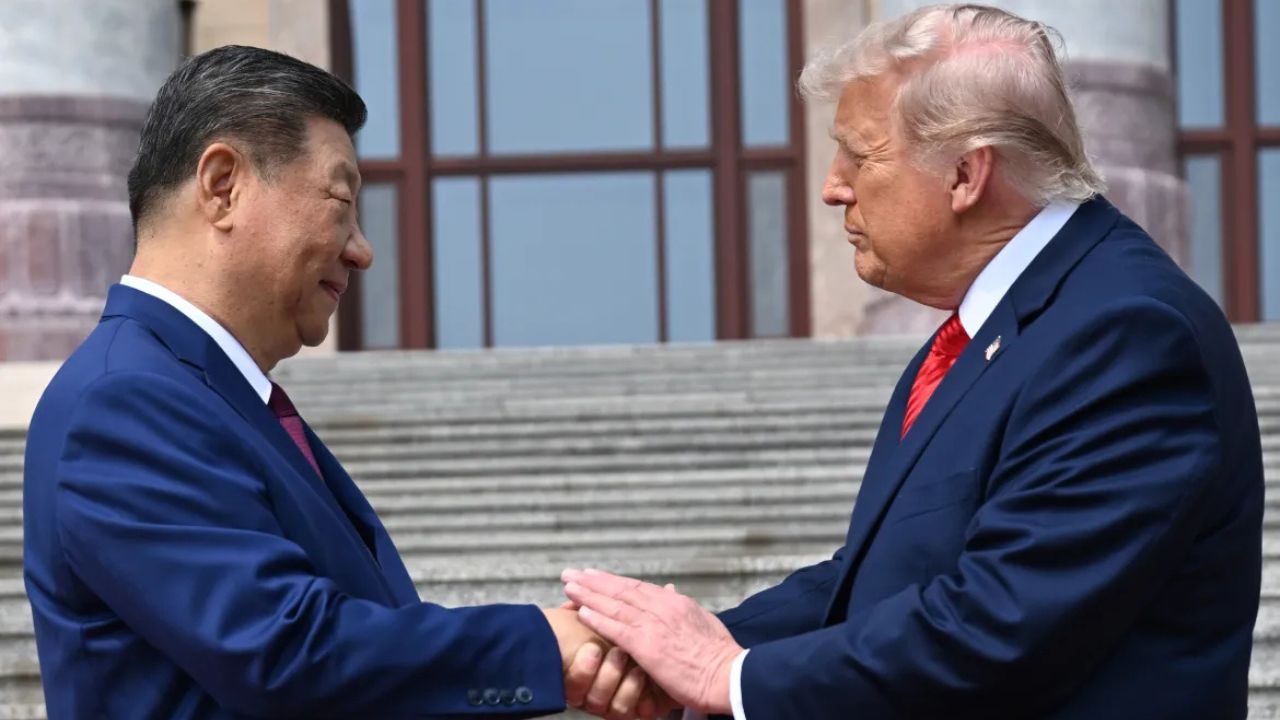
At a state banquet following the talks, Xi described the US-China relationship as the world’s most consequential bilateral relationship and warned against allowing tensions to spiral out of control.
“Today, President Trump and I had in-depth exchanges on China-US relations and international and regional dynamics,” Xi said during his opening toast.
“We both believe that the China-US relationship is the most important bilateral relationship in the world. We must make it work and never mess it up.”
Xi also stressed the importance of cooperation over confrontation, saying the two countries should be partners rather than rivals.
Trump, in his remarks at the banquet, described the discussions as “extremely positive and productive” and thanked Xi for what he called a “magnificent welcome.”
The summit marks Trump’s first visit to China since 2017 and comes after years of escalating rivalry between the two powers, beginning with the trade war launched during Trump’s first administration and continuing into his second term.

Despite the ceremonial warmth, however, major disagreements remain unresolved.
Taiwan remains Beijing’s red line
Among the most sensitive issues discussed during the summit was Taiwan, which Beijing continues to describe as the central flashpoint in US-China relations.
Although the overall tone of the talks appeared broadly constructive, one statement from Xi underscored the seriousness with which China views the issue.
According to a Chinese foreign ministry readout, Xi warned Trump that mishandling Taiwan could push the two countries towards direct confrontation.
“If the Taiwan issue is mishandled, China and the United States could collide or even enter into conflict, pushing the entire relationship into a highly dangerous situation,” Xi reportedly told Trump.
The warning reflected Beijing’s long-standing position that Taiwan is a core sovereignty issue and non-negotiable national interest.

China claims the self-ruled island as part of its territory and has intensified military activity around Taiwan in recent years through air and naval operations.
The United States officially recognises Beijing as the government of China but remains committed under the Taiwan Relations Act to supporting Taiwan’s self-defence.



US Secretary of State Marco Rubio said Washington’s policy on Taiwan remains unchanged.
“From our perspective, any forced change in the status quo would be bad for both countries,” Rubio said during an interview in Beijing.
He noted that Taiwan did not dominate the discussions despite being consistently raised by Chinese officials.
Rubio added that both sides appeared to agree on the importance of maintaining “strategic stability” in the bilateral relationship.
Trade and technology remain central
Trade and technology once again emerged as major points of contention during the summit.
The United States has maintained tariffs and export restrictions designed to limit China’s access to advanced semiconductors, artificial intelligence systems and sensitive technologies viewed as critical to military development.
China has responded by tightening export controls on rare earth minerals and strategic materials essential for global manufacturing, electronics and defence industries.
Despite growing political mistrust, the two economies remain deeply interconnected.
Trump is seeking visible economic gains from the summit, including expanded Chinese purchases of American agricultural products, energy supplies and aircraft manufactured by Boeing.

Beijing, meanwhile, wants greater long-term economic predictability and reduced restrictions on Chinese access to advanced technology.
The discussions also reflected how technological competition has become increasingly tied to geopolitical influence and national security.
For Washington, preserving technological leadership is seen as essential to maintaining global dominance. For Beijing, achieving technological self-reliance is viewed as crucial to national development and strategic independence.
Iran enters the negotiations
The Middle East crisis also featured prominently during the first day of discussions.
According to a White House statement, Trump and Xi agreed that the Strait of Hormuz should remain open to ensure the uninterrupted flow of global energy supplies.
The White House said Xi expressed opposition to the militarisation of the strait and any effort to impose tolls on international shipping using the strategic waterway.
The US statement also claimed that China showed interest in increasing purchases of American oil to reduce long-term dependence on Gulf shipping routes.
In addition, Washington said both leaders agreed Iran should never acquire nuclear weapons.
However, Chinese state media offered a noticeably more cautious account of the discussions and avoided direct references to the Strait of Hormuz, oil purchases or Iran’s nuclear programme.
Instead, Chinese reports only stated that the leaders exchanged views on developments in the Middle East.
The differing official narratives highlighted the continuing gap between Washington and Beijing on geopolitical issues, even as both sides search for limited areas of cooperation.
On the same day Trump arrived in Beijing, a Chinese-registered supertanker carrying two million barrels of oil was allowed by Iran to transit through the Gulf after being stranded since early March — a move analysts interpreted as a subtle reminder of the strategic importance of China-Iran ties.
US Treasury Secretary Scott Bessent suggested there had been progress in economic discussions between the two sides.
Speaking to CNBC, Bessent indicated that Washington and Beijing were nearing a deal involving a large Chinese purchase of Boeing aircraft.
He also said the two countries would begin discussions on establishing guardrails and best practices for the development of artificial intelligence technologies.
“The good news is the US is the undisputed leader in AI,” Bessent said. “The two AI superpowers are going to start talking about how we move forward responsibly.”
He added that existing agreements covering soybean sales to China were already functioning smoothly and noted Beijing’s interest in buying additional American energy products.

Bessent further revealed that the two countries were discussing mechanisms to facilitate Chinese investment in non-sensitive sectors of the US economy and possible tariff reductions on approximately $30 billion worth of goods in non-critical areas.
His comments suggested cautious progress in efforts to stabilise the economic relationship after years of tariff escalation and trade confrontation.
Analysts say the Beijing summit is unlikely to produce a comprehensive breakthrough because the structural rivalry between the two countries remains deeply rooted.
Still, even limited agreements on trade, technology or regional security could help reduce tensions and stabilise an increasingly fragile global environment.
The summit has reinforced one central reality: the relationship between the United States and China will continue to shape the future of global trade, technological development, energy security and international diplomacy.
For now, both Trump and Xi appear determined to keep strategic competition from escalating into direct confrontation — even as deep mistrust and competing ambitions continue to define the world’s most important bilateral relationship.