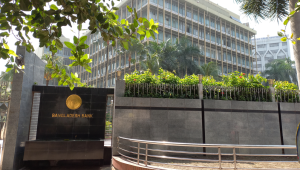

Bangladesh ended FY2025–26 with a merchandise trade deficit of $27.29 billion. At first sight, the number is uncomfortable. The deficit was $20.40 billion a year earlier.
Imports rose sharply while exports remained almost unchanged. The instinctive policy response to such a number is familiar: Bangladesh imports too much, exports too little, and therefore needs to restrain imports. But that diagnosis is incomplete.
A developing economy does not become stronger simply by importing less. Factories need machinery. Export industries need raw materials. Agriculture needs fertiliser. Transport and power generation need fuel. Manufacturers need chemicals, metals, components and technology.
The more important question is therefore not whether Bangladesh imports, but what those imports subsequently produce.
Bangladesh needs to move the trade debate beyond the size of the deficit towards what may be called the productivity of trade.
According to Bangladesh Bank’s provisional balance-of-payments data merchandise exports on an adjusted f.o.b. basis stood at $43.86 billion in FY2025–26, virtually unchanged from the previous year, while imports increased by 10.5 percent to $71.14 billion.
Consequently, the merchandise trade deficit widened to $27.29 billion.
Yet those figures tell only part of the story. Bangladesh Bank’s Monetary Policy Review 2025–26 shows that intermediate goods represented 62.2 percent of customs-based imports during July-April. Capital goods accounted for another 13.8 percent.
Consumer goods, by contrast, represented only 6.9 percent. The central bank itself described the pattern as one in which productive inputs were recovering while consumer and discretionary imports remained relatively restrained.
The latest commodity-wise customs import statistics compiled by Bangladesh Bank reinforce the point. During July-May FY2025–26, Bangladesh imported $42.51 billion of intermediate goods and $9.25 billion of capital goods. Consumer goods accounted for $4.59 billion.

This distinction matters enormously. A dollar spent importing a machine that produces goods for ten years cannot be economically equated with a dollar spent on final consumption.
Neither should imported cotton that becomes an exported shirt, chemicals used by domestic industry, or fuel powering factories be viewed simply as evidence of an undesirable dependence on imports. The appropriate question is: what economic return are we obtaining from our imported dollars?
The deficit is not the whole external-sector story There is another reason for caution in interpreting the trade deficit. Despite the $27.29 billion merchandise gap, Bangladesh Bank recorded a current-account deficit of only about $1.59 billion in FY2025–26. Private transfers reached $36.15 billion, including $35.59 billion in workers’ remittances.
The country’s overall balance of payments recorded a surplus of $6.61 billion, while gross official reserves under the BPM6 measure reached $32.93 billion at the end of the period, according to the same Bangladesh Bank balance-of-payments statement.
A trade deficit, a current-account deficit and a balance-of-payments deficit are therefore not interchangeable concepts.
This does not mean Bangladesh should be unconcerned about a widening merchandise deficit. Imports have to be financed, foreign-exchange vulnerabilities remain important, and persistent dependence on external earnings carries risks.
But making the trade deficit itself the principal policy target can produce the wrong response. Import compression may improve a number on a spreadsheet while simultaneously reducing machinery investment, industrial production and the raw materials required for exports.




Bangladesh instead needs to examine the quality and productivity of its trade flows. Our greater imbalance is structural
The more revealing imbalance lies on the other side of the ledger. Bangladesh imports a remarkably diverse range of goods: petroleum, cotton, yarn, chemicals, metals, fertiliser, machinery, food commodities, plastics and numerous industrial inputs.
Yet what the country sells to the world remains overwhelmingly concentrated in one industrial ecosystem.
Bangladesh Bank’s FY2025–26 BOP data put adjusted ready-made garment exports at $38.97 billion out of total adjusted merchandise exports of $43.86 billion.
Different export-data methodologies produce somewhat different shares, but the structural conclusion is unmistakable: Bangladesh’s merchandise export economy remains extraordinarily dependent on garments.
The problem is not new. The World Trade Organisation has repeatedly highlighted Bangladesh’s concentrated export structure. More recently, the World Bank’s export-diversification work in Bangladesh has focused on sectors including leather goods, footwear, light engineering and plastics precisely because dependence on RMG needs to be reduced.
Bangladesh has diversified what it buys from the world much faster than it has diversified what it sells to the world. That is arguably a more consequential imbalance than the headline trade deficit itself.
Bangladesh should therefore consider adding another lens to its trade and industrial policymaking: an Import Productivity Framework. This need not mean another bureaucracy or complicated approval mechanism.
Nor should it become an excuse for government officials to decide which individual imports are desirable. Rather, policymakers should systematically examine what happens after major categories of productive imports enter the economy.
If Bangladesh imports $1 billion worth of capital machinery, what additional industrial output does that investment eventually generate? How much employment? How much export revenue? How much import substitution? How much domestic value addition?
If an export industry requires large quantities of imported inputs, how much net foreign exchange does it ultimately earn? Such questions shift attention from the gross value of trade towards the economic transformation created by trade.
The objective should not be to minimise imports. It should be to maximise the productive return from imports while expanding the economy’s capacity to export.
Bangladesh has discussed export diversification for decades. The continuing dominance of RMG suggests that identifying promising sectors is much easier than building internationally competitive industries.
Garments succeeded not merely because entrepreneurs opened factories.
Over several decades, an ecosystem emerged around the industry: bonded warehousing, back-to-back letters of credit, customs arrangements, freight forwarding, port services, shipping connectivity, compliance systems, skills, buyer relationships and increasingly sophisticated domestic supply chains. Emerging export sectors require comparable enabling environments suited to their own needs.
The World Bank’s recent Export Competitiveness for Jobs experience provides useful evidence. Support for non-RMG firms in areas such as international certification, environmental and quality compliance and market access helped beneficiary firms enter new markets and generate substantial employment.
The lesson is important: export diversification requires more than financial incentives. Firms must be capable of meeting the standards, delivery requirements and supply-chain expectations of global markets.
Bangladesh’s approaching LDC graduation makes this transformation more urgent. The United Nations currently lists Bangladesh for graduation on 24 November 2026, although the question of extending the preparatory period remains under consideration.
Whatever the eventual timing, an economic model dependent on preferential market access and one overwhelmingly dominant export industry cannot be the country’s permanent strategy.
Bangladesh’s economic conversation has long celebrated export milestones and worried about import bills. Both figures matter. But neither tells us enough about the productive capacity being created underneath them.
The next generation of trade policy should ask harder questions. How much domestic value is embedded in every dollar exported? How effectively are imported capital goods raising productivity? Which industries are developing internationally competitive supply chains?
Which non-RMG sectors are actually gaining sustained market share rather than depending on temporary incentives? And how quickly is Bangladesh increasing the sophistication of what it sells? These are ultimately questions about the productivity of trade.
There is also a physical consequence that deserves greater attention. Trade imbalances do not remain confined to economic statistics. The composition and direction of import and export flows eventually appear in ports, warehouses, trucks, vessels and containers.
When inbound and outbound cargo flows do not match by volume, location, timing or equipment type, a financial trade imbalance can also contribute to a logistics imbalance. That deserves a separate discussion.
For now, the central lesson is simpler. Bangladesh should not aspire to balance imports and exports mechanically. A growing industrial economy will continue to require imported energy, technology, machinery and intermediate inputs.
The challenge is to ensure that progressively more of those imports create productive capacity, domestic value addition and internationally competitive exports.
The question policymakers should therefore ask when the next trade-deficit number arrives is not simply, “How can we import less?” It should be: “What are our imports enabling Bangladesh to produce and sell to the world?”
The answer to that question will tell us much more about the country’s economic future than the trade deficit alone.
The author is a Maritime, Logistics and Supply Chain Policy Analyst and Former Head of ICD Kamalapur & Pangaon ICT