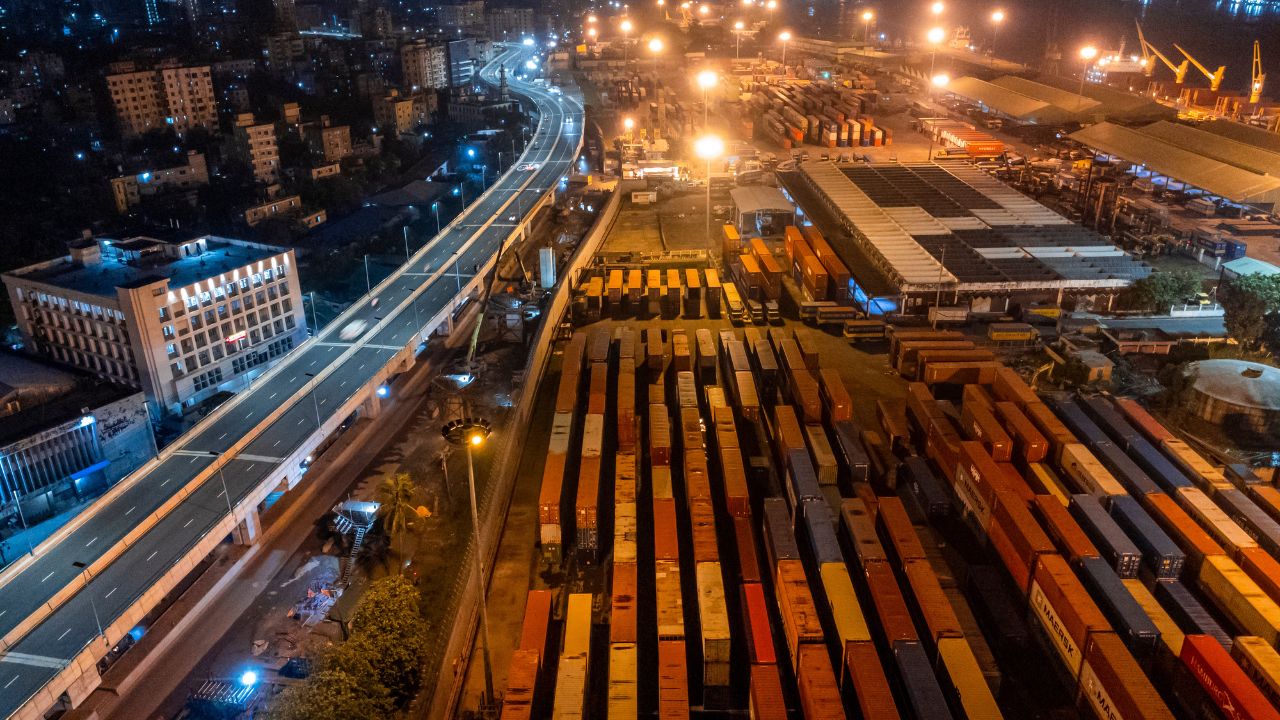



Bangladesh’s trade deficit widened sharply to $27.29 billion in FY2025–26, up nearly 34 per cent from a year earlier, as imports increased while exports declined.
The deficit, equivalent to more than Tk3.36 lakh crore, widened even as the country’s overall balance of payments (BoP) recorded a $6.61 billion surplus during the fiscal year.
According to Bangladesh Bank data released on Sunday, the overall BoP surplus nearly doubled from the previous fiscal year.
The underlying weakness was most evident in the trade account. Import payments rose to $71.14 billion during the year, registering 10.5 per cent growth, while export earnings declined 0.2 per cent to $43.86 billion. The Iran war-related fuel crisis imposed an additional import-cost burden on Bangladesh.

As import costs increased, the trade deficit rose from $20.40 billion a year earlier to $27.29 billion, widening by nearly $6.9 billion in a single year.
The country’s main export sector, ready-made garments (RMG), also showed weakness, with exports declining 1 per cent to $38.97 billion.




Remittance inflows provided support against the widening trade gap. Workers’ remittances rose 17.3 per cent to $35.59 billion, while total private transfers increased 16.9 per cent to $36.15 billion.
Even with this support, the current account deficit widened significantly, rising from $138 million in the previous fiscal year to $1.59 billion in FY2025–26.
The current account deficit stood at $281 million through May but widened to $1.59 billion after June transactions were included, increasing by about $1.31 billion in a single month.
Despite pressure on both the trade and current accounts, large financial inflows helped the overall BoP remain in surplus. The financial account surplus increased to $7.89 billion from $3.60 billion a year earlier.
However, most of the improvement did not come from foreign direct investment (FDI). Net FDI declined to $1.47 billion from $1.72 billion, while other investment increased to $6.65 billion.
Trade credit also recorded a major turnaround, moving from a net outflow of $3.15 billion in the previous fiscal year to a net inflow of $3.10 billion in FY2025–26.
The reserve position strengthened, with gross official reserves rising to $37.58 billion at the end of the fiscal year. The reserves were sufficient to cover 5.4 months of imports of goods and services, up from five months a year earlier.
In terms of goods imports alone, reserve cover increased to six months.