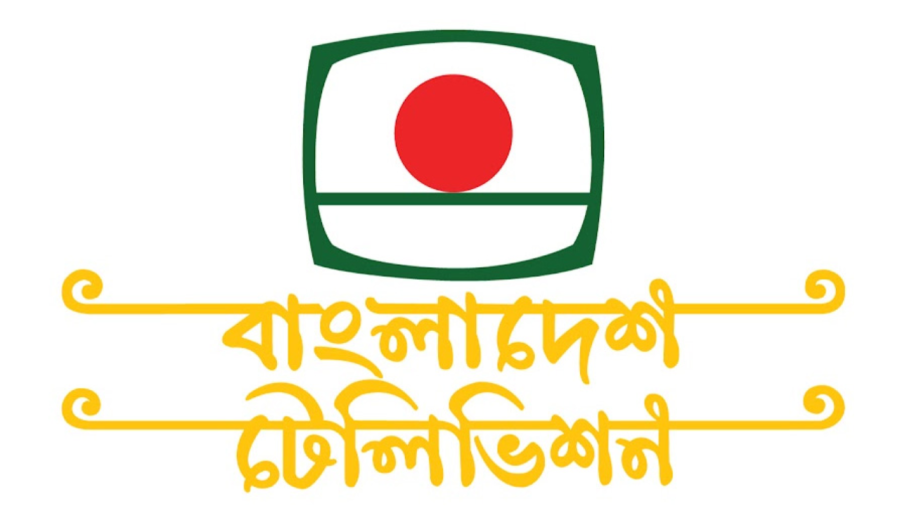



For more than five decades, BTV’s red-and-green logo has been more than a symbol. It carries memories of childhood, post-independence Bangladesh and generations of state broadcasting. Now, a plan to explore a new logo has put Bangladesh Television (BTV) at the centre of debate.
At the heart of the controversy are two sharply different views. BTV Director General Kazi Jesin says the broadcaster needs a “total transformation” to win back audiences. Former BTV Deputy director general and media personality KM Harun argues that changing the logo will do little without better programmes and institutional reform.
The controversy began on the night of 30 August, when BTV’s verified Facebook page released a video announcement inviting viewers and designers to submit ideas and designs for a new logo.
Under the slogan “BTV is returning with a new look,” the broadcaster set 10 September as the deadline.
The announcement quickly sparked debate on social media and in cultural circles. Many opposed replacing the existing logo, while others suggested modernising it without abandoning its core identity.
Speaking to TIMES of Bangladesh, Kazi Jesin said the proposal forms part of a wider transformation prompted by BTV’s declining audience.
“BTV viewers have turned away from the institution for a long time. People are not watching BTV, and interest in our programmes has declined. So, from that point, we are working on the total transformation of BTV so that it can once again become as popular with audiences as it was before,” she said.
Jesin said the logo is only one part of changes to BTV’s on-screen identity.

“As part of changing BTV’s screen, the issue of the logo has also come up. But we are not saying that any decision will ignore history and heritage. Basically, we are thinking about the logo as part of what people want to see and how they want to see BTV,” she said.
However, she stressed that BTV has not decided to scrap the emblem.
“It is not that we will completely change the logo. Perhaps there could be a slight change in its colour. Or we could try to make it a little more modern and visually appealing. It is also possible that, in the end, no change will be made at all,” she said.
Jesin said the decision would involve people associated with BTV and ultimately depend on the government.



“No final decision has been made yet on the extent of the change, or whether we will make any change at all. It is basically still at the thinking stage,” she said.
She also said the logo debate has overshadowed BTV’s main priority — content.
“Because there is so much discussion about the logo, the other issues are not coming into the discussion. If a decision is made to bring about any change, the views of respected artists and those associated with BTV will certainly be taken,” she said.
“Since I took responsibility, there has not been a regular programme at BTV in the last three months. So, at this moment, our first and foremost priority is content,” she added.
BTV is also working on structural issues, including its organogram and payment process, Jesin said.
“We are also working on BTV’s structural issues, including its organogram, as well as the payment process for those working at the institution,” she said.
Mahbubul Alam, the recently retired director general of Bangladesh Television, declined to comment on the matter.
But Harun sees the logo question differently. Speaking to TIMES of Bangladesh, he said BTV should not replace its historic identity through a sudden notice.
“As a state public asset, an institution like BTV should not suddenly change its historic logo through a notice. Modernising an institution depends on quality content. It cannot be achieved simply by changing the logo,” he said.
Veteran actor Keramat Mawla, associated with BTV since its early days, also called the proposed change unnecessary. “There cannot be a more meaningful logo than the one conceived by Kamrul Hasan, Imdad Hossain and Mustafa Monwar,” he said.
TV personality Nawazish Ali Khan called for deeper reforms, saying BTV has failed to keep pace with changing times.
“Good programmes will not emerge unless nepotism is removed and skilled personnel and dedicated artists are given opportunities. BTV will not change simply by increasing its budget. Its production style, script quality and the creative taste of directors need to change,” he said.
Many artists, filmmakers and cultural figures have also opposed the redesign, saying the rising red sun represents more than a graphic identity. Others have proposed modernising the logo. Viewer Sheikh Faridul Ahmed suggested retaining it while adding a subtle 3D transition for BTV HD.
BTV’s current logo emerged in the post-independence period. Renowned artists including Shilpacharya Zainul Abedin, Patuya Kamrul Hasan, Imdad Hossain, Mustafa Monwar and Mahiuddin Faruk were associated with its design and development.
When BTV moved to colour broadcasting in 1980, it began using the colour version. More than five decades later, the red-and-green emblem remains woven into BTV’s identity and the memories of generations of viewers.
The question now is whether BTV needs a new face — or a better reason to keep viewers watching the old screen.