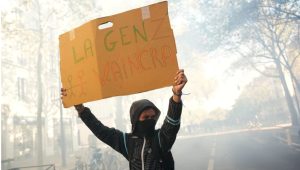
Protests over living costs, wages, public services and war have spread across France, Italy and Belgium, putting pressure on governments to contain unrest as demonstrators demand action on economic and social grievances.
In France, 410,000 people joined nationwide demonstrations, according to the interior ministry, as authorities deployed 70,000 police officers to prevent a repeat of the looting and vandalism that swept several cities on 17 October.
In Italy, protests against war and rising living costs led to clashes in Turin, Rome and Bologna. In Belgium, police used tear gas and pepper spray against demonstrators in Brussels demanding better conditions and increased education funding.
The unrest reflects mounting frustration over economic pressures and public services, with French unions and activists calling for further demonstrations.
French protest groups and trade unions called on Sunday for fresh demonstrations next Saturday, following a major security operation that helped contain unrest during nationwide rallies a day earlier.
Labour leaders also called for a nationwide strike on 5 November, saying anger over wages, living costs and public services had spread beyond the student movement that first mobilised last month.
“We see an aggregation of anger,” Murielle Guilbert, co-leader of the left-wing Solidaires trade union federation, told BFM TV, citing growing grievances among students, workers, firefighters and other groups.
“We call on people to take to the streets next Saturday,” she said.

The SUD Education teaching union said it would join the 31 October demonstration, while the larger CGT union would decide on its participation during the week.
The Yellow Vests, a grassroots movement that emerged in 2018 against fuel taxes, have also called for mass rallies next Saturday, including sit-ins outside town halls and the National Assembly.
“There is anger in this country. It’s growing in schools and universities, on roundabouts, in neighbourhoods, on farms and in workplaces,” activist Azelma Sigaux told reporters.
President Emmanuel Macron faces greater constraints in responding to the unrest than during the Yellow Vests protests.
In 2019, Macron mobilised resources to reduce fuel costs. Seven years later, strained public finances have left less room to meet protesters’ demands.


His mandate expires next April, while his centrist party no longer commands the parliamentary majority needed to pass major legislation.
The government has begun talks with unions and student representatives, but protest leaders say the proposed measures fall short.
“We have received no response at all from this government,” Guilbert said.
Police unions warned on Sunday that officers could not sustain Saturday’s deployment levels for long. The security operation helped limit disorder to sporadic clashes in cities including Paris and Marseille.
The Interior Ministry reported 1,314 arrests, about half the previous weekend’s figure. Around 50 police officers were injured, compared with more than 1,000 a week earlier.
The unrest has also drawn attention to continuing protests elsewhere in Europe.
In Italy, demonstrations against war and rising living costs returned to major cities on Saturday, a week after nationwide unrest.
Authorities deployed large numbers of officers, while many shops closed as a precaution.
Protesters clashed with police in Turin, Rome and Bologna, while rallies in Milan remained largely peaceful.
The demonstrations followed the previous weekend’s violence, when protesters fought police, looted shops and vandalised property.
After fresh protest calls circulated on social media, authorities stepped up security to prevent further violence.
Earlier on Saturday, Italian police detained a person allegedly linked to organising the “October 17 Movement”, associated with the previous weekend’s protests. The suspect was taken to police headquarters in Milan for questioning.
In Belgium, police used tear gas and pepper spray during clashes with anti-government demonstrators in Brussels on Saturday.
The protesters, many of them young, demanded better conditions and increased education funding.
The demonstration followed months of rallies, during which protesters also accused police of excessive violence.
The clashes were smaller and less intense than those in Belgium the previous week and the larger unrest in neighbouring France.
Protesters piled road signs and other objects onto rental scooters and bicycles and attempted to set them alight. Belgian media also reported police using tear gas against another group.
Brussels police said no major incidents had occurred by the end of the afternoon, adding that measures had been taken “to guarantee the maintenance of public order and the security of everyone”.
Police temporarily detained five people for disturbing public order and four others over alleged possession of prohibited weapons and incitement to rioting.