Six power distribution companies have faced intense opposition from experts, businesses, and consumer representatives after proposing a hike in electricity prices at the retail level.
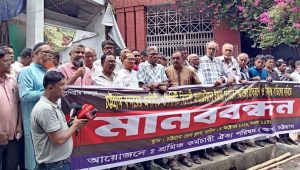
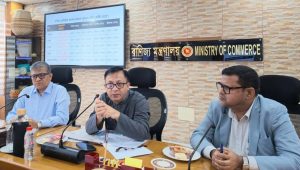
During a public hearing organised by the Bangladesh Energy Regulatory Commission (BERC), representatives from various sectors alleged that the burden of structural inefficiency, uncontrolled system losses, and controversial capacity charges is being shifted onto general consumers without addressing the root causes.
At the hearing held on Thursday at the Krishibid Institution Bangladesh in the capital, the Bangladesh Power Development Board (BPDB) proposed a 29-paisa increase per unit at the retail level.
Other proposals included 50 paisa by the Rural Electrification Board (REB), Tk 1.61 by the Dhaka Power Distribution Company (DPDC), 86 paisa by the Dhaka Electric Supply Company (DESCO), 85 paisa by the West Zone Power Distribution Company (WZPDCO), and Tk 1.66 by the Northern Electricity Supply Company (NESCO).
The organisations claimed that losses are mounting under current selling prices. According to BPDB, the average cost of purchasing electricity is Tk 8.57 per unit, with an additional distribution cost of 92 paisa.

As electricity is sold at Tk 9.20 at the retail level, the agency reported a deficit of 29 paisa per unit.
The REB said its potential losses could reach Tk 2,897 crore in the 2026-27 financial year, making a 50-paisa adjustment per unit essential.
Meanwhile, the DPDC noted that while a Tk1.61 adjustment would restore financial balance if wholesale prices and wheeling charges remain unchanged, a 5-20 per cent increase in wholesale prices could trigger a retail price hike of 11.36 to 24.55 per cent.




The hearing’s technical evaluation committee noted significant variations in distribution costs among the six agencies, with the average net distribution cost standing at Tk 1.25 per unit.
Throughout the hearing, experts questioned the lack of effective initiatives to reduce costs before seeking price hikes.
Moshahida Sultana, a teacher at Dhaka University and an energy researcher, emphasised the need for realistic cost-reduction plans and a re-evaluation of capacity charges and contracts for Independent Power Plants (IPP) and rental power plants.
Jebunnessa, a teacher at Jahangirnagar University, argued that the crisis cannot be managed solely by increasing tariffs without reducing administrative costs, corruption, and inefficiency.
Syed Mizanur Rahman, a teacher at Daffodil University, suggested that the sector must move away from a profit-driven business model and reconsider the inclusion of corporate tax and rate of return in price determinations.
Representing the Bangladesh Steel Manufacturers Association, Mohammad Jahangir Alam argued it is “completely irrational” to impose the burden of system losses on industrial units that have built their own substations and infrastructure.
He also demanded a review of demand charges and additional charges based on power factors.
Energy sector observer Shuvo Kibiria criticised the proposals for lacking a long-term vision or plan for renewable energy.
Further recommendations included introducing flat tariffs for slum dwellers and conducting Regulatory Impact Assessments before changing load limits for LT (Low Tension) consumers.
Concluding the hearing, BERC Chairman Jalal Ahmed stated that all opinions, data, and objections have been recorded, and written opinions can be submitted until May 23.
He reiterated that the commission’s primary responsibility is to protect consumer interests and directed that all future major projects in the power, gas, and energy sectors must be brought under BERC’s purview during the planning stage.