
Farmers across the drought-prone Barind region of Chapainawabganj are racing to transplant Aman paddy seedlings, but inadequate monsoon rainfall has forced many to rely on deep tube-well irrigation, driving up cultivation costs.
Although the Bengali month of Shraban has begun after Ashar, farmers said this season’s rainfall has been insufficient for Aman cultivation, making irrigation essential from the outset.
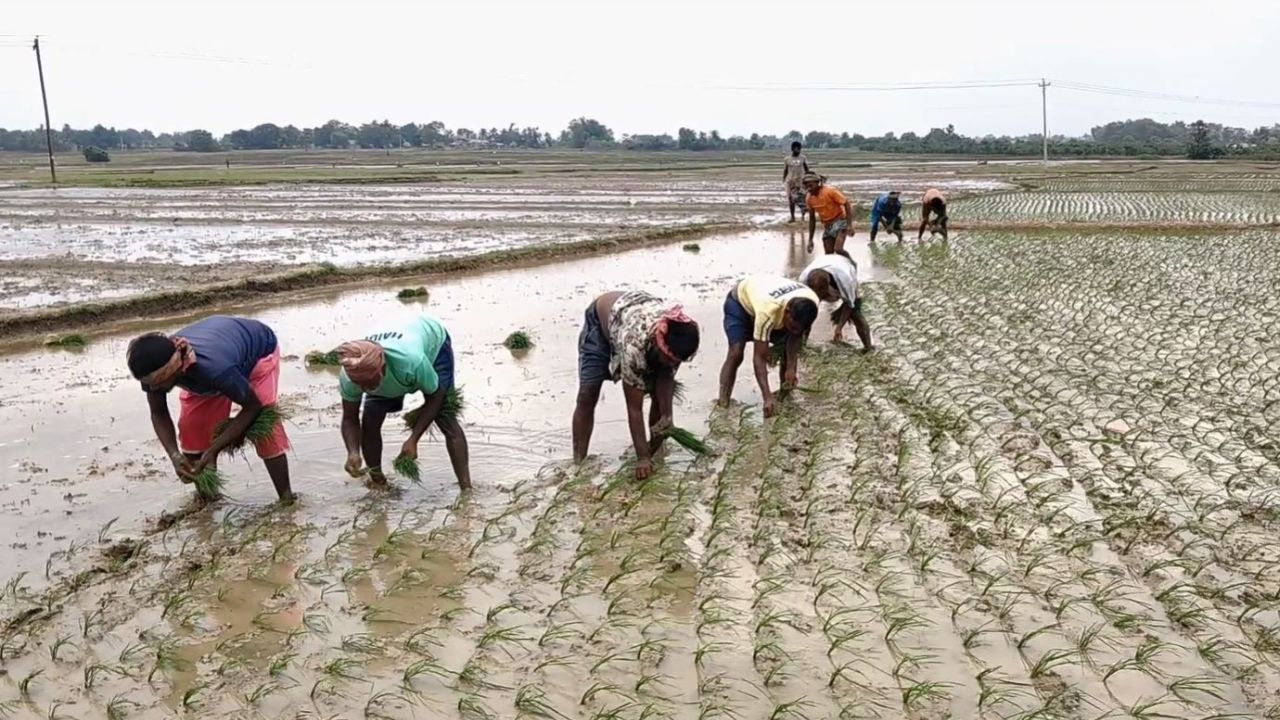
Visits to Mahadanga in Chapainawabganj Sadar and Krishnapur village in Nezam Pur Union of Nachol UIazila found farmers busy preparing fields, pumping water from deep tube wells to create muddy plots and transplanting seedlings in rows.

Farmers said Aman cultivation in the Barind region was once entirely dependent on monsoon rain, with fields naturally prepared by seasonal rainfall. However, declining precipitation over the past several years has made irrigation indispensable for growing the crop.
According to the Department of Agricultural Extension (DAE), average rainfall during June, July and August has steadily declined over the past six years, affecting agriculture across the Barind region. As a result, traditionally rain-fed crops such as Aman are becoming increasingly dependent on irrigation.




Monirul Islam, a farmer from Krishnapur village in Nachol, is cultivating Aman on 10 bighas of land this season. He said six bighas required full irrigation, while the remaining four benefited from limited rainfall.
He said irrigation costs amounted to around Tk625 per bigha, labour costs nearly Tk4,000 per bigha and another Tk1,600 was spent on transplanting and other farming operations, significantly increasing production costs compared with previous years.
Farmers said rising irrigation charges, labour wages and the prices of fertiliser, seeds and other agricultural inputs had squeezed their profit margins, while paddy prices had failed to keep pace with production costs.
Another farmer, Shahin Ali, said paddy cultivation now generated little profit after meeting expenses, with the small surplus barely compensating for the labour invested throughout the year.
Chapainawabganj Department of Agricultural Extension Deputy Director Md Atiqul Islam said the district had set a target of cultivating Aman on 53,800 hectares this season.
“So far, Aman has been cultivated on 32,490 hectares, achieving about 58 per cent of the target,” he said.