The ongoing turmoil at Islami Bank Bangladesh PLC is beginning to negatively affect the country’s banking sector and should be resolved quickly through dialogue, Association of Bankers Bangladesh (ABB) Chairman and City Bank Managing Director Mashrur Arefin said on Wednesday.
Speaking to reporters after a bankers’ meeting at Bangladesh Bank headquarters, the City Bank MD said uncertainty around the country’s largest bank has become a concern for the entire industry.
“What is happening at Islami Bank has started to create a significant negative impact on the industry. We want both sides to reach a settlement quickly,” Arefin said.
He said bankers held extensive discussions with Bangladesh Bank Governor Md Mostaqur Rahman on the issue during the meeting.
According to Arefin, the governor briefed bankers on the latest developments and expressed optimism that a solution could be reached soon.
Asked whether the Islami Bank situation had moved beyond a banking issue, Arefin said the governor had described it as having taken on a political dimension. However, he refrained from giving his own assessment and stressed the need for a quick resolution.
“We are hopeful that a solution will emerge. The governor appeared very firm today and we believe a way forward can be found,” he said.

The meeting also discussed a proposed Tk60,000 crore financing programme aimed at reviving private sector credit growth, which has remained sluggish in recent months.
Arefin said boosting credit growth is now one of the banking sector’s top priorities and the central bank is preparing the package with that objective.
“Credit growth is one of our biggest concerns. The governor also wants credit growth to improve, which is why this package is being introduced,” he said.
Under the proposed scheme, Bangladesh Bank is expected to provide part of the funding while the rest will come from commercial banks. The facility is expected to target small, micro and medium-sized enterprises.
Arefin said banks have already shared their views with the central bank on how funds could be mobilised, noting that a significant portion of liquidity in the banking sector is currently invested in treasury bills and bonds.




Another key issue discussed was the nationwide rollout of Bangla QR, the interoperable QR-based payment platform.
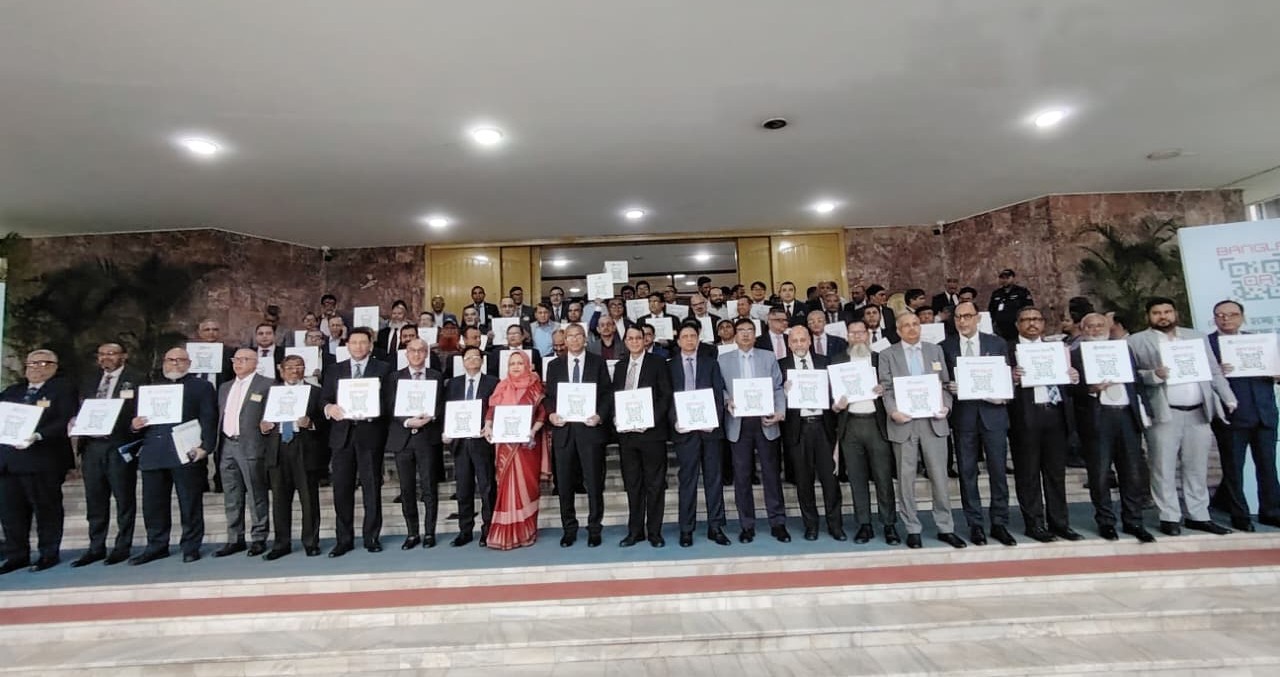
Arefin announced that all banks will launch a coordinated promotional campaign from July 1 through billboards, social media and other communication channels.
“We will jointly promote Bangla QR across the country and thousands of QR codes will be installed by banks,” he said.
Bankers also discussed merchant discount rates, interchange fees and revenue-sharing arrangements among participating banks to support wider adoption of the platform.
The meeting also reviewed plans to expand TakaPay, the country’s domestic card payment network.
Arefin said the successful launch of TakaPay debit cards should be followed by the introduction of TakaPay credit cards.
“We should have our own sovereign debit and credit card network. A local credit card platform would reduce the fees banks currently pay to international card operators on every transaction,” he said.
The meeting also focused on improving the quality and timeliness of trade-related data submitted by banks.
According to Arefin, inaccurate and delayed export-import reporting often creates difficulties in national economic accounting and policymaking.
Bankers also discussed concerns over import pricing, including possible over-invoicing and under-invoicing. He said banks will strengthen trade operations and use international pricing databases and market intelligence platforms to verify import prices.
Another proposal raised was allowing limited virtual participation in bank board meetings.
Arefin said bankers proposed permitting directors to join a small number of meetings online each year when they are abroad, ill or otherwise unable to attend physically. The proposal received a positive response, he added.
Responding to a question on Section 18(a) of the Bank Resolution Act, Arefin said the provision is being withdrawn and noted that the governor had publicly opposed it.
Asked whether he had any information about politically influenced lending decisions, Arefin said he was not aware of any such cases.
“I do not have any information that banks are currently being forced to approve loans under political pressure,” he said.
Summing up the meeting, Arefin described it as one of the most productive bankers’ meetings in recent years.
“It was an excellent meeting. We had open and constructive discussions on almost all major issues facing the banking sector,” he said.