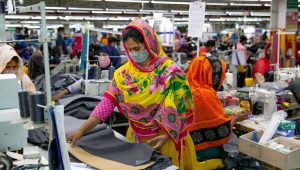
Bangladeshi entrepreneurs have built more than 400 small and medium readymade garment (RMG) units in Italy’s Naples region, employing over 12,000 workers and producing for global markets under the “Made in Italy” label.
The cluster has developed around Palma Campania and nearby communes including San Gennaro Vesuviano, San Giuseppe Vesuviano, Poggiomarino, Terzigno, Saviano, and Ottaviano.
Each unit typically employs between 10 and 100 workers, with Bangladeshis forming a large share of owners, managers, and staff alongside Italian and other migrant workers.
The production model is collaborative, with Italian brands supplying designs, patterns, technical instructions, and raw materials, while Bangladeshi entrepreneurs handle tailoring, finishing, and packaging.

The arrangement converts Italian raw materials into export-quality garments through Bangladeshi skill and management, with products sold across Italy, the European Union, and global markets.
The cluster was built by first-generation Bangladeshi migrants who adapted to local regulations and systems, establishing a stable industrial base through sustained effort.




The expansion supports Italy’s fashion supply chain by maintaining local production and employment, while generating jobs for Bangladeshis and contributing to remittance inflows that support foreign exchange reserves.
The growing presence has also reshaped perceptions, with Bangladeshi workers evolving into entrepreneurs and business partners within Italian society.
Bangladesh Ambassador to Italy ATM Rokebul Haque visited the cluster in Palma Campania and said the development reflects the resilience and industriousness of Bangladeshi workers.
He said the experience goes beyond economic gains, highlighting the role of Bangladeshi entrepreneurs in sustaining production and integration in the host economy.
Further expansion could be supported through systematic data collection on overseas industrial success to strengthen Bangladesh’s professional image in Italy and raise awareness among the diaspora to promote skilled employment.
There is also a need for a structured migration process for skilled and semi-skilled workers in tailoring, machine operation, and pattern-making to meet Italy’s industrial demand.
Coordinated support from relevant ministries and industry bodies such as Bangladesh Garment Manufacturers and Exporters Association could expand opportunities and strengthen economic ties between Bangladesh and Italy.