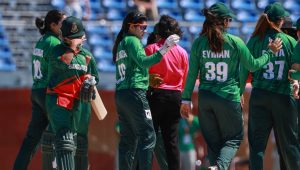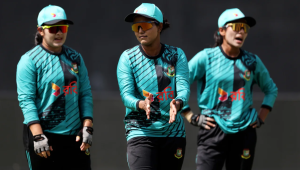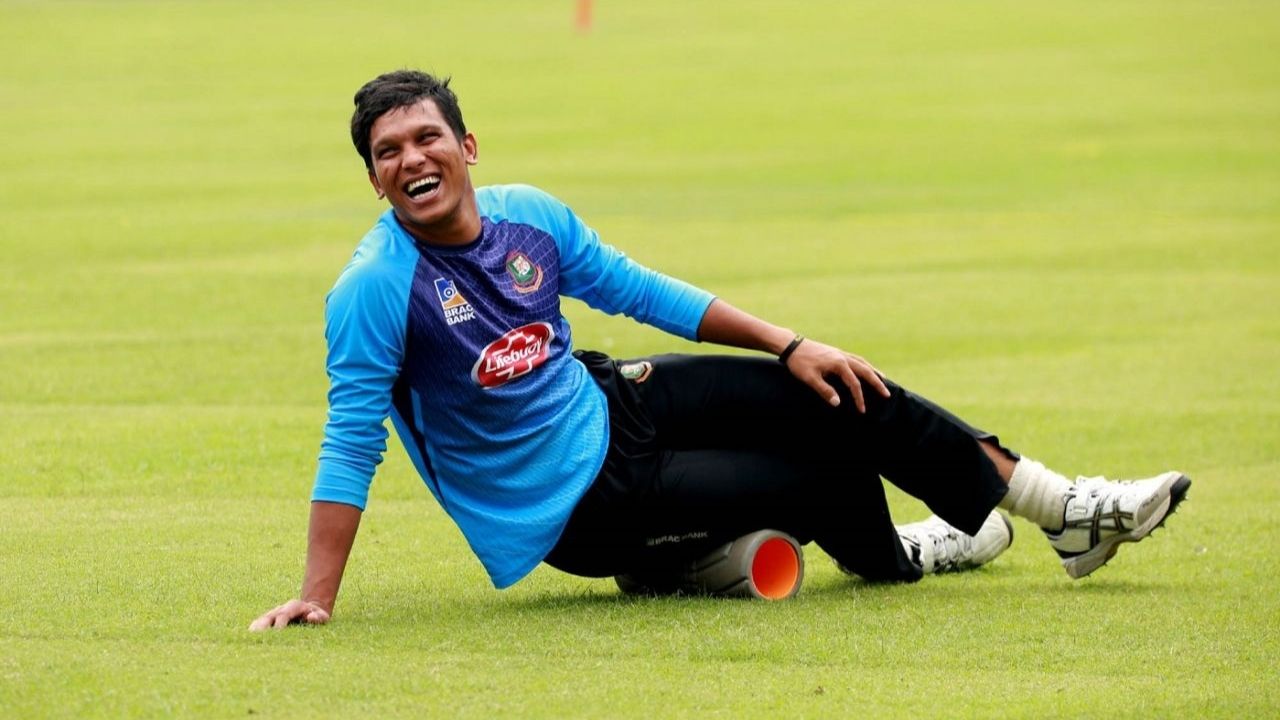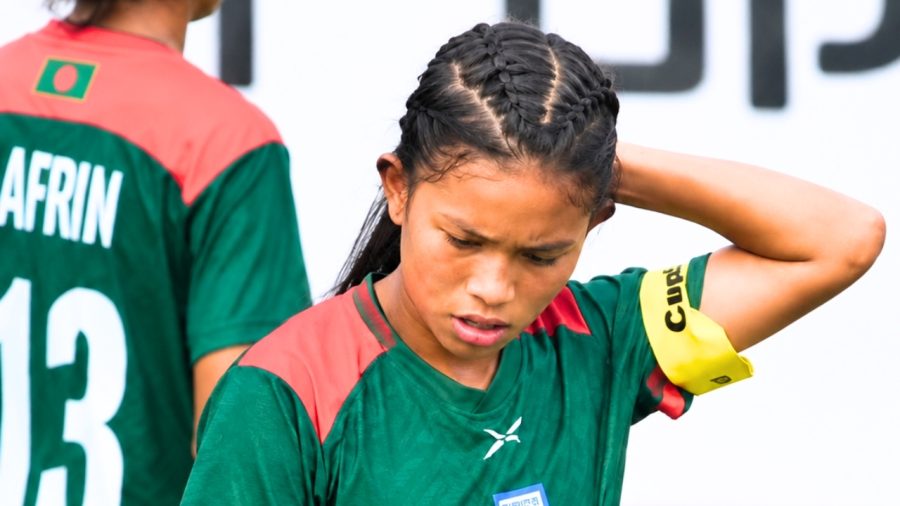

Bangladesh ended their Asian Games women’s football campaign with a goalless draw against Myanmar on Monday, taking one point from Group F after two heavy defeats. The statistics read 16 goals conceded across three matches and none scored. Bangladesh’s first two matches ended 10-0 and 6-0 against North Korea and South Korea respectively.
The North Korea match raised many questions. Coach Peter Butler left Ritu Porna Chakma, Monika Chakma, and Shamsunnahar Sr on the bench and started an inexperienced side against one of Asia’s strongest teams, ranked 11th in the FIFA rankings. The result was a record defeat for Bangladesh.
Former Bangladesh goalkeeper and captain Biplob Bhattacharjee told TIMES that Butler’s experiment wrecked the opener.
“The team collapsed completely in the first match because we experimented,” Biplob said. “It destroyed the team’s combination. You cannot experiment against North Korea. You must play experienced and best players. If you field a totally junior side from the first minute in a tournament this big, they will concede many goals. That is natural.”
Shafiqul Islam Manik, former national team veteran and coach, also believes Butler’s decision to pick a younger XI was not the right one.

“Ten goals felt like a bit much to me,” Manik told TIMES. “We could have done something better. Coaches who find good young players often want to experiment. Sometimes it works, sometimes it fails. A stumble is natural. The coach must take some of the responsibility.”
Butler also accepted responsibility after the team’s opening match. “I take full responsibility for today’s result because they are my players,” he said at the post-match presser.
Butler changed course against South Korea and selected his strongest available side. South Korea, ranked 19th, led 2-0 at the break and scored four more afterwards.
Manik found that defeat easier to accept. “Six goals does not shock me,” he said. “We can accept that result. Many of the best teams in the world concede five or six goals in a match.”




The two heavy defeats raised a wider question: has Bangladesh women’s football finally reached the end of its honeymoon period? Back-to-back SAFF titles and a first Asian Cup place had raised expectations. But gaps remained in the system. After the South Korea loss, Butler pointed to those gaps.
“This level is too much of a big step up for us at this present time,” he said. “We don’t have the infrastructure. We’ve been a victim of our own success.” Butler often pointed to matters outside his control. After the North Korea thrashing, he said, “I can’t control what goes on off the field.”
He suggested that the BFF president supported the team, but others did not. “Other people haven’t (supported), ringing up, having conference calls with players in the midst of the night, and you can’t build a team like that.”
To verify Butler’s claim of outside influence over the team, TIMES contacted BFF women’s wing head Mahfuza Akhter Kiron, but she declined to comment.
However, Biplob rejected that claim. According to him, blaming the players for poor results is never good for team culture.
“Senior players need phones in a national team camp, because they follow the daily schedule,” he said. “There is no proof of who spoke with whom. If someone has proof, they can show it. Blaming the players when results go bad is never right, I believe”.
Myanmar, ranked 55th, offered a different test in the final match. Bangladesh held 48 per cent of possession but managed only three shots, none on target. Myanmar had eight shots, two on target. After crashing down in their first two matches, Butler was pleased with his team’s performance.
“I was really, really proud,” Butler said after the Myanmar match. “Airin came back in, she’s only 16. I thought Moumita was outstanding, and Afeida did really, really well. I wanted a positive performance irrespective of the result, and they gave us that,” he said.
After two big defeats, Biplob analysed that Bangladesh came back and had outplayed Myanmar.
“We played better football than Myanmar,” he said. “They could not beat us and we took a point. Ranking does not matter.”
There will be ups and downs in international football, but according to Manik one poor tournament does not mean the Bangladesh women’s team has lost its flair.
“We are progressing as we expect,” he said. “We would all feel better if we had done a little better, because our expectations were very high. If we look at reality, I will not call it very bad.”