Bangladesh has successfully secured the adoption of a landmark resolution on sustainable bioeconomy at the 82nd session of the United Nations Economic and Social Commission for Asia and the Pacific (UNESCAP).
The resolution, titled “Supporting the transition towards a sustainable bioeconomy in countries in Asia and the Pacific,” was sponsored by Bangladesh and adopted by consensus, receiving strong support from member states across the region.
This achievement marks the first resolution sponsored by Bangladesh to be adopted by the UN system at the initiative of the newly elected government.
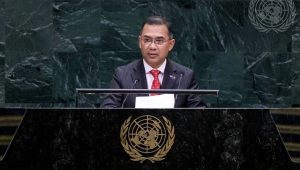
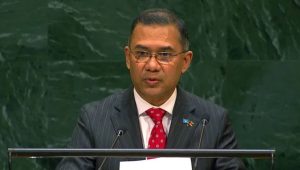
It arrives at a significant diplomatic juncture as Bangladesh vies for the Presidency of the 81st session of the UN General Assembly, through the candidature of Foreign Minister Dr. Khalilur Rahman.

The resolution aligns with Bangladesh’s national priorities of promoting sustainable, innovation-driven, and inclusive growth. It emphasises circular economy approaches, resource efficiency, and the application of science, innovation, and technology.
The document calls for strengthened regional cooperation in knowledge-sharing, capacity-building, investment mobilisation, and the development of sustainable bioeconomy value chains across the Asia-Pacific.




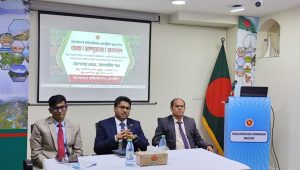
Speaking at a side event during the session, Faqir Mahbub Anam, MP, Minister for Science and Technology and Posts, Telecommunications and Information Technology, stated, “The bioeconomy is not just an emerging concept.
“It is a practical pathway for the Asia-Pacific to address climate challenges, strengthen resilience and ensure inclusive growth.”
The Bangladesh delegation in Bangkok collaborated with the FAO, ESCAP, and UNEP, among others, to prepare for the resolution’s adoption.
The initiative received broad support from co-sponsoring nations, including India, Thailand, Sri Lanka, Maldives, Nepal, Armenia, China, Bhutan, Mongolia, and Kazakhstan, demonstrating a shared regional commitment to sustainable bioeconomy pathways.
In addition to the bioeconomy resolution, the session adopted the “Baku-Bangkok Declaration on Promoting Social Development for Advancing Societies for All Ages in Asia and the Pacific.”
This declaration reaffirms regional commitments to inclusive social development, highlighting priorities such as poverty eradication, decent work, social protection, gender equality, and support for vulnerable groups.
It calls for enhanced regional cooperation to build societies for all ages across the Asia-Pacific region.