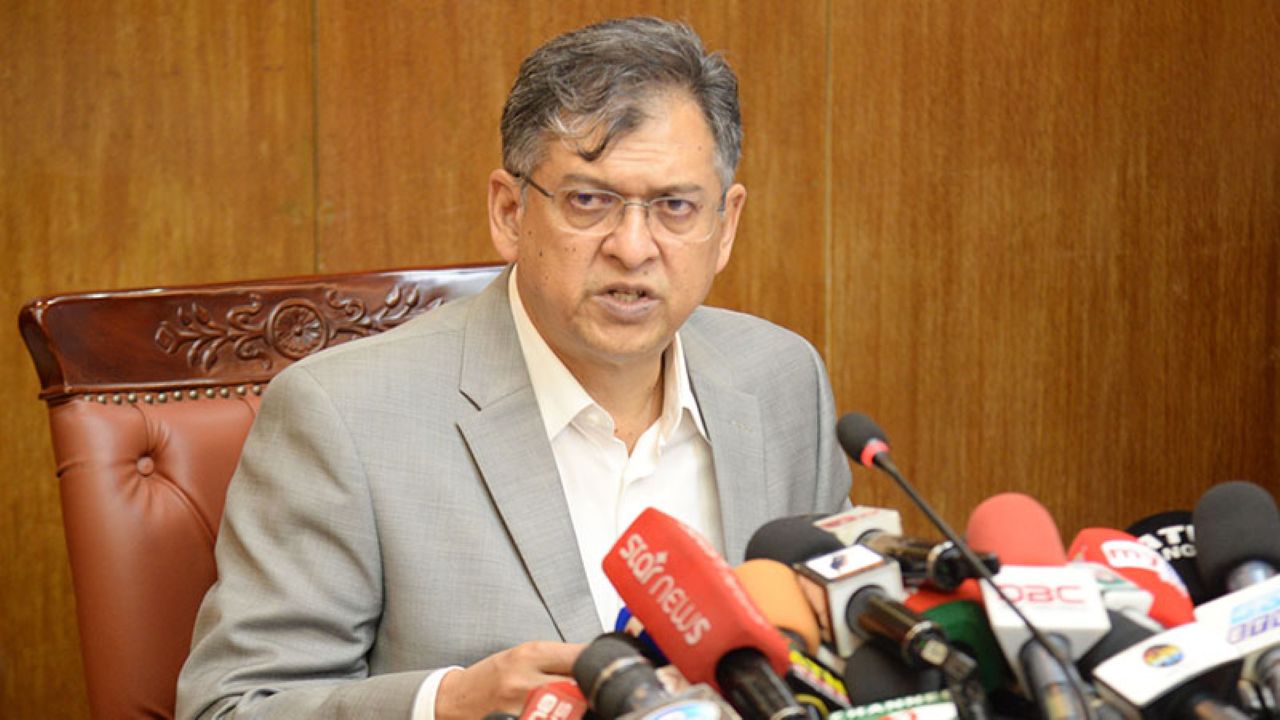
Bangladesh generates approximately 3 million metric tonnes of e-waste annually, yet less than 10 percent is formally recycled, according to a new assessment report by rights-based advocacy organisation VOICE.
The findings were presented at a report dissemination event on the “Hazardous Waste (e-Waste) Management Rules, 2021” held in Dhaka on Saturday, supported by the Association for Progressive Communication (APC).
While all 15 surveyed entities were registered with the Department of Environment, not a single one collected any end-of-life product in the last fiscal year, the report found.
Seventy-eight percent have no take-back system in place, only 22 percent verify Restriction of Hazardous Substances (RoHS) compliance, and no entity maintains proper hazardous waste storage or record-keeping.

“This clearly demonstrates that the Hazardous Waste (E-waste) Management Rules, 2021 are not being operationally enforced, leaving an estimated $200–221 million in annual economic recovery potential entirely unrealised,” VOICE said.
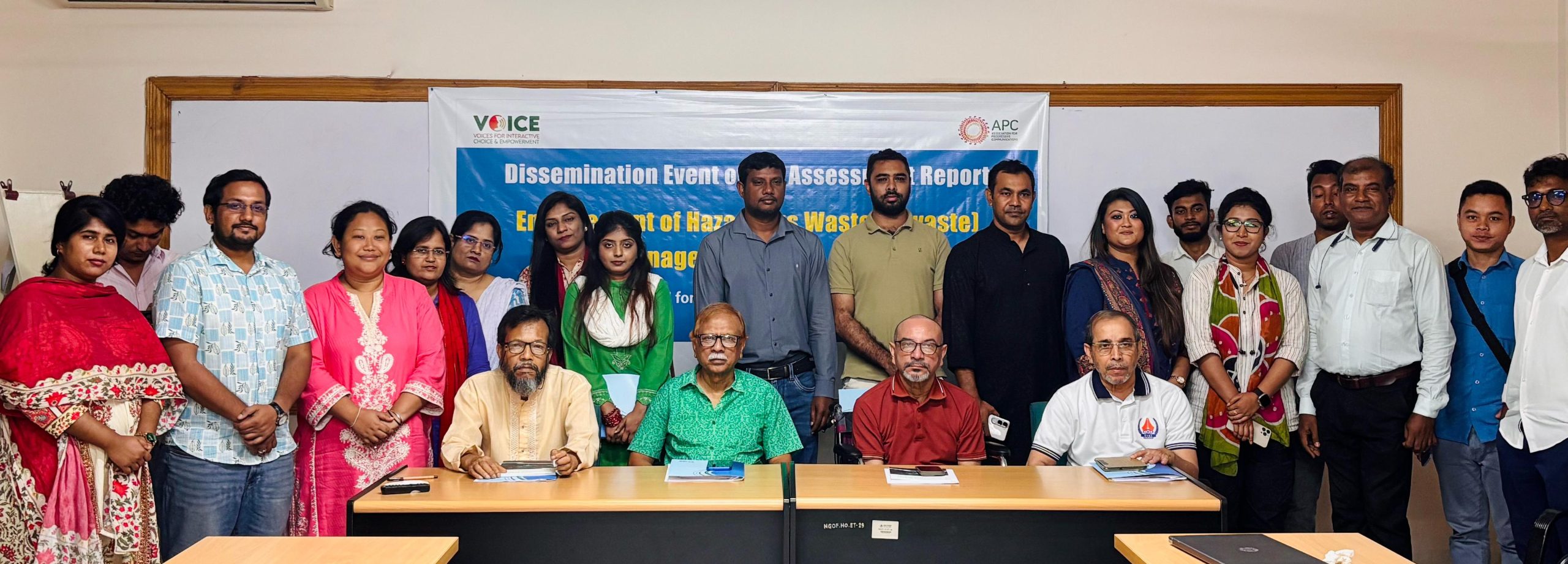
Ahmed Swapan Mahmud, Executive Director of VOICE, said, “Bangladesh made history with the Hazardous Waste (E-Waste) Management Rules, 2021. But legislation alone does not protect communities or the environment — implementation does.”



Musharrat Mahera, Deputy Director (Programmes) of VOICE, warned that the mismanagement of e-waste is causing severe environmental damage, leading to increased child mortality, maternal mortality, and premature deaths.
“Effective measures need to be taken urgently to reduce its devastating impact,” she said.
The report’s lead author, Bandhan Das, said, “The data we gathered presents a mixed picture. Although there is legal intent on paper, there is no practical implementation at the field level. Workers continue handling e-waste without adequate health and safety protection. This report is not just a document; it is an urgent warning for civil society.”
Md Aminul Russell from Unnayan Dhara Trust said that despite regulations on e-waste management, they are rarely followed in practice. “Extensive media coverage is crucial to influence policymakers,” he added.
Mihir Biswas from Bangladesh Poribesh Andolon (BAPA) made two recommendations: “First, the specific challenges must be clearly identified, and secondly, continuous collaborative discussions should be carried out to implement the recommendations that have emerged.”
Participants called for coordinated and sustainable efforts to strengthen the implementation of e-waste policies and environmental accountability, emphasising collective action to protect future generations from this growing risk.