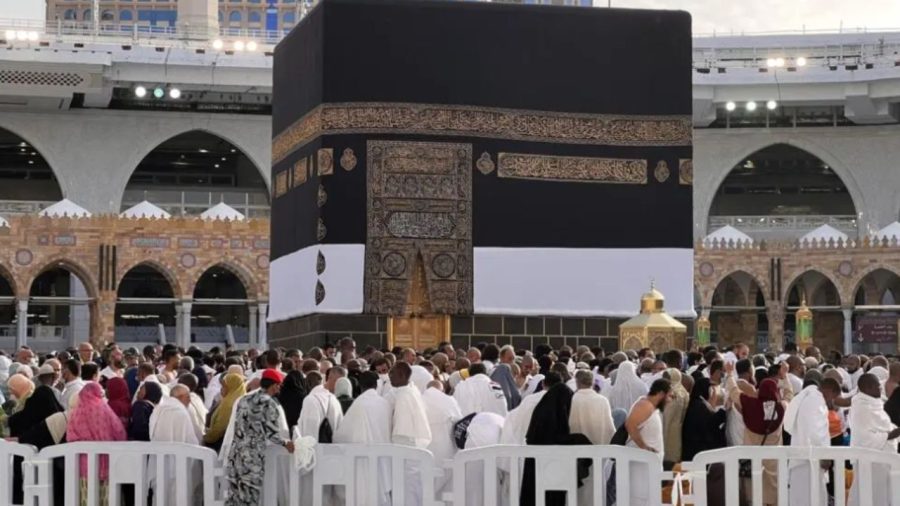

Saudi Arabia’s air defences destroyed a Houthi drone south of Mecca before it could enter the prohibited airspace over the holy city, a spokesperson for the Saudi-led military coalition in Yemen said on Wednesday, as fighting continues to spread across the Middle East.
The drone was intercepted on Tuesday evening, marking the second time the Houthis have attempted to target Mecca since a ballistic missile was launched towards the holy city in July 2017, coalition spokesperson Turki al-Malki said in a statement, reports Reuters.
The incident came after a week of attacks by Iran-aligned Houthi fighters that have drawn Saudi Arabia deeper into the conflict.
Mecca, home to some of Islam’s holiest sites and the focal point of the annual Hajj pilgrimage, is a security “red line”, al-Malki said.
Houthi officials, however, have denied targeting Mecca.

The attacks on Saudi Arabia have unsettled global energy markets amid the six-month US-Iran war, which has reduced shipping through the Strait of Hormuz to a trickle.
The Houthis have seized parts of Yemen’s Red Sea coast in recent days, overlooking the Bab el-Mandeb, one of the world’s most important shipping routes. Their control of the area threatens Saudi Arabia’s oil exports, which have been rerouted from the Strait of Hormuz.




Saudi Arabia issued security alerts for Mecca on Tuesday. But Houthi political bureau member Mohammed al-Farah denied that the group had targeted the city, calling the allegation “an outright lie” in comments carried by the Houthi-run SABA news agency.
The Houthis have announced several major attacks on Saudi Arabia over the past week, including an attack on an air base on Monday. They said the strike was retaliation for Saudi-led airstrikes on Yemen.
The attack wounded 13 civilians, according to Saudi-led military coalition officials.
Saudi Arabia has also blamed a separate pro-Iranian movement based in Iraq for Friday’s attack on the East-West Pipeline, one of the kingdom’s key oil transport routes.
The 1,200-km (745-mile) pipeline connects Saudi Arabia’s oil fields in the Gulf with the Red Sea and has served as the kingdom’s principal export route while shipping through the Strait of Hormuz has remained disrupted by nearly seven months of war.
The conflict has killed thousands of people across the region.
The pipeline has remained shut since Friday’s attack, and traders say a prolonged closure could cut off as much as 4 per cent of global oil supplies.
Saudi Arabia has not said when operations will resume. US Energy Secretary Chris Wright, however, told CNBC on Tuesday that crude oil should begin flowing through the pipeline within days.
Saudi Arabia has led a coalition fighting the Houthis since 2015. The conflict had largely eased under a ceasefire in recent years but reignited this month after the Houthis pushed back forces aligned with the Yemeni government.
Saudi Crown Prince Mohammed bin Salman spoke by phone with US President Donald Trump last week to seek military support. So far, US assistance has been limited to intelligence aid.