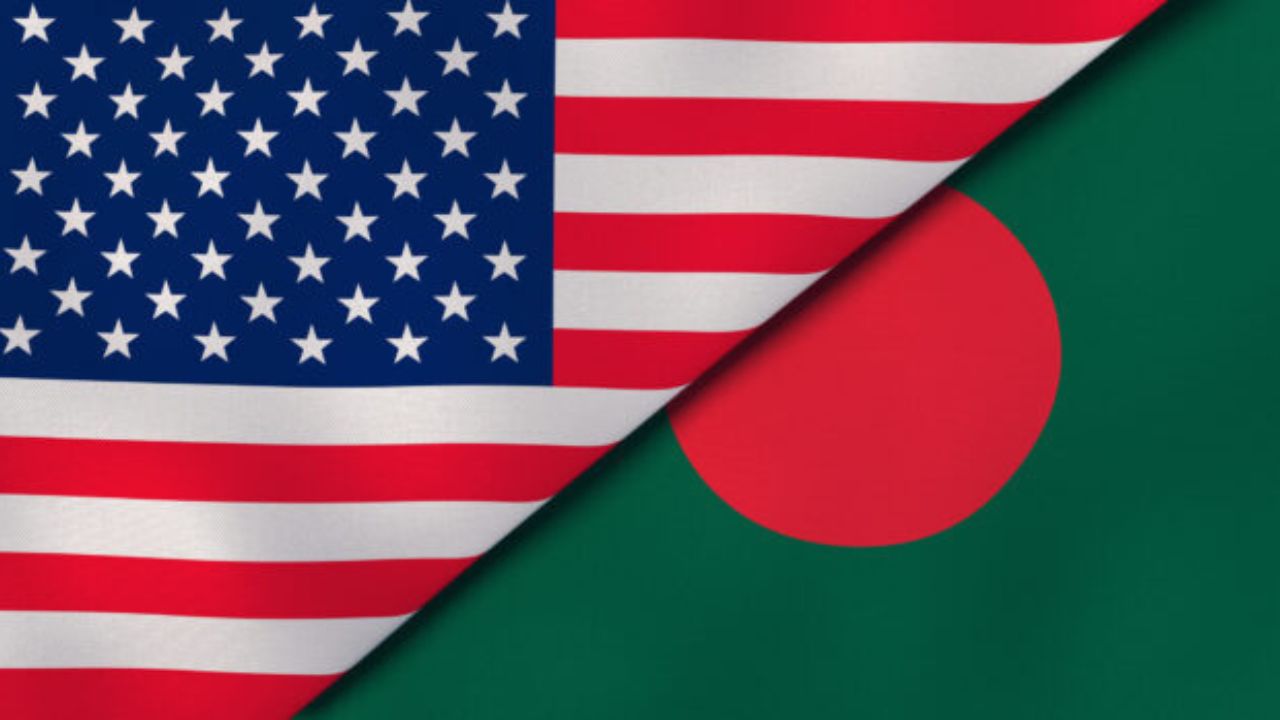

In a significant departure from its traditional diplomatic stance, Bangladesh is strengthening its national defence by formally joining a strategic 14-nation military coalition led by Saudi Arabia.
While Dhaka has long adhered to the constitutional principle of “friendship to all, malice towards none”, its entry into the multinational maritime defence alliance signals a pragmatic shift towards a new “Bangladesh First” approach aimed at safeguarding vital economic interests.
Security experts have described the move as a major step forward.
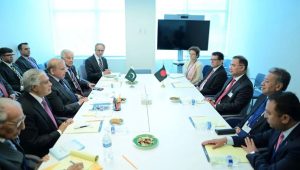
Formation of the alliance, announced by the Saudi Ministry of Defence on Thursday, establishes a new framework for collective maritime defence across the Bab al-Mandeb Strait, the Red Sea, and the Gulf of Aden.
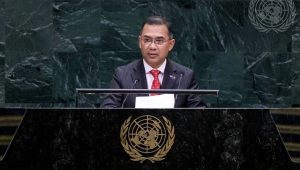
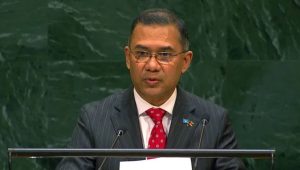
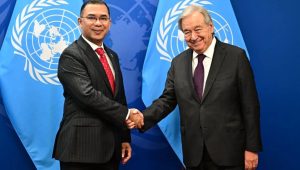
Armed Forces Division Principal Staff Officer (PSO) Lieutenant General Mir Mushfiqur Rahman represented Bangladesh in the arrangement.
Brigadier General (retd) Mustafa Kamal Rusho, research director at the Osmani Centre for Peace and Security Studies, told TIMES of Bangladesh that for a nation where more than 90 per cent of external trade by volume moves by sea, the move should not be viewed as a shift towards bloc politics, but as a survival necessity in a volatile global landscape.
A landscape of vulnerability
The alliance takes shape during a period of severe global economic strain. The virtual closure of the Strait of Hormuz due to the ongoing conflict between the United States and Iran has already disrupted approximately 20 per cent of global oil and gas exports.

This has forced a reliance on the alternative Bab al-Mandeb-Red Sea route, which has itself become a focal point of regional tensions.
Rusho argues that this participation is a critical evolution for the state.
“Participation in the new maritime initiative should be viewed not as a departure from [the traditional] philosophy but as an evolution in safeguarding national interests in an increasingly interconnected maritime environment,” the security expert notes.
He emphasises that safer maritime routes are essential for energy security, as nearly all of Bangladesh’s crude oil and a significant portion of its liquefied natural gas imports originate in or transit through the Gulf region.
The strategic necessity is underscored by recent escalations; last week, Iran-backed Houthi fighters in Yemen imposed a maritime blockade on Saudi Arabia, significantly disrupting oil shipments diverted to the Red Sea.




For Bangladesh, the stability of the Bab al-Mandeb is critical, as 10 to 12 per cent of global maritime trade passes through this 29km-wide chokepoint. Any disruption here is expected to trigger a surge in global energy prices, placing immense pressure on Bangladesh’s import-dependent economy.
Modernising the Navy under Forces Goal 2030
Beyond immediate trade protection, the alliance offers a platform for the Bangladesh Navy to enhance its operational reach and professional capabilities. The coalition’s activities will include intelligence and information sharing, joint operational planning, and the conduct of multinational maritime exercises.
Security experts suggest these activities will complement the ongoing modernisation of the Bangladesh Navy under Forces Goal 2030 and reinforce the country’s aspiration to become a responsible maritime stakeholder following the settlement of its maritime boundaries.
Such cooperation is expected to improve interoperability in anti-piracy operations, search and rescue, humanitarian assistance, and disaster relief. By contributing to international navigation safety, Bangladesh also strengthens its ability to protect its growing blue economy.
A diplomatic balancing act
Despite clear economic benefits, the alliance presents a delicate challenge for Dhaka’s “balanced” foreign policy.
The coalition includes nations such as Pakistan, Turkiye, Egypt, Jordan, and Qatar, but notably excludes the United Arab Emirates and Oman for the time being, despite those nations sharing similar security concerns.
The most sensitive diplomatic hurdle remains Iran. Bangladesh and Iran have maintained cordial relations for decades, and Tehran has generally viewed Dhaka as a non-aligned partner.
“Dhaka will need to communicate consistently that its involvement is directed solely towards protecting international navigation and commercial shipping rather than participating in any military posture against Iran,” a former diplomat told TIMES.
He warns that if the coalition becomes perceived as a broader effort to counter Iranian influence, it could generate diplomatic unease and affect future cooperation in trade and energy.
Moreover, the “Bangladesh First” strategy must account for other major partners. China, Bangladesh’s largest defence supplier and principal development partner, has its own interests in safeguarding Indian Ocean energy routes.
While Beijing may see a focused maritime security arrangement as compatible with its interests, it might react negatively if the coalition evolves into a mechanism perceived as containing China or aligning too closely with the United States.
Similarly, India, the principal maritime power in the Bay of Bengal, will watch closely to see if this new framework complements existing regional initiatives.
Protecting the migrant workforce
A primary driver for the move is the welfare of the four million Bangladeshi workers employed across Saudi Arabia and the Gulf states. Their remittances are a vital source of foreign exchange for the country.
Improved maritime security and regional stability support the economic growth in the Gulf that sustains this labour demand.
However, the political risk is high.
If the coalition becomes directly involved in wider Middle Eastern rivalries involving Iran, Yemen, or Israel, the security environment could deteriorate. This would not only affect infrastructure projects and employment opportunities but could also disrupt the vital flow of remittances.
Brigadier General (retd) Mustafa Kamal Rusho further pointed out that the gains of safer sea lanes and enhanced strategic relevance in the Indian Ocean will only endure if Dhaka preserves its strategic autonomy.
The Saudi-led initiative, headquartered in a yet-to-be-named Saudi city, remains open to other nations as they complete national procedures. For Bangladesh, the success of this shift depends on the alliance remaining defensive, inclusive, and rules-based rather than bloc-oriented.