The election for the presidency of the 81st session of the United Nations General Assembly (UNGA) is set to take place in New York today, with Bangladesh’s Foreign Minister Md Khalilur Rahman competing against Andreas S Kakouris of Cyprus.
If elected, Khalilur would become only the second Bangladeshi to serve as president of the UN General Assembly, one of the most prestigious positions in the multilateral system.
The only Bangladeshi to have previously held the post was Humayun Rasheed Choudhury, the former foreign minister and parliament speaker, who was elected President of the 41st session of the General Assembly in 1986.
For Bangladesh, a victory would represent not only a diplomatic milestone but also a renewed opportunity to raise its profile within the United Nations system nearly four decades after Humayun Rasheed Choudhury’s historic tenure.
Bangladesh’s long pursuit
Bangladesh first expressed its intention to seek the presidency of the General Assembly in 2020.

The interim administration later nominated former foreign adviser Md Touhid Hossain as the country’s candidate. Palestine initially entered the race but subsequently withdrew, leaving Bangladesh as the sole Asian contender.
However, diplomatic sources say the interim government never fully committed itself to promoting Hossain’s candidacy. As a result, his campaign remained limited and lacked sustained diplomatic outreach.

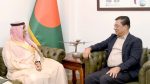
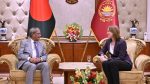
Following the formation of the BNP-led government earlier this year, Prime Minister Tarique Rahman appointed Khalilur Rahman as foreign minister and replaced Hossain as Bangladesh’s candidate for the UN post.
Since then, Khalilur Rahman has conducted an extensive international campaign, backed by the full support of the government, in an effort to secure votes ahead of the election.
One-year leave if elected
Khalilur Rahman has said he would take a one-year leave of absence from the government if elected president of the General Assembly.
Speaking during an informal interactive dialogue at the United Nations on 13 May, he responded to a question from a representative of Andorra about whether he would resign from his ministerial position.
“Will I resign? No,” he said. “My prime minister has made it very clear that I will be released for one year to take up the position as a full-time responsibility. Resignation is not the only option. I can go on leave.”
The remarks were intended to reassure member states that he would be able to devote his full attention to the presidency if elected.
From career diplomat to foreign minister
Before joining the current government, Khalilur Rahman served in the interim administration led by Muhammad Yunus, first as high representative on Rohingya affairs and later as national security adviser.
Following the BNP’s election victory, he joined the cabinet as a technocrat minister and assumed the foreign affairs portfolio.
A career diplomat, Khalilur Rahman topped Bangladesh’s first regular civil service examination and joined the foreign service in 1979. He later moved to the United Nations system, serving in senior positions in New York and Geneva under the United Nations Conference on Trade and Development.
He holds a master’s degree in economics from the University of Dhaka, another degree from the Fletcher School of Law and Diplomacy, and a PhD in economics from the Harvard Kennedy School. He is also a founding member of East West University.