M. A. Matin
For the past two decades, Bangladesh has been hailed as one of South Asia’s most remarkable success stories. Once dismissed in the 1970s as a “basket case,” today the nation is celebrated as a “development miracle.” Its macroeconomic indicators GDP growth, export expansion, and infrastructure projects present a picture of progress that is undeniably impressive.
Yet beneath this glittering exterior lies a harsh reality: Bangladesh remains ensnared by corruption, political dysfunction, and widening inequality. The nation stands at a paradoxical crossroads, simultaneously a land of economic promise and a society burdened by systemic misfortune.
In the 21st century, Bangladesh’s economy has shown extraordinary dynamism and resilience. By 2023, its nominal GDP reached approximately $460 billion, ranking 35th in the world. This rise has positioned Bangladesh ahead of regional peers in many respects:
- Pakistan: $340 billion
- Vietnam: $430 billion
- India: $3.7 trillion+
- Sri Lanka: $84 billion
Even more strikingly, in 2021 Bangladesh surpassed both India and Pakistan in per capita income, a landmark achievement, though recent inflation and currency pressures have slowed this momentum.
From 2010 to 2020, Bangladesh maintained a 6–7% annual growth rate, consistently outpacing most regional economies. Ready-made garments (RMG), remittances from migrant workers, and rural development initiatives were the primary engines of this growth. Landmark infrastructure projects—the Padma Bridge, Dhaka Metro Rail, and Rooppur Nuclear Power Plant—stand as tangible symbols of a nation in motion.

Yet, economic numbers alone do not tell the full story. Inequality has deepened alarmingly. Wealth remains concentrated in the hands of political elites and powerful business syndicates, while millions continue to live in urban slums without access to clean water, sanitation, or quality healthcare.
Between 2023 and 2025, inflation disproportionately affected the middle and lower classes. Basic goods became unaffordable, while government interventions failed to stabilize markets. The promise of economic growth remains largely intangible for a significant portion of the population.
Corruption has become a structural feature of Bangladesh’s political economy. On the 2024 Transparency International Corruption Perceptions Index, Bangladesh ranked 147th out of 180 countries, making it one of Asia’s most corrupt nations.
From securing a government job to clearing goods at ports or accessing justice, corruption functions as an unavoidable tax. Billions of dollars are lost annually to graft and bribery, eroding public trust and discouraging foreign investment. Without accountability and transparency, economic gains risk being hollow victories.




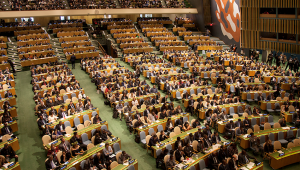
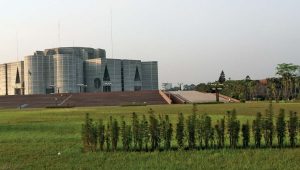
Perhaps Bangladesh’s gravest challenge lies in its fractured political culture. Democracy has gradually deteriorated into a hollow spectacle characterized by manipulated elections, the suppression of opposition, and partisan media narratives.
Most national elections have been marred by controversy, boycotts, and widespread public distrust. Instead of a competitive democratic process, the nation often succumbs to authoritarian populism, where dissent is criminalized, opposition parties are marginalized, and civil liberties are steadily curtailed.
This political instability not only hampers governance but also undermines long-term economic planning and public confidence. Investors, both domestic and international, are often left wary of engaging in a volatile and unpredictable environment.
With 60% of its population under 35, Bangladesh should ideally be enjoying a demographic dividend. Yet unemployment, inadequate skill development, and nepotism have left the younger generation frustrated and disillusioned.
Every year, tens of thousands of educated youth migrate abroad in search of better opportunities. This brain drain gradually erodes the country’s capacity for innovation, skill development, and sustainable economic growth, leaving the nation less equipped to meet its ambitious development goals.
Despite its low per capita carbon emissions, Bangladesh is among the world’s most climate-vulnerable nations. Coastal erosion, salinity intrusion, flooding, and rising sea levels threaten to displace at least 30 million people over the coming decades.
Urban centers, particularly Dhaka, face additional challenges. The city frequently ranks among the world’s most polluted, and chaotic urbanization, inadequate waste management, and extreme traffic congestion make daily life a struggle for residents. Environmental risks are increasingly intertwined with socio-economic vulnerabilities, compounding the nation’s challenges.
Bangladesh’s story is not merely one of GDP expansion—it is also the story of a society still wounded by injustice, irresponsible governance, and the betrayal of its citizens’ potential.
Economic growth is hollow if it fails to translate into dignity, justice, and equal opportunity. Unless political reform is implemented, institutions are empowered, and public faith in democracy is restored, the nation’s so called “miracle” will remain fragile and deceptive.
Bangladesh today stands at a crossroads. It can either remain a mirage of prosperity trapped in misfortune or rise as a just, inclusive democracy, where economic growth benefits every citizen and strengthens social cohesion.
Policy Roadmap: Steps Toward Inclusive Development
- Strengthen democratic institutions: Ensure free, fair, and credible elections while protecting civil liberties.
- Combat corruption decisively: Reform anti-corruption agencies, increase transparency, and hold public officials accountable.
- Invest in youth and skills: Expand vocational training, higher education opportunities, and merit-based employment.
- Reduce inequality: Promote equitable access to health, education, and housing, particularly for marginalized communities.
- Climate resilience and urban planning: Invest in sustainable infrastructure, flood defenses, and waste management.
- Inclusive economic policy: Encourage diversified industrial growth and support small- and medium-sized enterprises.
Only through structural reforms and inclusive governance can Bangladesh transform its economic miracle into sustainable development that benefits every citizen.
(The views expressed in this opinion piece are of author’s own)
The writer is a political analyst