
Long before Kazi Asma Azmery became known as the “Bangladeshi Passport Girl” in her home country and the “Green Passport Girl” internationally, she was already travelling in her imagination.
As a child, she listened to stories of distant lands while her mother fed her. The adventures of Ibn Battuta and Marco Polo, along with the Bengali folklore of Thakumar Jhuli, opened a world far beyond the one she knew.
“Since childhood, I loved to travel. My mother used to read me storybooks like Ibn Battuta, Marco Polo, and Thakumar Jhuli while feeding me. Those stories started showing me dreams of seeing the world,” she recalled.
Even an old Bengali belief became part of that childhood fascination. According to the saying, a mole under the foot means the person will travel widely.
“I even checked under my foot to see if I had a mole because of the old saying that a mole under your foot means you’ll travel the world, and I actually had one!” Asma laughed and said.
Years later, that childhood curiosity would become a life lived across borders. Her first experience of travelling alone came in 2007, when her mother sold personal jewellery to fund her travel to Thailand. She simply wanted to see the ocean. At that point, travelling to dozens, let alone hundreds, of countries was not yet a defined ambition.
Then came 2009. When a male acquaintance boasted about visiting 26 countries, Asma declared her own intention to match his record. He dismissed her immediately, pointing out her gender as if it were an insurmountable obstacle. Her response was swift: “Do girls’ tickets cost more than boys’?”

“In our societal context, it felt like women were expected to stay home, cook, and serve, rather than explore. That doubt only fuelled my determination,” said Asma.
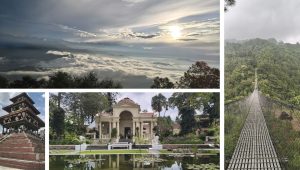
Soon after, she travelled to Nepal. Standing before the Himalayas, she found something larger than the destination itself. The mountains made her realise that the boundaries she had been taught to accept were not necessarily boundaries she had to live by. The journey had changed direction. What began as wanderlust gradually became a challenge to expectation.
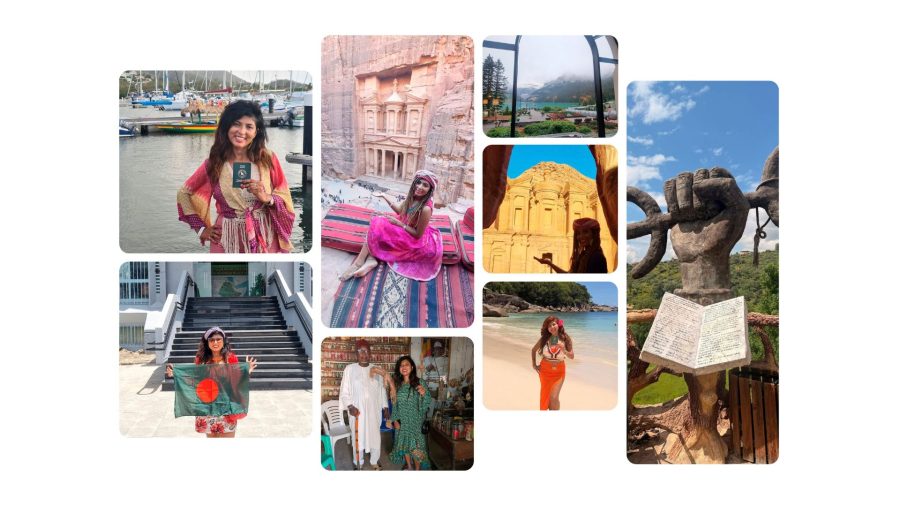
Nearly two decades later, that journey has taken Asma to 161 countries, with Algeria becoming her 161st. She has explored more than 1,420 cities along the way, turning what began as a childhood dream into one of the most extensive travel journeys by a Bangladeshi woman. But the number is only one part of the story.
Her journeys have also been shaped by the reality of travelling internationally as a Bangladeshi woman.
For her, nationality has never been something to simply leave behind at the airport. Travelling on one of the world’s most visa-restricted passports inevitably meant facing harsh realities.

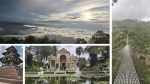


In May 2010, despite carrying a valid visa, confirmed hotel bookings, and a return ticket, Asma was detained at an airport in Cyprus for 27 hours purely because of her nationality.
Sitting in detention, she faced a choice: give up or prove a point. She chose the latter, resolving to demonstrate to the world that a Bangladeshi traveller could explore the globe legally, honourably, and without resorting to unlawful means.
Although she has lived in New Zealand since 2012 and later moved to Australia, she has continued to travel with her Bangladeshi citizenship.
“If I change my passport, my personal situation changes, but it won’t change the reality for the 180 million people of Bangladesh,” she said. “I wanted to show that with proper planning and persistence, we can travel the world on our own passport.” That decision has become central to the meaning of her journey.
For many travellers, a passport is simply a document needed to cross a border. For Asma, her green passport represents something more personal. It is part of the identity she carries into every country she visits and part of the message she wants her journey to communicate.
That is how the nickname “Green Passport Girl” came to carry a meaning beyond a catchy label. Her passport is not something she has tried to leave behind in pursuit of global mobility. Instead, she has made it part of the story.
Her travels have also challenged another assumption: that seeing the world requires a life of luxury. For Asma, the choice has often been about priorities. “Instead of buying luxury designer dresses, I buy plane tickets.” It is a line that neatly captures the philosophy behind her lifestyle.
Financing a life on the road required sheer grit and strict financial discipline. From her university days starting in 2006 onward, Asma worked relentlessly, adopting a gruelling rhythm: working part-time jobs for a year and a half to save, then spending four to six months travelling continuously on a strict budget.
She relied on Couchsurfing, hitchhiking, long-distance buses, and epic overland train routes like the Trans-Siberian Express to stretch every dollar.
Yet 161 countries are not reached through wanderlust alone. There are visas to apply for, routes to plan, borders to cross, and unfamiliar situations to navigate. And for a Bangladeshi woman, the journey can come with an additional layer of questions and scrutiny.
Her story began with someone telling her that she was a girl and therefore, implicitly, should not be travelling as far as a man. Years later, her answer remains the same; only the scale has changed.
Asma did not need to become someone else to see the world. She did not need to abandon her nationality. She simply kept going.
That persistence has turned her travels into something larger than a personal record. Her journey speaks to women who have been told, directly or indirectly, that certain ambitions are not meant for them.
The girl who once searched the sole of her foot for a sign that she would travel the world eventually stopped waiting for signs. She started buying tickets, and 161 countries later, the journey is still not really about the number.
It is about what happened between one country and the next: the stories she encountered, the assumptions she challenged, the borders she crossed and the identity she chose to carry with her.
Today, Asma uses her platform as a public speaker to advocate against illegal migration, urging young travellers to represent their nations with dignity. Every border she crosses legally is a statement, not just for Bangladeshis, but for passport holders from Kenya to Algeria who face systemic hurdles when pursuing their travel dreams.
Carrying her green passport into every new country, she continues to prove that borders are only as impassable as you allow them to be. For Asma, the world was first introduced through a storybook. She eventually decided to step inside the story herself.