The Arakan Rohingya National Council (ARNC) has rejected a United League of Arakan (ULA) report on violence against civilians by Islamist armed groups in northern Arakan, calling it politically motivated and fabricated.
ARNC said the document weaponizes civilian suffering to advance an anti‑Rohingya narrative. It condemned all attacks on civilians — Rohingya, Rakhine, Hindu, Mro, Khumi, Daingnet, Thet, Maramagyi, or others but accused the ULA of manipulating human rights language to criminalize the Rohingya people.
In a press release, the council noted the report titled “Violence Against Civilians by Islamist Armed Groups in Northern Arakan: An In-Depth Analysis” repeatedly used inflammatory religious terms such as “Islamist terrorist groups,” “religious domination,” “exclusive Muslim zone,” and “caliphate,” which it said falsely equated Rohingya identity and Muslim faith with armed extremism.
ARNC described the report as propaganda designed to fuel fear, suspicion, and hostility toward an already persecuted community.
“This rebuttal exposes the ULA’s selective framing, challenges its anti‑Rohingya narrative, and reaffirms ARNC’s commitment to truth, accountability, equal rights, protection of all civilians, and peaceful coexistence among all peoples of Arakan,” the release said.

ARNC said, the report begins with a misleading historical account portraying Muslims in Arakan as mainly the result of colonial‑era migration from Chittagong. It claims British migration “significantly altered” northern Arakan’s demographic and religious composition.
It also said this is not academic history, but a political falsehood rooted in racist bigotry and Rohingya‑phobia. The same narrative has long been used by the Myanmar military, anti‑Rohingya nationalists, and Rakhine separatists: first depict Rohingya as foreigners, then as demographic threats, then as terrorists and finally remove them from their ancestral land.
ARNC rejected the claim in the strongest terms, stressing Rohingya are not foreigners, guests, or colonial intruders but an indigenous people integral to Arakan, with deep historical, cultural, linguistic, and religious roots. Even the ULA report itself admits a Muslim presence existed before British rule, though it minimizes that presence as “relatively smaller.”
Independent sources also show Francis Buchanan‑Hamilton’s 1799 account referred to Muslims of Arakan who called themselves “Rooinga,” meaning natives of Arakan. Later scholars confirmed Buchanan recorded this term in the late eighteenth century, long before modern disputes over Rohingya identity, it said.

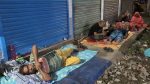
The report’s opening narrative is especially dangerous because it turns a human rights issue into a demographic accusation. Rohingya population figures have collapsed not because Rohingya are outsiders, but because of mass displacement, persecution, denial of citizenship, village destruction, and systematic efforts to remove Rohingya from Arakan.
ARNC said it does not defend any unlawful killing, abduction, or abuse by armed actors, and stressed that every credible allegation should be independently investigated. But it argued the ULA’s presentation is not an independent probe. Instead, it isolates alleged crimes by Rohingya‑linked groups while minimizing or omitting grave abuses committed by the Arakan Army/ULA against Rohingya civilians.
The council noted the report avoided mention of killings and mutilation of Rohingya civilians carried out by AA forces in a captured Rohingya village. In several villages, men of different ages were killed and brutally mutilated in what appeared to be an attempt to instill fear among the Rohingya population.
Rohingya identity falsely linked to terrorism
ARNC rejects any attempt to connect the Rohingya people with terrorism or armed violence. It stressed that no armed group represents the Rohingya nation and no actor has the right to speak for an entire persecuted people. The overwhelming majority of Rohingya are farmers, fishermen, traders, teachers, students, religious leaders, mothers, fathers, children, elderly people, and displaced families.
They are survivors of genocide, mass displacement, statelessness, and systematic persecution. They are victims of terrorism, not perpetrators.
ARNC’s position is clear. Any armed group or individual that attacks civilians, recruits by force, abducts people, extorts communities, abuses women, loots property, or commits crimes against any community must be independently investigated and held accountable. Civilian suffering must never be justified, regardless of the identity of victims or perpetrators.
The report erases Rohingya suffering
ARNC said the ULA report uses numbers and charts without credible methodology, presenting Rohingya‑linked actors as the main source of danger while ignoring the long, documented history of violence against Rohingya.
It described this as a selective and dishonest narrative, noting that persecution did not begin with recent armed groups but has deep roots in decades of state‑backed discrimination, denial of citizenship, restrictions on movement, land confiscation, forced displacement, arbitrary arrest, village destruction, and mass violence.
More than 700,000 Rohingya fled to Bangladesh within weeks, while international investigators found evidence of genocidal intent by Myanmar’s military leadership. ARNC said any report that discusses civilian suffering in Arakan while ignoring this central history is not balanced but reflects selective memory serving political and racist intent.
ARNC calls for probe of Rohingya genocide
ARNC has called for an independent international investigation into civilian killings, disappearances, village burnings, forced recruitment, sexual violence, land confiscation, property destruction, and other abuses in northern Arakan.
It demanded a full probe into the 2016‑2017 Rohingya genocide, including the role of Myanmar military units, police, border guards, Rakhine extremist networks, local vigilante mobs, nationalist organizations, and all accomplices.
It also called for immediate protection of all civilians — Rohingya, Rakhine, Hindu, Mro, Khumi, Daingnet, Thet, Maramagyi, and other communities.