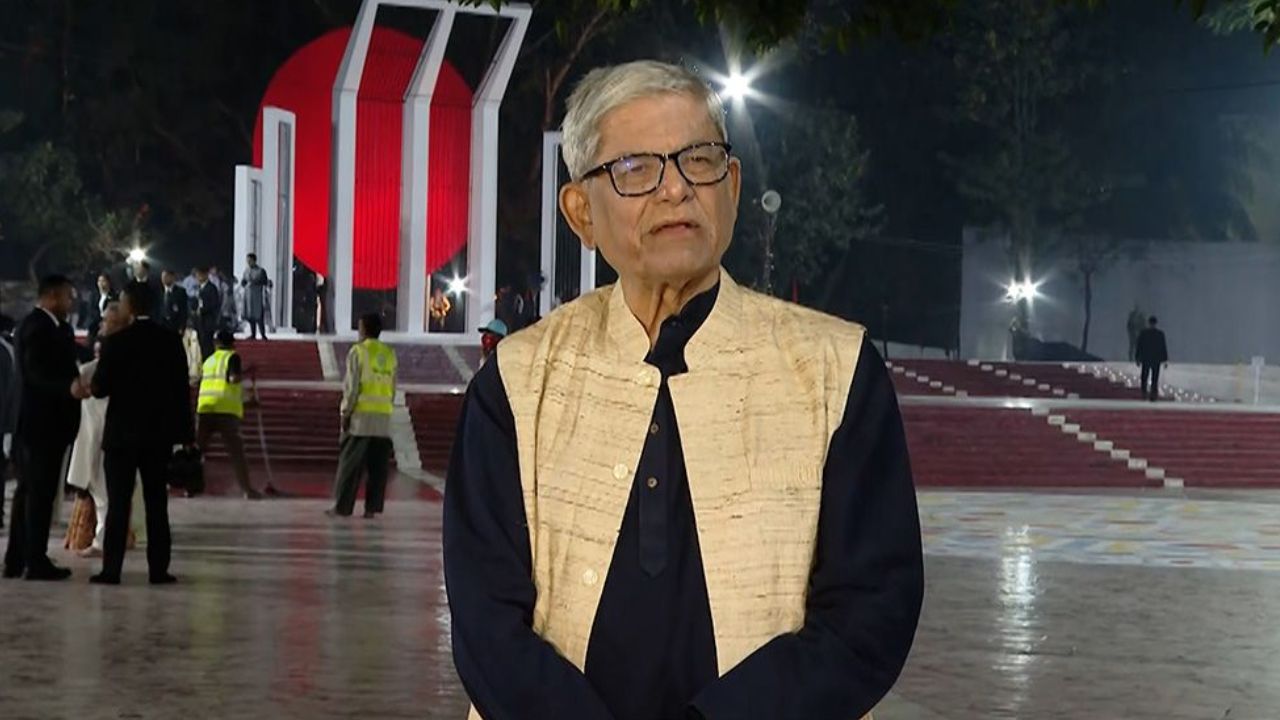

Last Thursday, the 16th of July, a minister stood at the inaugural stage of the Rath Yatra in Swamibagh. As he reached the end of his speech, the sweltering heat took its toll; he fell ill and was rushed home to rest on medical advice.
The minister is seventy-eight years old. This is his first year as a full minister, having taken his oath on the 17th of February. It is a milestone that arrived fifty-seven years after he first entered the political fray in 1969.
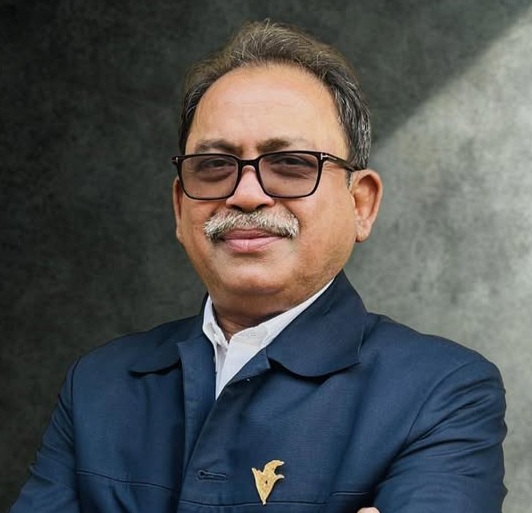
His name is Mirza Fakhrul Islam Alamgir – secretary general of the BNP, minister for local government, and member of parliament for Thakurgaon-1.
In the landscape of Bangladeshi politics, there are men more powerful, more popular, and certainly wealthier.
Yet, few have navigated the variety of political chapters Fakhrul has survived. From the mass uprising of ’69 and Maulana Bhashani’s NAP to Zia’s secretariat, Ershad’s local-level politics, Khaleda’s cabinet, Hasina’s prison cells, and now Tarique’s cabinet. He has entered every “room” of power and emerged intact.
His journey is a masterclass in the politics of endurance, though his electoral record is remarkably modest. Between 1991 and 2026, he contested the Thakurgaon-1 seat five times. He lost twice to the Awami League’s Khademul Islam (1991, 1996) and split victories and defeats with Ramesh Chandra Sen (2001, 2008).
Most famously, in 2018, he won the Bogra-6 seat but refused to take his oath, handing back his victory on the principle that he would not legitimise a rigged parliament. By 2026, however, he returned to Thakurgaon-1 with a resounding 238,000 votes.

This survival instinct appears to be a family trait. The Mirza family of Thakurgaon is a cross-section of the nation’s history.
One uncle, Wing Commander SR Mirza, directed youth camps for the Mujibnagar government in 1971, while another, Mirza Golam Hafiz, served as Speaker and Law Minister. His father, Mirza Ruhul Amin – locally known as “Chokha Mya” – was a Muslim League veteran and a seventeen-year mayor who later served in Ershad’s cabinet.
Fakhrul’s own path was more rebellious. In 1969, as an economics student at Dhaka University, he was the General Secretary of the SM Hall branch of the East Pakistan Student Union.
Records from the time of the uprising are slightly ambiguous; while he held the SM Hall post, other sources suggest he held a university-wide leadership role, though whether as President or Vice-President remains a matter of historical debate.
He transitioned from a leftist activist to a 1972 BCS education cadre, teaching economics at Dhaka College for fourteen years, before becoming the Private Secretary to Deputy Prime Minister SA Bari during Zia’s tenure.




The shift from a pro-Moscow/Peking student leader to the secretary general of a nationalist party remains one of the least-written chapters of our history. Fakhrul is a living testament to the vanished leftist camps of the seventies, yet he remains a “silent document” on the matter.
His leadership has been defined by the term “Acting.” Following the death of Khandaker Delwar Hossain in 2011, he held this “temporary” post for five years, despite internal objections that the position did not exist in the BNP constitution.
He became the full Secretary General only in 2016, immediately followed by imprisonment.
The weight he has carried is immense. Since 2018, with the Chairperson jailed and the Acting Chairman in London, Fakhrul has been the solitary face of the party before the police and the press. He has been to jail eleven times, spending three and a half years in custody.
Of the hundreds of cases filed against him, the state has charged him with sabotage and explosives – yet not a single case of corruption has been successfully brought. His declared assets of approximately Tk4 crore would be mocked by even a minor Upazila Chairman.
Despite his academic background, Fakhrul has left little in writing. His only published work, “Amar Swapno Amar Desh” [My Dream, My Country], is a collection of speeches rather than a memoir.
There is no biography, and even his date of birth remains a mystery, disputed between 26 January and 1 August. Remarkably, even a reception-souvenir printed in Thakurgaon has failed to make it into online library catalogues.
This void is a reflection of how we record history. In Bangladesh, we write the history of the “Chairs” – of Mujib, Zia, and Ershad.
The person standing beside the chair is often erased; it took fifty years for the nation to truly understand the importance of Tajuddin Ahmad, and while Fakhrul is not Tajuddin, the pattern of historical neglect is the same.
Critics within his party claim he lacks the “heat” for a hartal, preferring the measured tone of a press briefing.
He lacks the traditional tools of the strongman: the loud voice and the patronage of loyalists. Instead, he possesses the trust of foreign diplomats and a habit of sending condolences to sick opponents – a face that has struggled to find a place on anyone’s “hate list.”
At seventy-eight, as he takes charge of the Ministry of Local Government, Rural Development and Co-operatives, the rewards for his fifty-year odyssey are visible but modest – two previous terms as a State Minister, his current full cabinet rank, and an auditorium named after his father.
The expectations, however, remain starkly local.
A grocer in Thakurgaon recently told reporters he simply hopes for better hospitals and schools. It is a humble demand for a man who has spent fifty years in the second tier of power, eventually becoming the very definition of that tier.
Mirza Fakhrul has spent fifteen years in a life of “reaction” – responding to morning arrests and evening briefings. In such a life, there is little time to write one’s own story.
He has remained history’s answer to someone else’s sentence. But as he looks toward the future, there is a sense that the final chapter has yet to be declared.
This opinion is edited from a Facebook post by Mirza Faisal Amin – the younger brother of Mirza Fakhrul Islam Alamgir.