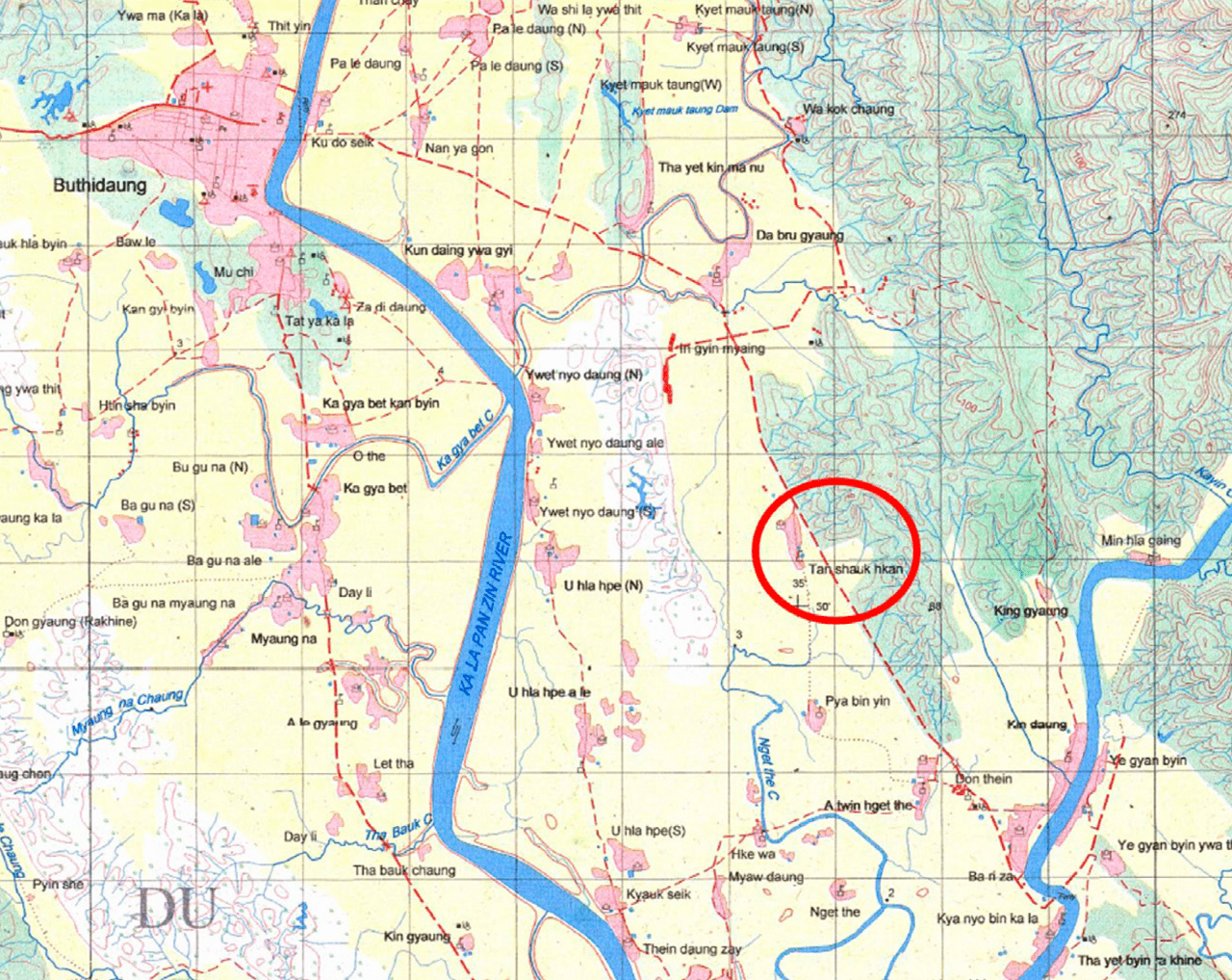
Since early 2024, the Arakan Army has swept through Rakhine State, capturing village after village in its relentless advance. By February, its fighters were pressing hard on Maungdaw and Buthidaung. Then, on 2 May, the war reached Htan Shauk Khan village (“Hoyya Siri” in Rohingya) – around 45 kilometres east of Bangladesh’s Teknaf jetty.
Armed men stormed the village – a settlement of about 1,000 people, including Rohingya families already driven from their homes elsewhere – and turned it into a killing ground, survivors said. Houses were set ablaze, screams pierced the night, and panic rippled through the serenity of the Rakhine jungle.
Among those who survived was Arofa Begum (35), a woman from Htan Shauk Khan village. She remembers the blood pooling so fast she thought she might drown in it. Her husband lay beside her, his skull shattered. One daughter was riddled with bullets; another was dragged away, screaming. Six sons were shot down one by one, their small bodies collapsing into the dirt.
“I was covered in their blood. I lay still and pretended to be dead. Everyone else was gone. That was the only way to live,” she told TIMES of Bangladesh from a bamboo shelter in a refugee camp in Cox’s Bazar, where she arrived in March 2025.
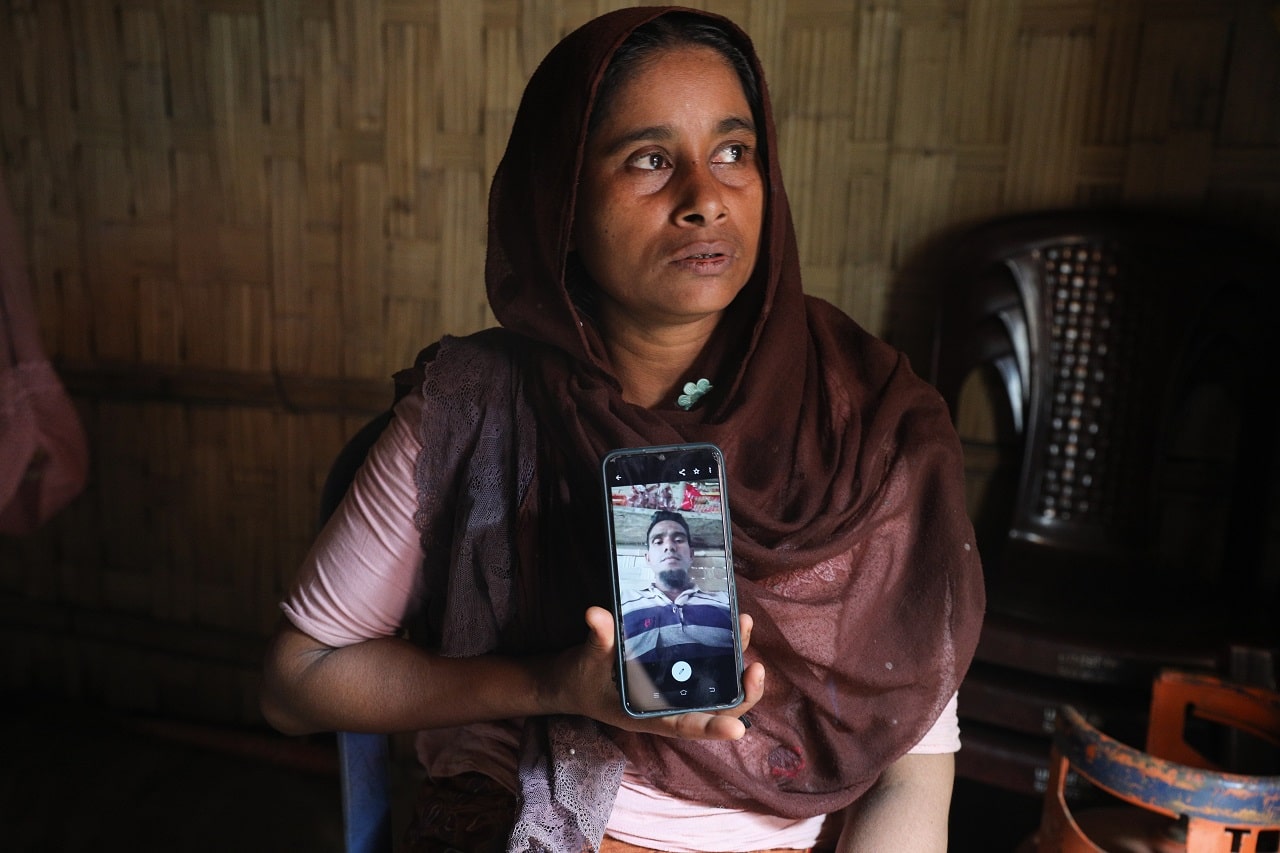
“They separated us into three groups,” Arofa said. “They killed the youth first. Then they turned their guns on us.” She was shot four times in the left arm. She lay among the corpses and later in a mudhole for six days, breathing shallowly so the soldiers would not hear her. At night, she watched as the gunmen returned to strip jewellery from the dead, to throw still-living children into water, and to torch the piles of bodies.
During the massacre, some villagers of Htan Shauk Khan fled into the nearby jungle, clinging to a final chance at survival. Shamsul was among them; he now lives in a Rohingya refugee camp, having arrived in early August 2025. From the jungle, he tracked the Arakan Army’s advance by the height of the flames and the acrid smoke from his burning village. He said the fighters withdrew to their battalion in July 2024. When he finally returned, the stench reached him before the ruins came into view.
“There were bodies everywhere,” he recalled. “Two here, three there. In the ponds, in the latrines, in the bathrooms. Many had been burned in piles. The ground was black with ash, and sometimes skulls floated in the paddy fields.”

“The Arakan Army even asked survivors if they had seen the mass graves – a way to identify anyone documenting the killings,” he said. “They threatened us, insisting we lie and blame the junta.” Shamsul still finds it surreal to recount his ordeal while sitting in a bamboo hut at the camp, alive against the odds.
Arofa was intercepted by the Arakan Army while hiding from one village to another and was offered medicine in exchange for a statement blaming the junta for the killings in her village.
Shamsul walked past mass graves, the soil cracked and charred. “The world doesn’t know,” he said. “There were no journalists. No one came. So, I took pictures and videos with my phone, because otherwise no one would believe us.”
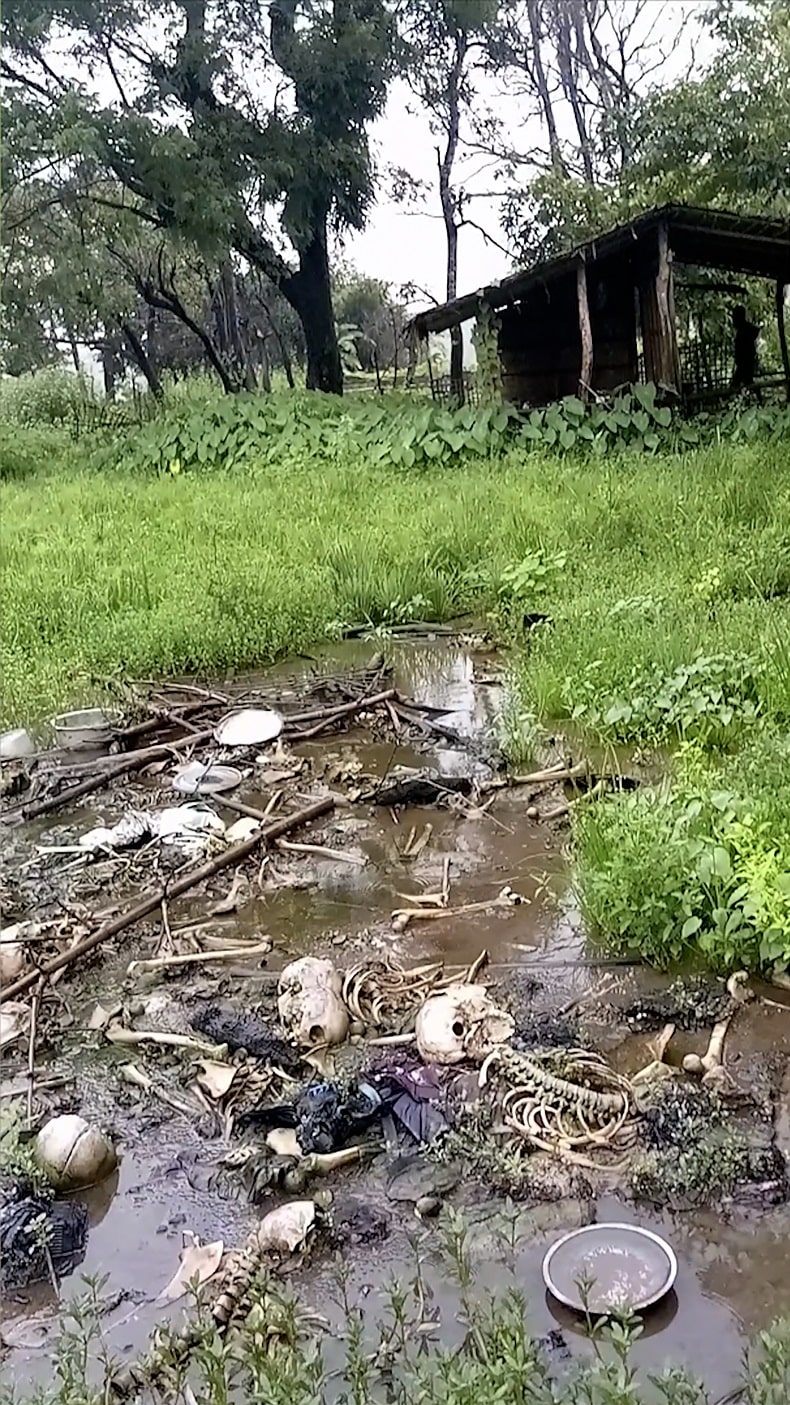
TIMES investigation team obtained videos and photographs from Shamsul, then revisited Arofa – without him being present – to verify the locations depicted. As the footage played, Arofa broke down, her voice rising into a scream. “This is where they killed my family,” she cried. “My little, little flowers.”




The testimonies follow a grim pattern: executions, sexual violence, looting, villages set ablaze, and bodies disposed of to erase evidence. After repeated requests, the Arakan Army did not respond to TIMES for comment on accounts provided by the victims.
Findings by Human Rights Watch and an ongoing investigation by Fortify Rights echo what TIMES has documented on the ground.
“The military’s atrocities are well known, but the Arakan Army now appears to be imposing its own system of oppression in northern Rakhine,” said Shayna Bauchner, Asia researcher at Human Rights Watch. “It cannot claim to liberate the state while subjugating part of its population. The Arakan Army and its political wing, the United League of Arakan, must end discriminatory practices and honour their commitments to inclusive, lawful governance.”
Referring to survivors and eyewitnesses, John Quinley, director at Fortify Rights, said it was Arakan Army soldiers who perpetrated the killings in Htan Shauk Khan village. Speaking to TIMES over the phone, he called for the Arakan Army to hold their forces accountable and for international investigators and human rights monitors to access the areas where the violations occurred.
It took Arofa 25 days to reach Bangladesh after a year of hiding in multiple villages across Rakhine State. She and her only surviving daughter drank from streams, chewed leaves, and begged strangers for help. Traffickers demanded money; villagers paid to save them. “Without them, we would have been killed,” she said.
When she reached Alikadam in Bangladesh on 13 March 2025, she carried nothing but scars and debt. She had borrowed Tk100,000 (about $850) to pay smugglers and still owes the money. Now she lives in a refugee camp with no steady food or cooking supplies.
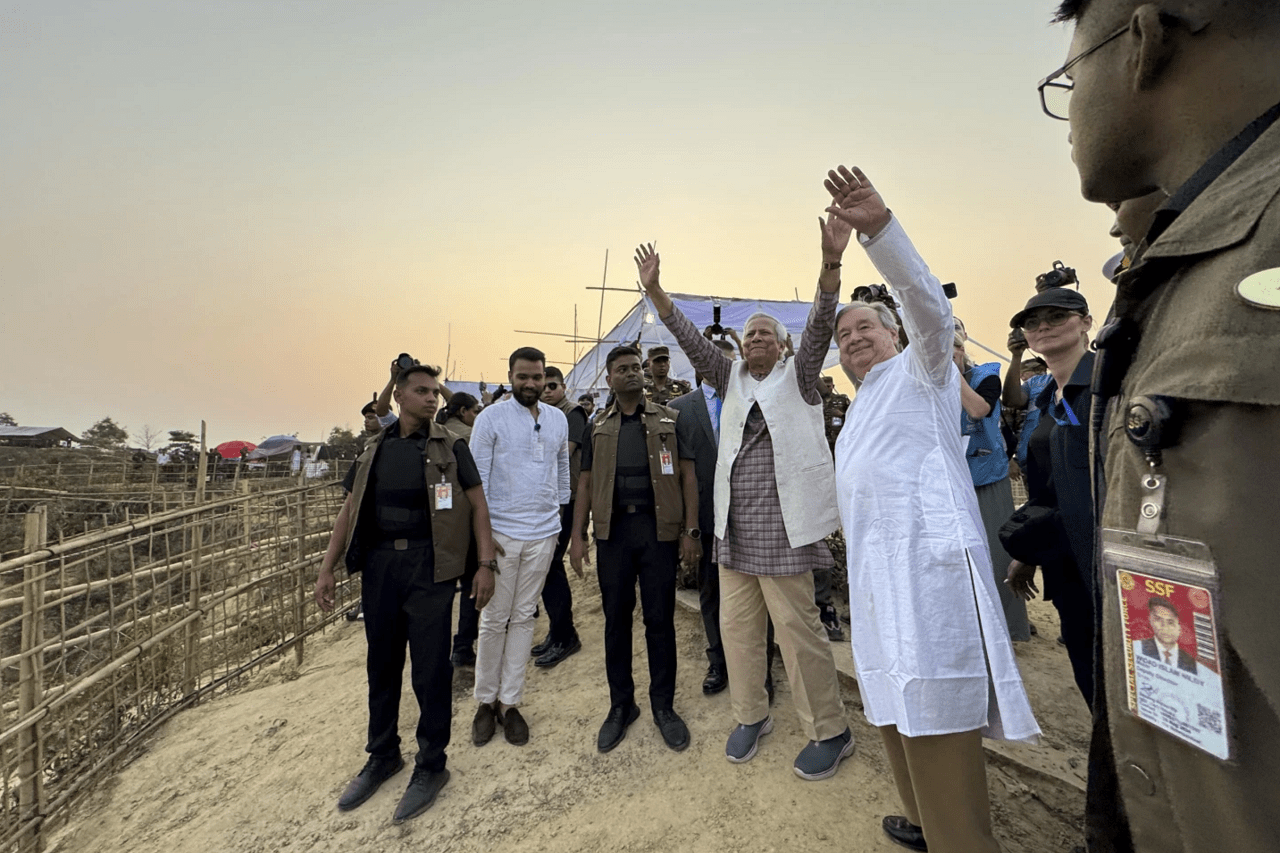
On 14 March 2025, UN Secretary-General António Guterres and Chief Adviser Muhammad Yunus visited the Rohingya camps in Cox’s Bazar, where Yunus assured refugees they could celebrate next year’s Eid back in their homes in Rakhine State. Yet UNHCR data shows that between April and August 2025, more than 53,000 Rohingya fled war-torn Myanmar and arrived in Bangladesh.
Since the Htan Shauk Khan massacre, more than 150,000 Rohingya have fled to Cox’s Bazar, UNHCR data shows. But in January 2024, President Donald Trump suspended US-funded projects worldwide, cutting monthly allowances and free schooling once available to refugees.
As of 14 July 2025, over 400,000 people remain displaced in Rakhine, many seeking to escape the war. With camps overcrowded, around 10,000 victims from Buthidaung and Maungdaw now pay Tk3,000–5,000 for bamboo huts outside Ukhiya’s settlements.
UNHCR Bangladesh told TIMES that the Rohingya community, already stripped of everything, now faces a severe funding crisis that threatens essential services – from food and healthcare to education and shelter. Without urgent support, families risk hunger, the sick may lose access to treatment, and shelters could collapse in the monsoon. Continued international aid is critical to safeguard their survival and dignity until lasting solutions emerge.

The testimony is stark and chilling in its detail. Yet it may never be investigated, much less prosecuted. The Rohingya, denied citizenship and forced into exile, have little power to demand accountability.
At a 25 September panel in New York – “Global Refugee Asylum System: What Went Wrong and How to Fix It,” hosted by US Deputy Secretary of State Christopher Landau – Khalilur Rahman, Bangladesh’s high representative on Rohingya issues, pointed to photographs from the Arakan Army showing its troops with Rohingya villagers as evidence of progress. Contradicting the facts, he said the group, now controlling up to 90 per cent of Rakhine, has begun re-engaging with Rohingya communities.
“This is a rare opportunity for the world to act decisively,” he told the panel. “Please help them go home. Spend a fraction of what is being spent here inside Myanmar so they can restart their lives and reclaim their future.”
But rights groups urged caution. “No government should be pushing for premature or coercive returns, which would only set the stage for the next devastating exodus,” said Shayna Bauchner, Asia researcher at Human Rights Watch. “Instead, they should demand an end to abuses and real accountability for the crimes driving this crisis.”
Joe Freeman, a Myanmar researcher with Amnesty International, added: “Existing conditions in northern Rakhine State are nowhere near ready for Rohingya to return safely.”
Against this backdrop, a high-level UN conference is taking place in New York on the condition of Rohingya Muslims and other minorities in Myanmar. But in a sweltering bamboo hut in Cox’s Bazar, Arofa is haunted by her children’s last moments.
“I touched them with my own hands,” she said. “I saw my son still moving, and they shot him again. I saw my daughter riddled with bullets.” She dabbed her eyes with her scarf. “I wish at least one of my sons had lived. I lost everything. I tell my story so the world will know – so the world will deliver justice to the Rohingya.”