


A mound in Manirampur Upazila of Jashore has revealed the remains of a settlement over 1,800 years old, reflecting the coexistence of Buddhist, Jain and later Islamic influences.
Locally known as Damdam Pirsthan Dhibi, the site is located in Donar village under Bhojgati Union, approximately six kilometres from Manirampur bazar. Long believed to date from the Sultanate period, formal archaeological excavations have shown it to be far older, originating around the second or third century AD.
The discovery dates back to 1986, when locals digging soil for a madrasa unearthed intricately laid ancient bricks. The news quickly drew attention, prompting the Department of Archaeology to begin formal excavations in the 2004–05 fiscal year.
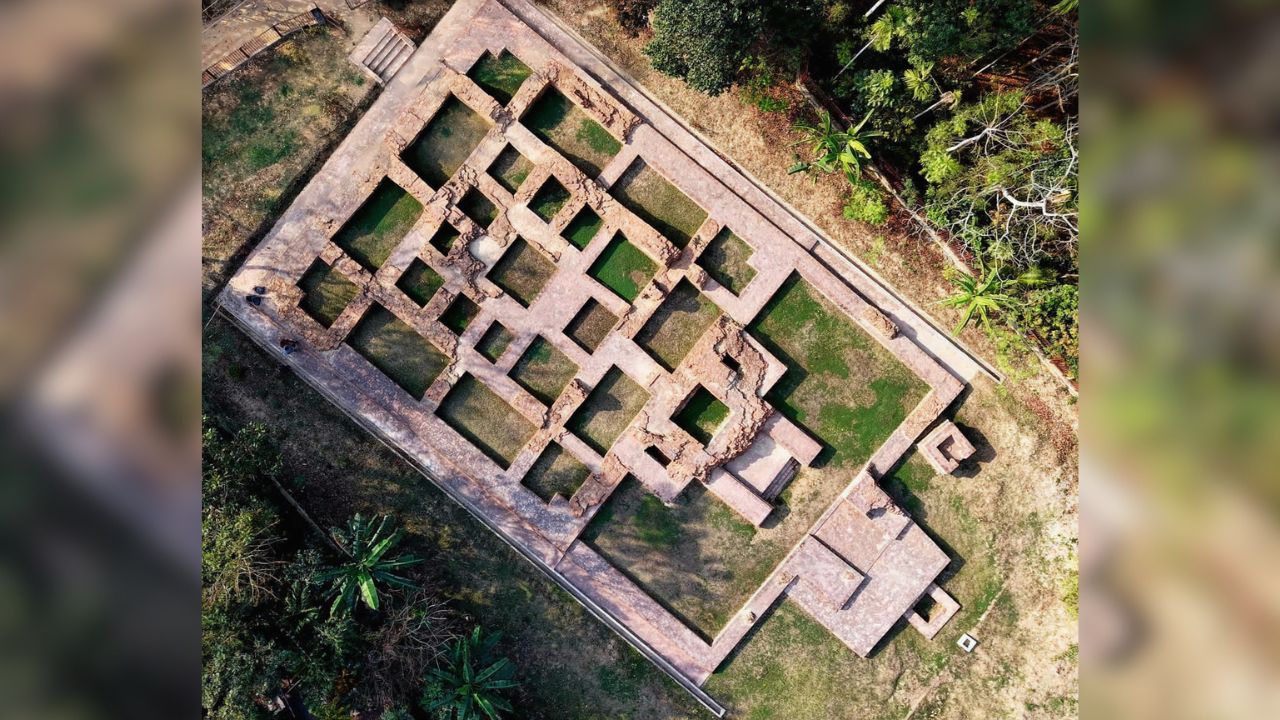
Initial excavations revealed eight roofless rooms, later expanding to 18 chambers over four years. Further investigation indicated that the temple complex was constructed in two distinct phases: the first as a square structure, and subsequently extended eastwards into a rectangular plan to increase the sanctified area. The inner sanctum contained 24 small and large chambers, demonstrating advanced architectural sophistication for the period.

Artefacts recovered at the site include a small stone Buddha, terracotta plaques, lotus-patterned bricks, serpent-motif vessels, and an idol believed to represent the 13th Jain Tirthankara Mallinath. Rare objects such as antimony sticks and rouletted pottery from the second or third century AD were also discovered. Archaeologists say these findings confirm that the site functioned as a place of worship for both Buddhist and Jain communities.
Over time, the temple fell into disuse, and the area became deserted. Subsequently, a Sufi figure reportedly established a shrine here, giving rise to its present identity as a pirsthan. Local residents say the name “Damdam” comes from a hollow sound once heard when walking over the mound.



Adjacent to the mound lies a large reservoir known as Kumari Dighi, surrounded by folklore. Local belief held that offerings made by young women at a well on its edge would miraculously return in the form of golden vessels, a tradition that has largely faded.
A rare species of tree, believed to have been planted 1,800 years ago, still survives at the site. The tree appears lifeless for six months each year but blooms with fragrant flowers for the remaining half, a phenomenon not observed elsewhere in Bangladesh.
A researcher from the Department of Archaeology involved in the excavation said: “Each layer of soil tells the story of a different era. The discovery of rouletted pottery from the second century is particularly significant. It indicates that a highly organised and culturally advanced settlement existed here nearly two millennia ago.”
Eighty-year-old local resident Abdul Quddus recalled: “As a child, I was afraid of the mound. Elders told us a golden city lay beneath the thick jungle. Seeing the ancient rooms today, it is astonishing to realise the depth of history beneath our feet.”
The site has now become a growing attraction for both tourists and researchers. Experts believe that if developed as a heritage and tourism centre, Damdam Pirsthan Dhibi could become one of Bangladesh’s most significant archaeological destinations.
Today, the mound stands as a living testament to the country’s rich civilisational heritage, its buried stories whispering the remarkable history of Manirampur and beyond.