Iran appeared to reject a US proposal aimed at ending the ongoing war, describing it as “extremely maximalist and unreasonable,” according to Iran’s state broadcaster Press TV, citing a senior political-security official.
A high-ranking diplomatic source confirmed that Tehran received the 15-point plan from Washington but responded negatively, signaling a widening gap between the two sides.
Meanwhile, the death toll from the conflict across the Middle East has reportedly surpassed 4,500, with no signs of de-escalation. Airstrikes on Iran continue, alongside Iranian drone and missile attacks targeting Israel and US allies.
Tehran sets conditions for ending war
Pakistan reportedly delivered President Donald Trump’s proposal, which included US-Israeli demands and incentives to halt the conflict.
However, Iranian officials have made clear that any resolution must go beyond a temporary ceasefire.
“Iran will end the war when it decides to do so and when its own conditions are met,” a government official told Press TV.
According to the report, Tehran has outlined key conditions, including a complete halt to “aggression and assassinations”, concrete guarantees preventing future attacks, compensation for war damages and reparations, an end to hostilities across all regional fronts involving allied groups, and international recognition of Iran’s sovereign authority over the Strait of Hormuz.

Iranian officials have dismissed the US proposal as “deceptive” and lacking credibility, accusing Washington of shifting its positions.
While no indirect talks have taken place since February 28, officials confirmed that messages continue to be exchanged through mediators.
Strikes intensify across the region
Fighting has continued unabated, with both sides escalating military operations.
An Israeli military official said operations remain “business as usual,” despite diplomatic efforts. Israel reportedly carried out fresh strikes on Iranian targets, including ship and submarine construction facilities.
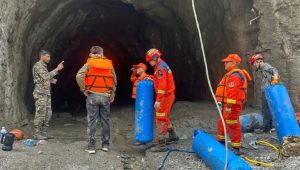
Iranian media reported that a residential area in Tehran was hit, with rescue teams searching through rubble.




Elsewhere in the region
Kuwait and Saudi Arabia reported intercepting drone attacks.
A fuel tank at Kuwait International Airport was struck, causing a fire but no casualties.
Iran’s Revolutionary Guards claimed responsibility for new strikes targeting Israel and US bases in Kuwait, Jordan, and Bahrain.
Since the launch of what the US calls “Operation Epic Fury,” Iran has also targeted countries hosting US bases and effectively restricted traffic through the Strait of Hormuz—a vital route for roughly one-fifth of global oil and liquefied natural gas supplies.
Tehran has told international bodies that non-hostile vessels may pass through the strait with coordination, though in practice access remains highly limited.
Pentagon shifts to ‘wartime footing’
The Pentagon has announced plans to ramp up production of key defence systems and munitions.
In a statement, the US Department of Defense said it would accelerate production of precision strike missiles and components for the Terminal High Altitude Area Defense (THAAD) system, designed to intercept high-altitude threats.
Defence Secretary Pete Hegseth has called for placing the US defence industrial base on a “wartime footing,” with increased output of navigation systems and electronic warfare capabilities.
Iran warns US over troop movements
Iran’s Parliament Speaker Mohammad Bagher Ghalibaf said Tehran is “closely monitoring all US movements in the region, especially troop deployments.”
“Do not test our resolve to defend our land,” he warned in a social media post.
US media reports indicate that troops from the 82nd Airborne Division may be deployed to the region, although official confirmation remains limited.
Trump approval rating drops sharply
In the United States, political fallout from the war is becoming evident.
A Reuters/Ipsos poll conducted over four days shows President Donald Trump’s approval rating has dropped to 36%, down from 40% the previous week—marking its lowest level since his return to office.
Public dissatisfaction appears driven by rising fuel prices and concerns over the economic impact of the war.
Only 25% of respondents approved of Trump’s handling of the cost of living, while just 29% supported his management of the economy—figures that underscore growing domestic pressure.
India resumes Iranian energy imports
Amid shifting geopolitical dynamics, India has resumed importing Iranian liquefied petroleum gas (LPG) for the first time in years following a temporary easing of US sanctions.
A sanctioned tanker carrying Iranian LPG is expected to arrive shortly at the port of Mangalore, with supplies to be distributed among Indian Oil Corporation, Bharat Petroleum Corporation, and Hindustan Petroleum Corporation.
India had halted such imports in 2019 under Western pressure but is now among the countries most affected by disruptions in energy shipments through the Strait of Hormuz.