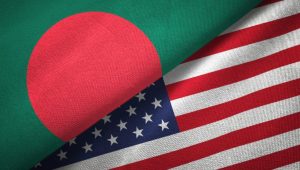
Tehran and Washington have signed a memorandum of understanding to end the US and Israel’s war on Iran.
US President Donald Trump signed the “memorandum of understanding” electronically on Wednesday to end the war, as did Iran’s President Masoud Pezeshkian, bringing it into effect two days earlier than previously expected. It calls for the immediate opening of the Strait of Hormuz and lifting of a US blockade on Iran’s ports.
According to the 14-point MoU, US and Iranian negotiators are due to meet in Switzerland on Friday after nearly four months of war to forge a final settlement within the 60-day window laid out in the agreement.
The memorandum explicitly calls for an end to the war in Lebanon. However, Israel, which launched an invasion in March and has since seized a large swathe of southern Lebanon in its pursuit of Hezbollah militants, was excluded from the negotiations.
Israeli Prime Minister Benjamin Netanyahu, who helped convince Trump to launch the war, has insisted Israel is not bound by any US-Iran agreement in its fight against Iran-aligned Hezbollah in Lebanon. Although hostilities there have eased since Trump rebuked Netanyahu this week, further escalation could threaten the talks. Iran says the deal also requires a ceasefire in Lebanon.
The 14-point deal
The United States and Iran have signed the interim Islamabad Memorandum of Understanding (MoU) aimed at ending the conflict and paving the way for a comprehensive peace agreement within 60 days.
Under the MoU, both sides agreed to an immediate and permanent ceasefire across all fronts, including Lebanon, and pledged not to use or threaten force against each other while respecting sovereignty and territorial integrity.
The United States committed to lifting its naval blockade of Iran, withdrawing forces from areas near Iran after a final agreement, suspending new sanctions, issuing waivers for Iranian oil exports, and working towards the eventual removal of all sanctions.
Washington also pledged, together with regional partners, to support a $300 billion reconstruction and economic development plan for Iran and facilitate the release of frozen Iranian assets.
Iran agreed to ensure safe passage of commercial vessels through the Persian Gulf and Strait of Hormuz, maintain the current status of its nuclear programme during negotiations, and reaffirm that it will not develop or acquire nuclear weapons. Both sides agreed to work with the International Atomic Energy Agency (IAEA) on Iran’s enriched uranium under a mutually agreed mechanism.

A joint mechanism will monitor implementation of the MoU, maintain the status quo during negotiations, and seek endorsement of the final agreement through a UN Security Council resolution.
The new reality
The world before the US-Israel military campaign against Iran and the one emerging after the 17 June agreement are markedly different. The war has reshaped strategic calculations across the Middle East and beyond, with implications extending far beyond the battlefield.
The conflict has challenged long-standing assumptions about American military dominance, regional power balances and the global security architecture.
For Bangladesh, the implications are significant. The shifting geopolitical landscape is likely to influence diplomatic alignments, trade flows, energy security and defence planning. It will also reshape relations among states and broader global security structures.
For Bangladesh, the ceasefire brings relief. A prolonged conflict would have increased pressure on the economy, energy imports, overseas employment and foreign relations. While short-term shocks remained manageable, a prolonged war could have created far greater risks.
Governments worldwide are now reassessing strategies in response to this evolving geopolitical order.


Military power and asymmetric warfare
For decades, the United States has remained the world’s leading military power, with Israel also regarded as a dominant regional force. However, the conflict demonstrated that overwhelming military capability does not guarantee strategic success.
Despite sustained operations by Washington and Tel Aviv, Iran responded with drones, missiles and relatively low-cost indigenous weapons, showing resilience and operational endurance.
The war reinforced a key lesson in modern conflict: smaller powers can offset technological disadvantages through asymmetric tactics, strategic preparation and the ability to absorb sustained pressure. It also highlighted the high economic and political costs of prolonged warfare for militarily superior states.
Reports also suggested Iran received varying degrees of political, intelligence and diplomatic support from China and Russia, reflecting broader geopolitical competition around the conflict.
Changing attitudes towards Israel
The war has also influenced international perceptions of Israel.
While Israel has long enjoyed strong Western backing despite criticism over Gaza and other operations, the latest conflict exposed divisions among its traditional allies.
The United States expressed frustration over certain Israeli actions, while several European countries adopted more critical positions on its military operations and humanitarian record.
Although Israel retains international support, its diplomatic standing has become more contested than in recent years.
Security architecture under question
The conflict has raised questions about the credibility of the United States as the principal global security provider.
For decades, Washington has guaranteed maritime security and maintained extensive defence partnerships across the Gulf. Regional allies invested heavily in US defence systems and hosted military bases under the assumption of guaranteed stability.
The Iran conflict has prompted Gulf states to reassess those assumptions. While they are unlikely to abandon US partnerships, there is growing emphasis on strategic diversification and self-reliance.
Middle East power dynamics
The regional balance of power is shifting.
Iran, long diplomatically isolated by many Arab states, has demonstrated significant military capability despite years of sanctions. Regardless of differing interpretations of the war’s outcome, Tehran has reinforced its position as a major regional power.
Its influence through allied non-state actors, including the Houthis in Yemen and Hezbollah in Lebanon, continues to shape regional security dynamics.
This evolving environment is expected to prompt regional actors to recalibrate their foreign and security policies.
Implications for Bangladesh
Bangladesh has managed the immediate economic impact of the conflict relatively well.
Higher energy prices and disruptions in fertiliser supply created pressure on the economy, but assistance from partners, including India, helped stabilise supplies.
Remittance inflows remained strong. Between January and May, Bangladesh received over US$16.7 billion, compared with US$13.7 billion in the same period last year. The rise may reflect precautionary transfers by expatriates in the Gulf and seasonal remittances linked to Eid.
Labour migration slowed, with overseas employment in the Gulf declining to about 314,000 during the first five months of the year. While the UAE, Oman and Bahrain remained largely closed to Bangladeshi workers, Saudi Arabia, Kuwait and Qatar continued recruitment.
Recruitment is expected to recover as Gulf economies stabilise after the disruption.
Diplomatically, Bangladesh maintained close engagement with Gulf states. High-level communications and visits reflected Dhaka’s efforts to remain actively engaged in regional diplomacy. Adviser to the Prime Minister Humayun Kabir visited several Gulf countries, signalling solidarity that was well received. A future visit by the Prime Minister to a Gulf state is also anticipated.
Bangladesh also supported international efforts to end the conflict.
Defence lessons for Bangladesh
The most significant lesson for Bangladesh lies in defence planning.
The conflict around the Strait of Hormuz has highlighted the vulnerability of conventional naval forces in modern warfare. Large surface vessels are increasingly exposed to precision missiles, drones, submarines and naval mines.
For maritime countries such as Bangladesh, which must protect extensive coastal areas and maritime resources, this underscores the need to rethink defence priorities.
Rather than relying primarily on expensive surface fleets, Bangladesh may benefit from a more cost-effective maritime strategy focused on coastal missile systems, drones, submarines, surveillance networks and sea-denial capabilities tailored to its geography.
Modern warfare increasingly rewards flexibility, resilience and affordability over sheer military size. For Bangladesh, the shifting security environment offers an opportunity to rethink defence planning while strengthening diplomatic engagement in an uncertain world.