
Criticising the central bank’s proposed merger of five ailing Islamic banks, speakers at a roundtable discussion feared that the largest nationalised merged Sariah-based bank could turn into a largest problem lender.
Their fears come as the country’s previous experience of merging two state-owned banks into one bank was not good while performances of the existing public commercial banks are largely questionable.
Under such circumstances, they think that merging of five financially weak unconventional banks under the government’s ownership through injecting public funds could further intensify the problems in the coming days.
The worry comes at a roundtable discussion on Tuesday, titled “Transition of Banking Sector in Bangladesh: Challenges and Way Forward”, jointly organised by the banking and insurance department of the University of Dhaka and the Policy Think and Economic Research Centre (PTERC) at the university.
Dr Toufic Ahmad Choudhury, former director general of the Bangladesh Institute of Bank Management (BIBM), expressed serious concern about the merger plan.
“These five troubled banks could become an even bigger problem in the future since there is no real synergistic effect among them. The banking sector must be managed in line with international standards, not through makeshift solutions,” he said.

Choudhury, now director general of Bangladesh Academy for Securities Markets, said the country needs a much stronger central bank with full authority. Dual regulations must end and there should be a clear legal framework giving full regulatory responsibility to Bangladesh Bank.
Speaking as chief guest, Bangladesh Bank deputy governor Dr Md Kabir Ahmed said merger was not their first choice, it was liquidation. However, liquidation would mean that shareholders and depositors would get nothing, which could dampen public trust in the banking system.
Considering political and social consequences of the liquidation, he said they have chosen the second option of merger as a resolution to the financially weak banks.




He said merging the five troubled banks is the best possible alternative. Before moving forward, the central bank conducted a six-month-long study to evaluate the merger’s feasibility. There is nothing to be worried about – this will result in a strong, well-established Islamic bank.
We expect the merged entity to start making profits within a year, as the plan has been thoroughly designed and stress tested.”
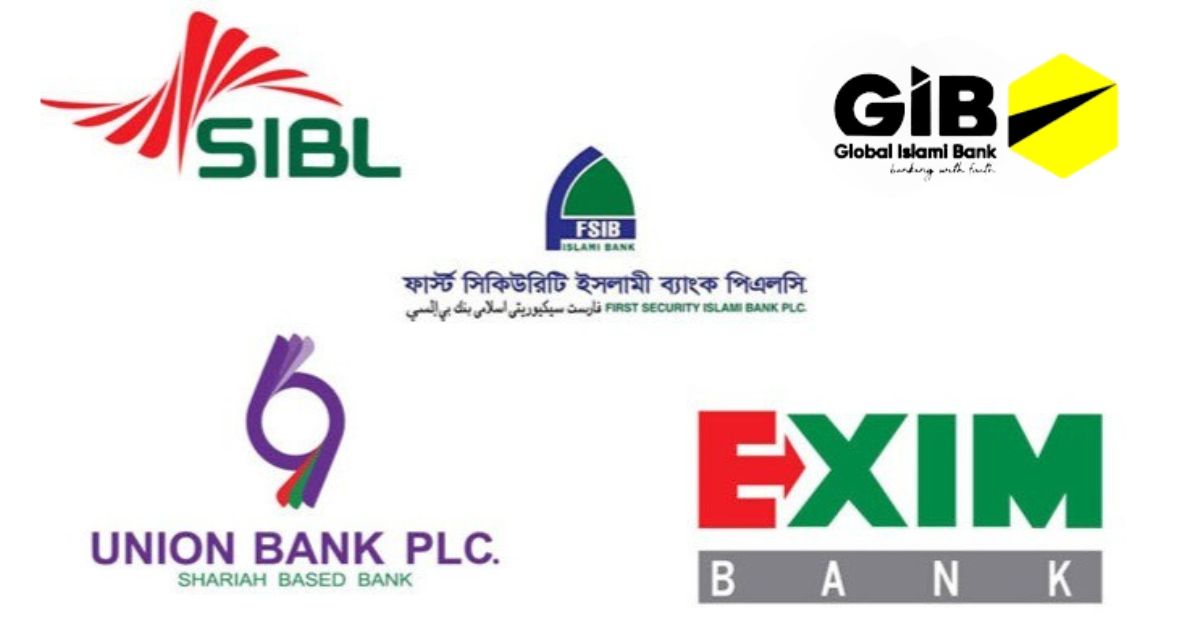
Under the newly enacted Bank Resolution Ordinance 2025, Bangladesh Bank has initially decided to merge Social Islami Bank, Global Islami Bank, First Security Islami Bank, Union Bank, and EXIM Bank.
He said the central bank is also setting up a Bank Resolution Fund to deal with future merger and acquisition-related issues.
Bangladesh Bank Executive Director Dr Md Ezazul Islam said, “Since our liberation war, we have often introduced regulations only after problems emerged, instead of taking preventive measures”.
“The central bank has been taking decisions independently in the last one year and we’re getting the outcomes. We must ensure this independence is sustained,” he said.
Islam acknowledges the existing gaps in traditional supervision and good governance.
“To address these, we have formed dedicated monitoring teams — and we are confident that we will overcome these challenges once again,” he added.
Faruq Mayeenuddin Ahmed, vice chairperson of Brac Bank Limited, said, “The troubled banks have already created five separate holes, and these might eventually create one large hole in the financial system. We need to think critically and research deeply to find sustainable solutions to fill the holes.”
“We must first categorise and separate non-performing loans like looted and anonymous loans. Independent directors must be truly effective and not merely chosen for compliance or convenience,” he added.
Ahsan Ullah, an adviser to the Bangladesh Bank governor, said that once the merged bank reaches its break-even point after commencing operations, the central bank plans to move toward its privatisation.
He also underscored the importance of ensuring Bangladesh Bank’s institutional autonomy to strengthen regulatory effectiveness.
The keynote paper was presented by Md Mazadul Haque, chairman of the PTERC, while the discussion was moderated by Dr Md Shahidul Islam, professor and chairman of the banking and insurance department of Dhaka University.