The Forum for Women’s Political Rights called for meaningful representation of women in national politics.
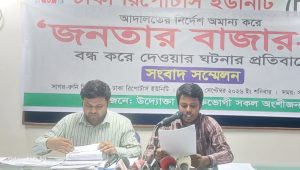
Speakers made the call on Thursday at a conference organised by the Forum for Women’s Political Rights at the Krishibid Institution in Khamarbari, Dhaka.
Speakers at the event emphasised that women continue to face inequality in politics. They warned that political parties that ignoring women’s voices could lead to significant backlash from millions of women voters seeking real change.
The forum has held discussions with the election and national consensus commissions to ensure effective women’s representation in parliament.
It also proposed amendments to the Representation of the People Order (RPO) call for mandatory women candidates, 33% women’s leadership in parties, and safe election participation.
At the conference, six key demands were reiterated – proportional women’s representation, direct election of women in 100 reserved seats by 2026, mandatory 33%-50% women nominations, state-funded campaign expenses, clear legal roles for women leaders, and strong Election Commission measures against violence and harassment.

Speaking at the event, Sharmeen S Murshid, Advisor on Children and Women Affairs, called for ensuring meaningful participation of women in national politics. She also mentioned that a proposal has been made to the Election Commission to arrange state-funded election expenses for female candidates.
She said, “Even after democratic changes, women are still not being properly valued. Political parties are evaluating women based on only 5% to 10% of the seats. This is also something we must witness.
“However, I would say that in the upcoming election, women must contest as independent candidates beyond party lines. At least 10 women should be selected as strong contenders.”




Farida Akhter, Advisor on Fisheries and Livestock, stated that in the upcoming election, women must be directly nominated for 50% of the general seats. She added, “Promises to fulfill this demand in the future are mere deception.
“The lack of women’s representation in the Consensus Commission is also shameful.”
She reiterated, “In the upcoming election, women must be directly nominated for 50% of the general seats. Future promises to meet this demand are deceptive. The disregard for women in the Consensus Commission is also shameful.”
Barrister Sara Hossain said, “We want candidates from all parties and ideologies to have the opportunity to participate in the election, and we want to ensure equal participation of men and women. For those coming through political parties, if a second chamber is established, it should include representatives from various professions and cultural backgrounds.”
She further stated, “I believe women’s participation alone is not enough. We are demanding women’s participation because we believe inequality must be addressed.”
Zonayed Saki, chief coordinator of Ganosamhati Andolon, said that although women’s participation in various professions in the country is increasing, it is still limited in politics.
“Even in fields like medicine and universities where women are excelling, the political environment remains extremely hostile for them. On Facebook, we see daily how politically active women are subjected to bullying. Even the behavior of many leaders’ supporters doesn’t align with their words,” he said.
Emphasizing the importance of women’s participation in politics, he said, “If women don’t enter politics, this environment will never change.”
Samanta Sharmin, Senior Joint Convenor of the National Citizens’ Party (NCP), stated that politics in Bangladesh is still largely male-dominated. She pointed out the clear absence of women in important political platforms like the Consensus Commission.
“Why don’t we see female members in the Consensus Commission? When we look at the pictures of everyone standing together there, it seems as if Bangladesh is still a male-centric country,” she said.
Shima Dutta, president of Bangladesh Nari Mukti Kendra, urged political parties to view women as a vital part of the democratic mainstream. She demanded responsible inclusion of women in candidate selection, manifestos, and leadership structures.
She warned, “There are 60 million women voters in this country. Any political party that tries to move forward by ignoring women will be answered at the ballot box.”
At the conference, speakers highlighted the contributions of women in society and politics. They also called for ensuring equal rights for both women and men.