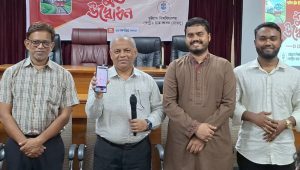

The Chairman of the University Grants Commission of Bangladesh (UGC) Professor SMA Faiz has urged the teachers and students to rise above personal interests and work collectively for the greater welfare of the nation.
He made the call while addressing a workshop on Curriculum Development and Stakeholder Engagement in Social and Behavioral Change (SBC) held at the UGC Auditorium on Sunday. The event was jointly organised by UGC and UNICEF.
UGC Members Professor Mohammad Tanzimuddin Khan, Professor Dr Mohammad Anwar Hossen, Professor Dr Masuma Habib and Prof Dr Mohammad Ayub Islam spoke at the event as special guests. Director (Current Charge), International Collaboration Division of UGC Jesmin Pervin and UNICEF’s SBC Program Manager Md Badrul Hasan also addressed the programme.

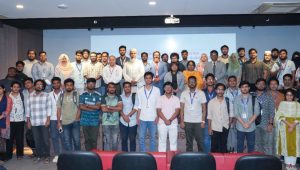
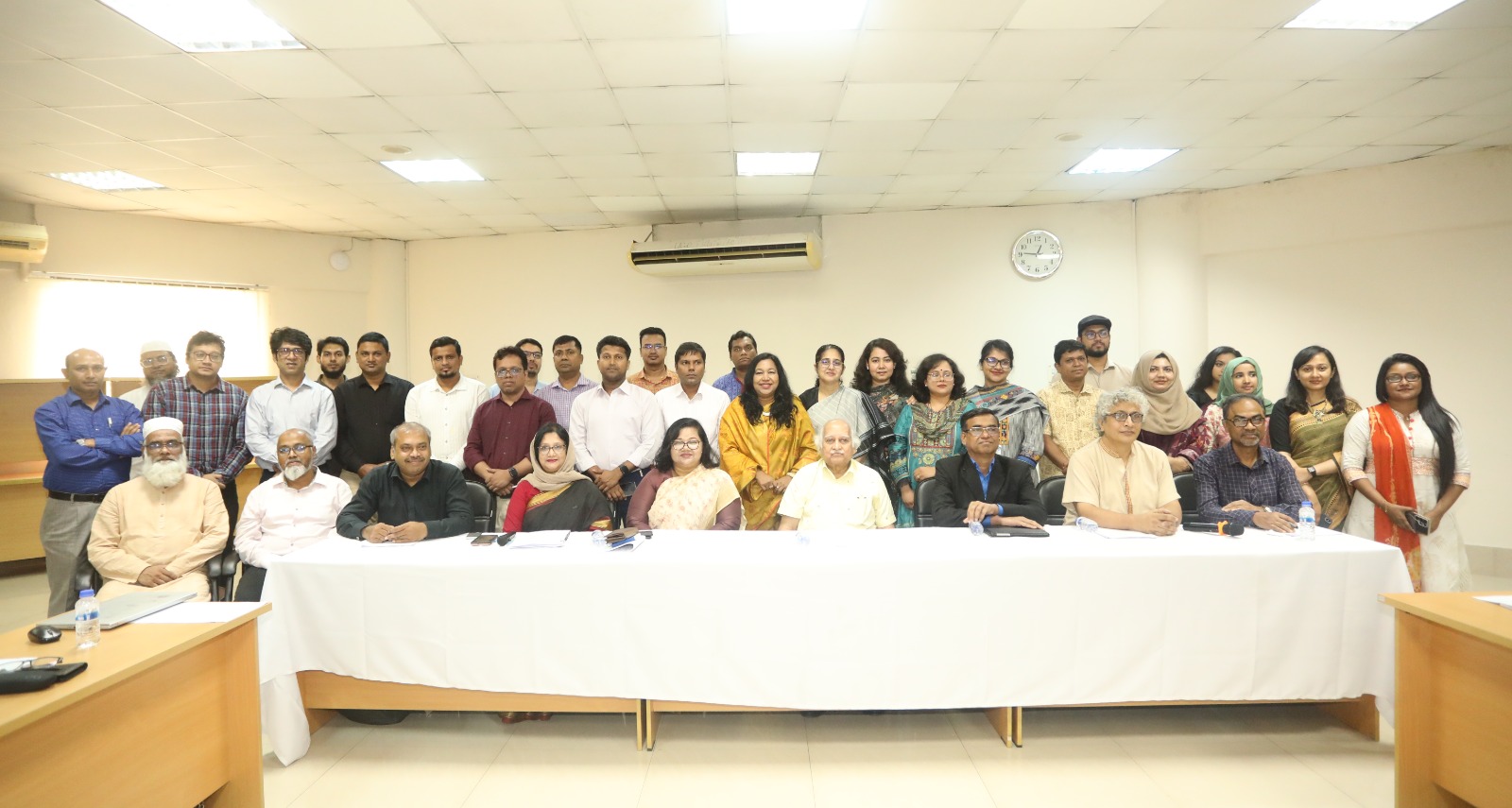
A total of 33 faculty members specialised on SBC from various public and private universities participated in the workshop.
Professor Dr Faiz noted that today’s young generation is remarkably talented and sincere. However, he expressed concern that the potential of students in the post-July uprising period has not been fully utilised. “




In many cases, teachers’ personal interests are being prioritised over students’ welfare,” he said. He emphasised the need to make higher education institutions more student-friendly and to strengthen teacher-student relationships while also putting forward a set of recommendations.
Professor Tanzimuddin Khan stressed that SBC curriculum development must reflect the country’s socio-cultural context. Highlighting the growing impact of virtual communities on everyday life, he suggested that the role of the digital sphere should be incorporated into SBC curriculum design.
Professor Anwar Hossen observed that the SBC project has already achieved several specific goals, including the creation of an SBC research repository and the development of 12 course curricula. He also noted that opportunities for further research in this area are now more accessible.
Professor Masuma Habib described the development of an SBC curriculum as both timely and essential. She pointed out that university teachers, along with other stakeholders in society, must have a clear understanding of the challenges posed by social and behavioral changes as well as strategies for addressing them.
Professor Ayub Islam underscored the importance of integrating SBC into different branches of higher education such as health, environment, and education. He opined that SBC curricula are vital for ensuring meaningful and effective community engagement. He also suggested that universities should have the flexibility to select specific SBC courses from the curriculum according to their institutional needs.