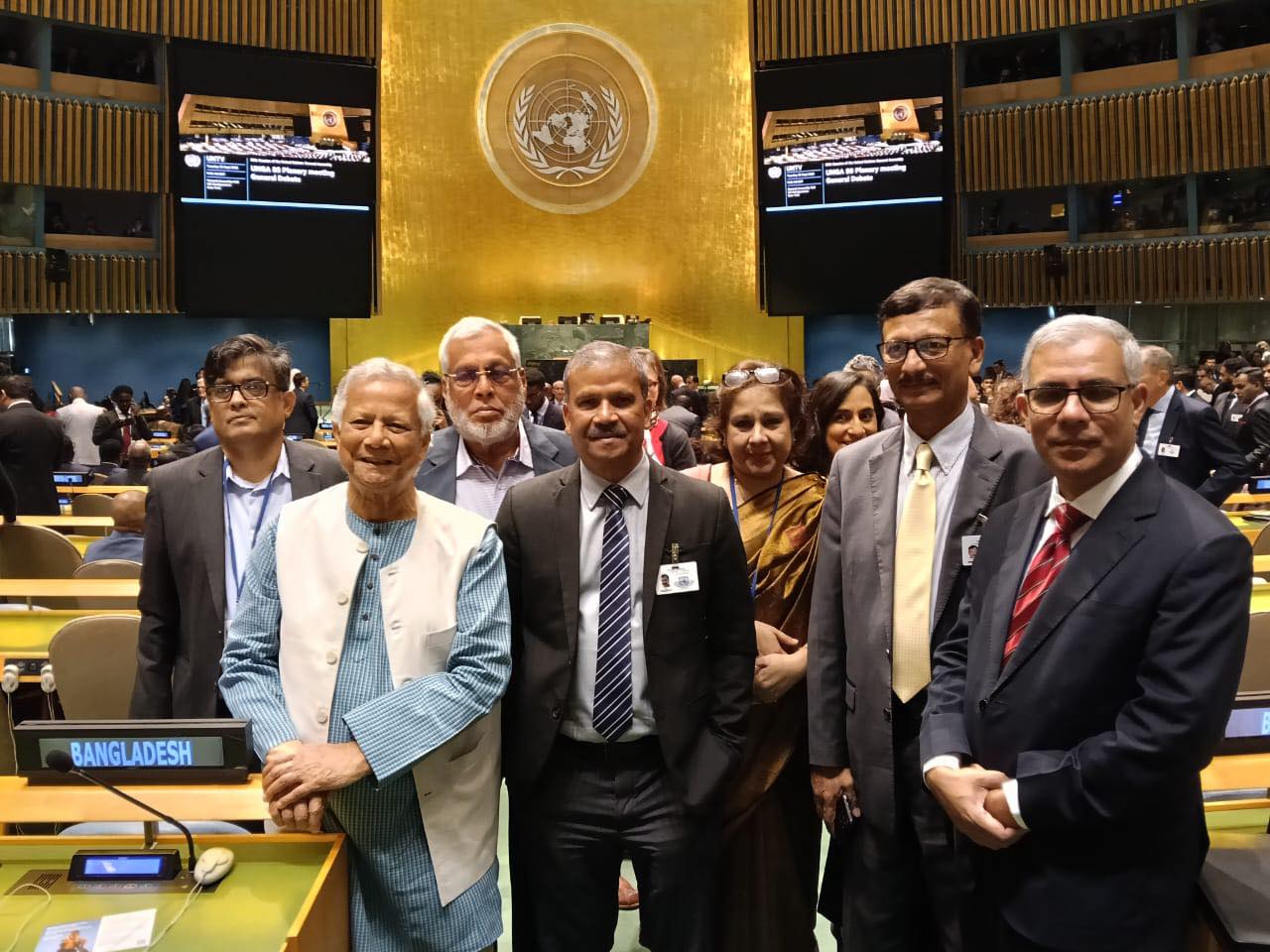

Transparency International Bangladesh (TIB) has raised questions over the interim government sending more than a hundred people, an unusually large delegation, to the 80th session of the United Nations General Assembly (UNGA).
In a press release issued on Thursday, TIB said the continuation of this “embarrassing record” followed the practices of the fallen authoritarian regime, placing Bangladesh among the few countries that sent such a large delegation.
The organisation questioned what message the interim government was attempting to convey by doing so, and to what extent citizens, including taxpayers, could expect tangible benefits.

TIB Executive Director Dr Iftekharuzzaman said that, despite clear directives to prevent wasteful foreign trips funded by taxpayers, the government has raised questions about its credibility by conducting an “inherently contradictory action.”
“During the fallen authoritarian regime, sending large delegations to the UNGA and other international forums was a common practice, sometimes exceeding two hundred representatives,” he said.



He added that it was hoped that a government formed through the unprecedented student and people’s movements – with a strong commitment to transparent, accountable governance and state reform – would avoid repeating this practice.
“Unfortunately, the interim government has followed a similar path,” Iftekharuzzaman pointed out.
He also noted that generally powerful countries such as the United States, Russia, and China send comparatively large delegations to secure their multilateral diplomatic influence, and even then, delegations exceeding a hundred are rare.
By contrast, he said, some countries lacking good governance, such as Nigeria, send large delegations rarely justified by anything other than “junket” in the name of diplomacy.
TIB observed that last year the interim government had set a hopeful precedent by sending only 57 representatives to UNGA, thereby avoiding the waste of public funds. The organisation had expected the number to decrease further this year.
Considering the cost of sending a large delegation with taxpayers’ money and the questionable image it projects internationally, TIB asked what criteria determined the composition of the delegation, whether national interest and meaningful participation were considered, and if the public would receive answers.