
You might hear people say today’s youth are always on their phones. But behind those screens, a generation is reimagining identity, pushing for equity, and refusing to accept the status quo. In Bangladesh, Generation Z, born between the mid-1990 and early 2010, is challenging social norms with boldness impossible to ignore.
They’re diverse, unapologetically vocal, and digitally armed. From making digital art on iPads to street protests, Gen Z turns personal beliefs into political action. And this isn’t just a global trend echoing from the West. It’s happening right here, in Dhaka’s crowded alleys, university campuses, and Instagram stories.
For earlier generations, identity was tied to religion, region, family, and duty. But for the young, identity is fluid and self-defined. Prianka Pereira, a 22-year-old student, says, “Our generation doesn’t stick to fixed labels. We care more about what feels true than what others expect.”
Breaking old norms
Romantic relationships and gender roles are also being rewritten. While society nudges young adults toward early marriage and rigid expectations, this generation questions traditional timelines, focusing more on mutual respect, emotional connection, and partnership rather than just conformity. As Ayishwarja Paul Arpan points out, “We value equality and individuality in relationships, and that doesn’t always align with tradition.”
Patriarchy hasn’t disappeared, but it’s being questioned louder than ever. Conversations about consent, gender roles, and toxic masculinity are gaining traction, especially online. With increased access to feminist literature, podcasts, and global movements, young Bangladeshis are demanding a cultural shift in how relationships and women are viewed.
From memes to movements

What older generations once dismissed as “time pass” has become a platform for protest. Social media is where Gen Z finds its voice. Whether it’s calling out sexism, demanding justice, or speaking out against the Hasina regime’s downfall, platforms like Instagram, Facebook, and TikTok are now the frontline of activism.
Behind those viral posts are deeply rooted frustrations. As Arpan points out, “Memes are our form of artistic expression. Where we see the injustice, we won’t be silent. Through memes, we will voice our concern.”
This generation’s activism is swift, visual and often witty but never shallow. It reflects a collective shift: from passive acceptance to radical awareness.
Mental health
Another overlooked arena where the young are forcing conversation is mental health. Once dismissed as “mood swings” or “weakness,” anxiety, depression, and burnout are now discussed and destigmatised.




Warisha Khan, a 2nd-year university student, says, “We’re not ashamed to talk about our struggles anymore. Our parents were told to toughen up. We’re learning and educating ourselves on self-acceptance and teaching the newer generation (Gen Alpha) to be more accepting towards themselves and others.”
By prioritising mental well-being, this generation is reframing strength not as silence but as openness.
Gen Z and politics
Gen Z may be sceptical of mainstream politics, but they’re far from disengaged. Their activism lives in everyday conversations, digital spaces, and moments of protest.
“I’ve always been very vocal whenever any issue happens,” says Junayed Hasan. “I believe social media should be used to have open discussions and to grow when you’re wrong about something. If you keep your opinions to yourself, you don’t evolve.”
During the July Uprising, this same generation was bold, frustrated, and fiercely connected, which helped ignite a movement. Not just through Instagram Stories or Twitter threads, but through protests, organising and relentless pressure, they stood up to a regime many thought untouchable.
From the 2018 student-led road safety protests to campaigns advocating LGBTQ+ rights, Gen Z addresses once-taboo issues. Dhaka University Press (2023) notes their ideologies lean progressive, emphasising youth empowerment, climate justice, and systemic reform. Where older generations see rebellion, today’s youth see social responsibility.
For a greener future
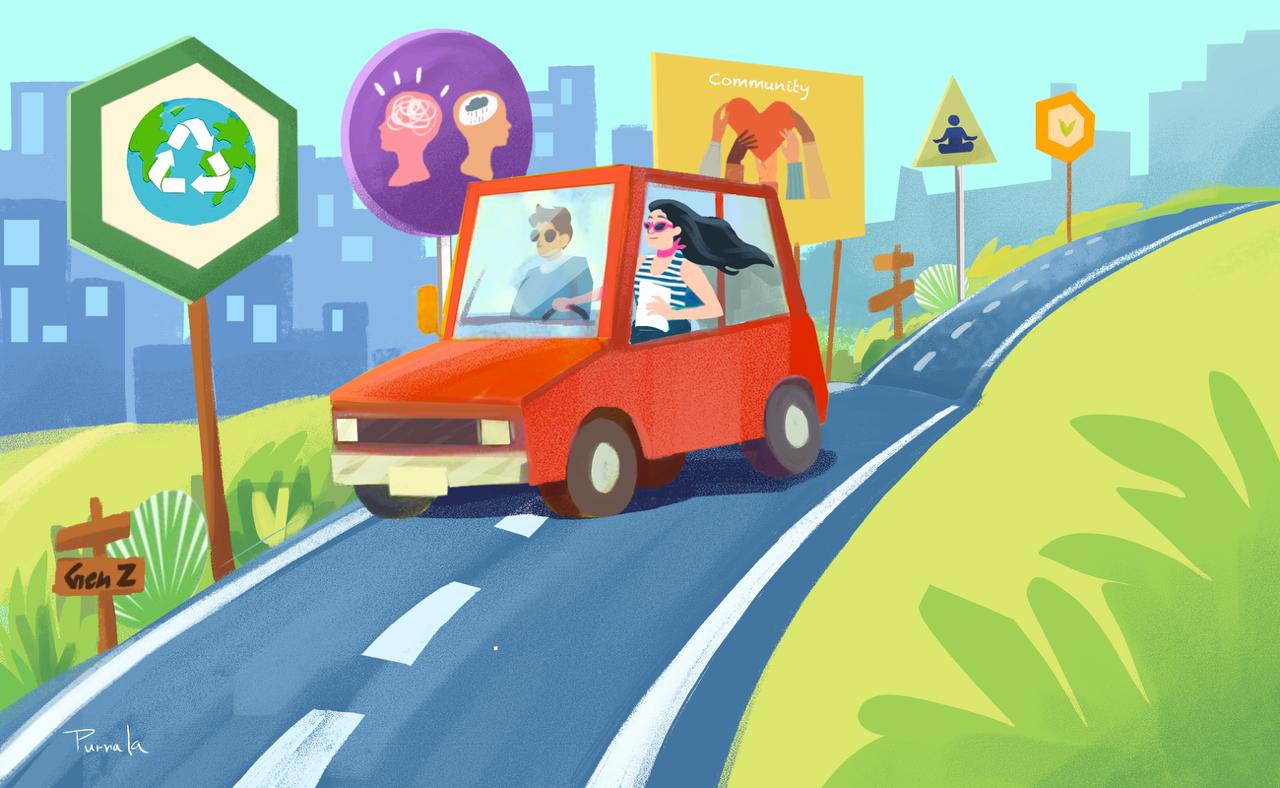
Climate justice unites Gen Z worldwide. In Bangladesh, young people aren’t just aware; they’re anxious, taking action. From organising clean-up drives to awareness campaigns, they step up as the planet’s most passionate defenders. Their activities are not just fuelled by trends but by the real fear of an unliveable future.
In a country vulnerable to climate change, from floods to rising sea levels, young people are refusing to let the issue stay buried under political red tape. From clean-up drives to online awareness campaigns, Gen Z shows that activism can be both local and global.
Faith and freedom
Embracing diversity doesn’t mean abandoning religion. Many young people are navigating the balance between faith and freedom in nuanced ways. They’re finding room for progressive values within personal spirituality, challenging both the stereotypes of secular elitism and rigid orthodoxy.
It’s not about turning away from belief, it’s about deciding which traditions to embrace and which to rethink. “We’re figuring out how to be spiritual in a way that feels true to us,” says Warisha.
Community > Competition
Unlike the individualistic culture of previous decades, Gen Z prioritises collaboration. They’re creating new social startups, launching mental health collectives and building safe spaces for marginalised voices not as side projects, but as essential expressions of their values.
For this generation, activism isn’t just about marching or making noise; it’s about creating lasting, inclusive systems where everyone feels seen and respected. “I want my future workplace to value fairness, diversity and respect. That’s non-negotiable,” says Prianka. “It’s where I will grow, so it needs to reflect the world I want to live in.”
She’s not alone. Many are no longer tolerating judgment or exclusion; they’re confronting it. “Yes, at times I have felt judged for my choices or opinions. It’s a tough feeling, but it also pushes me to be more understanding of others,” added Prianka.
Of course, not every youngster in Bangladesh woke up a warrior. Many grapple with internalised prejudice, generational pressure, or economic limitations. But the difference is they’re talking about it.
Raised amid global crises, climate disasters, a pandemic, and economic instability, they remain surprisingly hopeful. In a country often trapped in political stagnation and social conservatism, the youth are reshaping Bangladesh one conversation, one protest, one post at a time.