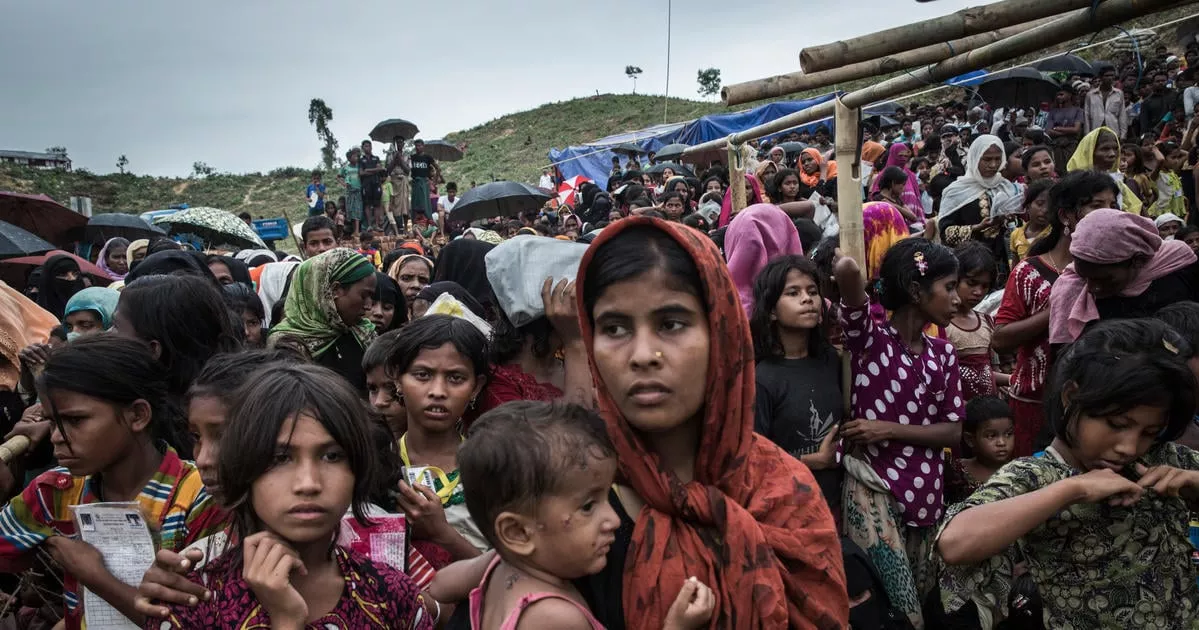

The ASEAN Parliamentarians for Human Rights (APHR) has issued an urgent call for collective regional action to address the worsening humanitarian crisis in Rohingya refugee camps in Cox’s Bazar. Warning of imminent food shortages and growing instability unless ASEAN steps up its role.
At a press conference held at the Dhaka Reporters Unity on Wednesday, the APHR delegation thanked the Bangladesh government for its continued support of the Rohingya despite facing enormous challenges.
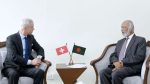
They also acknowledged Chief Adviser Muhammad Yunus for a productive meeting where sustainable solutions to the crisis were discussed.
The visit marks a follow-up to APHR’s 2018 fact-finding mission and aims to highlight the escalating crisis to key regional actors, particularly ASEAN and its member states.

The delegation warned that without swift intervention, the crisis could spiral further, fueling human trafficking, arms and drug smuggling, and destabilising the broader Southeast Asian region.
“The Rohingya crisis is not a distant issue – it is an ASEAN issue,” said Charles Santiago, former Malaysian MP and APHR co-chair.
“Eight years since the crisis began, ASEAN is still not treating this issue as its own. If ASEAN continues to look away, the costs – human trafficking, illicit trade, and growing instability – will be borne by the entire region.”



The World Food Programme (WFP) has already announced that food rations in the camps will run out after November 2025 unless $17 million per month in funding is secured. APHR urged the immediate creation of an ASEAN Humanitarian Fund to deliver life-saving aid and prevent mass starvation.
Wong Chen, Malaysian MP and APHR board member, emphasized that since Myanmar is part of ASEAN, the regional bloc has a moral and political responsibility to act.
“ASEAN Member States, together with the international community, must ensure food security for the 1.3 million Rohingya refugees. With USAID cutting support, the need is urgent and immediate.”
Beyond humanitarian assistance, APHR also stressed the importance of long-term support, particularly in education. They called for accredited schooling and vocational training programs for Rohingya children and youth, in partnership with the Government of Bangladesh.
Raoul Manuel, a former Philippine legislator and APHR member, highlighted the urgent need to empower Rohingya youth.
“They cannot remain trapped without access to education and skills. Their future – and the future of a peaceful, democratic Myanmar – depends on equipping them with the tools to live with dignity.”
APHR praised the Philippine government for offering scholarships and higher education opportunities to Rohingya students and urged other ASEAN countries to follow suit.
The delegation also called for the establishment of a dedicated ASEAN platform on the Rohingya issue, which would facilitate high-level dialogue and a unified action plan rooted in the principle of burden-sharing.