


Perhaps a necessary tragedy of existing in a hyper-connected world is realising that someone else’s political theatre across the Atlantic invariably may play out on the streets and political hallways of Dhaka.
Every couple of years, as November approaches, we are expected to tune in, watch the cable news pundits gesture wildly at multi-coloured maps, and pretend that the democratic machinery of the United States operates on a plane of elevated morality.
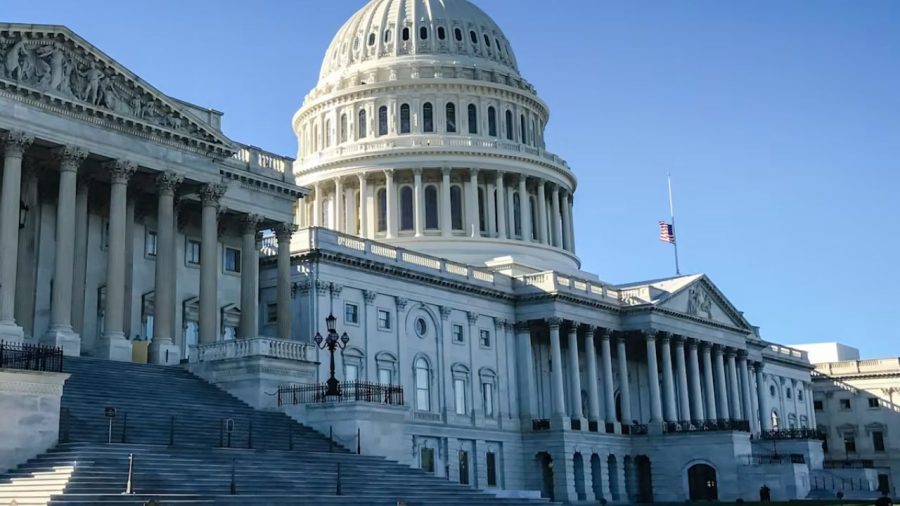
On 3 November, Americans will head to the polls for midterm elections that, for once, the rest of the world is watching with an anxious and exhausted eye. Every single seat in the House of Representatives is technically up for grabs, alongside 35 Senate seats and dozens of governorships.
The historical rule of thumb is simple enough: whichever party holds the White House usually bleeds ground during the midterms. This year, that pattern looks less like a gentle slide and more like an impending avalanche.
On paper, the math seems straightforward: Democrats require a net gain of just three seats to recapture the House gavel. But arithmetic in American politics is rarely pure.
Republican-drawn district maps across several Southern states threaten to blunt that statistical advantage (gerrymandering, after all, is just legalised voter curation).
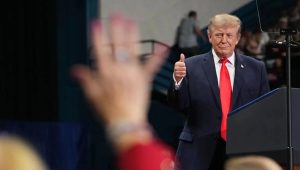
Keep this in mind: President Trump’s approval rating sits somewhere between 29 and 35 per cent.
This is some of the lowest in American presidential history.

The Senate, as usual, presents a far trickier labyrinth. With Republicans holding the majority, Democrats need a net gain of four seats to claim outright control. A 50-50 deadlock would leave the tiebreaking vote in the hands of Vice President JD Vance.
Which states are in play?
At present, five races are locked in toss-up territory:
In Maine: Republican Susan Collins, doggedly pursuing a sixth term, finds herself locked in a bitter clash against Democrat Troy Jackson. This is after the rather melodramatic ouster of previous Democratic candidate Graham Platner.
In Michigan: Abdul El-Sayed, having survived a grueling Democratic primary against Representative Haley Stevens, now faces Republican Mike Rogers. Blatant, inexcusable, Islamophobic attacks against El-Sayed continue, including from the president, who called him a Jihadist.
In Ohio: Republican Senator Jon Husted is defending his turf against former senator Sherrod Brown.




In Texas: Progressive state legislator James Talarico is challenging the entrenched Republican Attorney General Ken Paxton.
In Alaska: Representative Mary Peltola takes on Republican Senator Dan Sullivan, in a contest delightfully muddied by an independent candidate sharing a near-identical name.
Elsewhere, Democrats hold comfortable leads in Georgia (where Jon Ossoff defends his seat), North Carolina (where former governor Roy Cooper remains the clear favourite), and New Hampshire (with Chris Pappas running strong).
Then there is South Carolina, the most bizarre contest on the ballot. Following the death of Senator Lindsey Graham in July, his sister, Darline Graham, was sworn in to complete his term. She is now defending the seat against paediatrician Annie Andrews.
For the average American voter, the stakes are not about abstract geopolitical grandstanding; they are about the mundane, crushing weight of daily expenses. You cannot create an economic hell, wrap it in a consumerist screensaver, and expect people to be thankful.
The chief complaint across the nation is the cost of living. Out in Kansas, farmers are grappling with skyrocketing diesel and fertiliser bills linked directly to the ongoing war in Iran, compounding the pain of ongoing global trade disputes.
Should a Democratic House come to fruition, it will not be able to rewrite national policy single-handedly; any legislation still requires the president’s signature. What it will inherit, however, is the presumably formidable machinery of oversight: the power to issue subpoenas, conduct public hearings, and control spending bills.
Simultaneously, election administration remains a festering point of anxiety. The Justice Department has aggressively pursued noncitizen-voting claims in California and Alaska, efforts that courts have largely restricted or dismissed.
A House controlled by the opposition party would hopefully place such executive overreach under a magnifying glass.
Foreign policy seldom decides American elections, yet this midterm carries global fingerprints: the genocide in Gaza and settler violence in the West Bank, aggressive tariffs, the war in Iran, and the conflict in Ukraine.

But those who expect a shift in Congressional power to dramatically alter foreign policy are clinging to an illusion; Capitol Hill’s leverage here is far narrower than standard civics textbooks suggest, especially considering that the Democrats, when it comes to true change, are flaccid actors, nothing more than controlled opposition.
Where Congress can exert pressure is on war powers. A skeptical House willing to demand transparency on the Iran war, military aid, and international sanctions can constrain presidential adventurism at the margins. Foreign capitals from London to Beijing will read Tuesday’s results as a litmus test of how durable Trump’s mandate truly is.
Should Bangladesh care?
What does any of this mean for Bangladesh?
The answer, unglamorously, lies in the ready-made garment (RMG) sector. Garments account for over 80 per cent of Bangladesh’s total export earnings, and the United States remains the country’s single largest market.
Back in February, Dhaka negotiated an agreement with Washington that reduced the headline tariff from a terrifying 37 per cent down to 19 per cent. But that delicate structure was promptly shattered by the US Supreme Court ruling. Now, Bangladeshi exporters face the new 10 per cent Section 301 duty stacked right on top of regular tariffs.
If any genuine relief arrives, it will come from executive discretion rather than Capitol Hill.
Washington is currently evaluating a tariff-rate quota that would waive the extra duty on garments manufactured using American-grown cotton, with Bangladesh among four nations shortlisted for the programme.
We live in a world where a voter in Kansas complaining about diesel prices and a garment worker in Ashulia stitching shirts for American department stores are bound together by the same unfeeling global economic grid.
Whatever Tuesday brings – whether a congressional gridlock or an executive reign unchecked – Bangladesh must be prepared to navigate the fallout. History has shown us that foreign powers will always act in their own self-interest; the real tragedy would be if we failed to act in ours.
We may mock the theatre of American democracy, but we cannot pretend its ripples do not wash up on our shores.