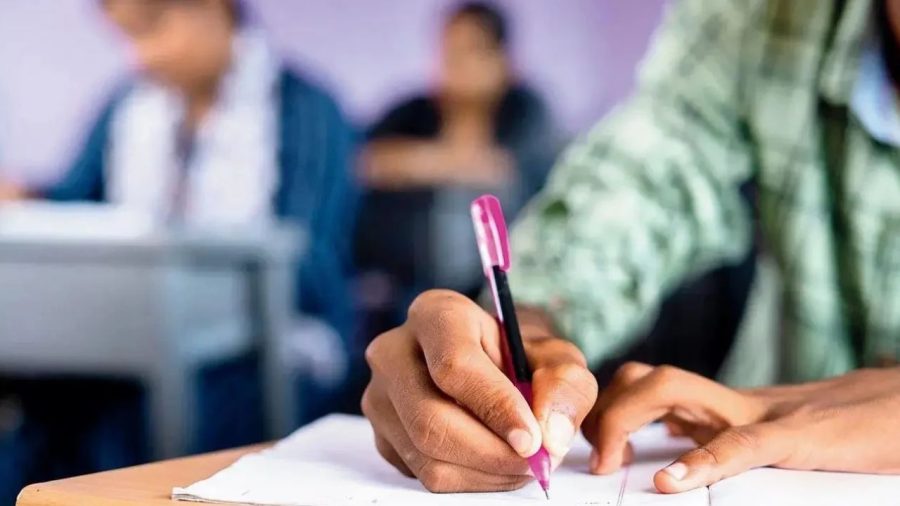



The publication of the 2026 Higher Secondary Certificate (HSC) and equivalent examination results has sent shockwaves through the education sector of Bangladesh, bringing to light a severe decline in student performance across the country.
Across eleven education boards, the overall pass rate plummeted to 52.12 percent, meaning nearly half of all examinees failed – marking a historic low not seen in 22 years, down from 58.83 percent the previous year. Out of 1,240,798 participating students, 646,685 passed, while 594,113 failed.
The number of GPA-5 achievers also saw a steep decline to just 40,084, compared to 145,911 in 2024 and 69,097 in 2025. Furthermore, the number of institutions with a zero percent pass rate rose from 204 to over 209, with English and ICT proving to be the most formidable stumbling blocks.
The results mark the second consecutive year of declining pass rates in the HSC and equivalent examinations. In 2024, the pass rate stood at 77.78 percent, dropping to 58.83 percent in 2025, and now resting at 52.12 percent. Over a two-year span, the pass rate has nosedived by 25.66 percentage points.
This sustained inclination has reignited fierce debates regarding the true quality of education, student preparedness, and instructional standards. Analysts point out that while last year’s poor results prompted diagnoses of teacher shortages, low compensation, and institutional instability, the continued slide questions the efficacy of past remedial measures.

Strict evaluation and syllabus pressures
Education sector experts attribute this drastic downturn to a confluence of systemic, structural, and environmental factors. Over the last two years, examinations were conducted based on the full syllabus, placing significant mental strain on students who needed extra time and rigorous preparation.
Moreover, unlike previous years of lenient grading, examiners strictly adhered to marking guidelines without artificially inflating scores. Enhanced surveillance and strict discipline inside examination centers further contributed to the lowered pass rate.
Compounding academic pressures, the cohort of students taking the 2026 exams entered college in the immediate wake of the 2024 mass uprising. The subsequent political and social instability left lingering disruptions in academic environments. Many students struggled to adapt, developing a reluctance toward regular classroom attendance and focused studying, a psychological hangover that visibly impacted performance.


Government and official responses
Reacting to the crisis, Education Minister ANM Ehsanul Hoque Milon openly stated that such a massive performance collapse is ‘never commendable’ and termed the decline deeply concerning. He noted that the results expose glaring deficiencies in student learning outcomes, teaching methodologies, and institutional environments.
To address the immediate fallout, the ministry is planning special re-examinations within a month for roughly 422,000 students who failed in just one or two subjects. Concurrently, the government is tackling long-standing teacher shortages and restoring academic discipline.
Prime Minister’s Education Adviser Mahdi Amin emphasised that the administration has ensured an entirely objective and neutral evaluation process for its first major evaluation cycle. For the first time, a comprehensive script re-audit opportunity is being provided alongside merit-based recognition.
Perspectives from academicians
Educators across various institutions offered nuanced critiques of the current academic ecosystem. In an interview with a daily newspaper, Professor Debashish Chakraborty of Amrita Lal Dey College remarked that the results accurately reflect students’ true preparation levels, warning that an over-reliance on commercial coaching centers rather than classrooms will continue to depress performance.
Assistant Professor Dulal Majumdar criticised teacher apathy, the rampant reliance on private coaching and note-memorisation, and parental negligence in monitoring students’ academic courses. Meanwhile, some experts asserted that while the results appear harsh, they present an unvarnished picture of regional education realities that requires shared accountability among all stakeholders.

Student grievances vs reality check
Unsurprisingly, the majority of students and guardians have voiced frustration, blaming overly difficult examination papers and unexpected format changes. Some students argued that current testing models demand rote memorisation of entire textbooks rather than conceptual understanding.
Conversely, a segment of educationists rejects the label of a ‘crisis’, viewing the results instead as a long-overdue reality check. They argue that rigorous evaluation filters out unmerited inflation, acting as a necessary corrective to elevate genuine educational standards. Other contributing lifestyle factors cited by experts include rampant addiction to mobile gaming and social media, alongside a lack of competitive academic drive, particularly in rural and sub-district colleges.
To reverse the continuous decline and build long-term resilience, education experts recommend a multi-tiered intervention strategy. Remedial focus must first be placed on core competencies in subjects like English, Higher Mathematics, and Science.
Additionally, institutions must shift reliance away from private coaching by making regular classes, class tests, and assignments more rigorous and interactive. Finally, addressing regional disparities, filling teacher vacancies, and insulating academic institutions from political volatility will be crucial to long-term recovery.
Md Emdadul Hoque Howlader is a Deputy Editor at Daily TIMES of Bangladesh