


Sitting in a shop selling prepaid internet access cards in Deir el-Balah, 24-year-old Ahmad Mohsen reflects on how far his life has drifted from the future he imagined three years ago.
Before Israel’s genocidal war on Gaza began, Mohsen had graduated with a degree in nursing and was preparing to complete the procedures needed to obtain his professional licence. He had hoped to work in a hospital, pursue a master’s degree or take specialised courses, reports Al Jazeera.
Instead, the war changed his plans. In its early months, Mohsen volunteered at Al-Aqsa Martyrs Hospital in Deir el-Balah, working amid overwhelming numbers of wounded and dead. With no pay for his work, however, he was eventually forced to look for another source of income.
“I got tired, and I wasn’t being paid for my efforts, so I started looking for another job that would give me at least a small income,” Mohsen said.
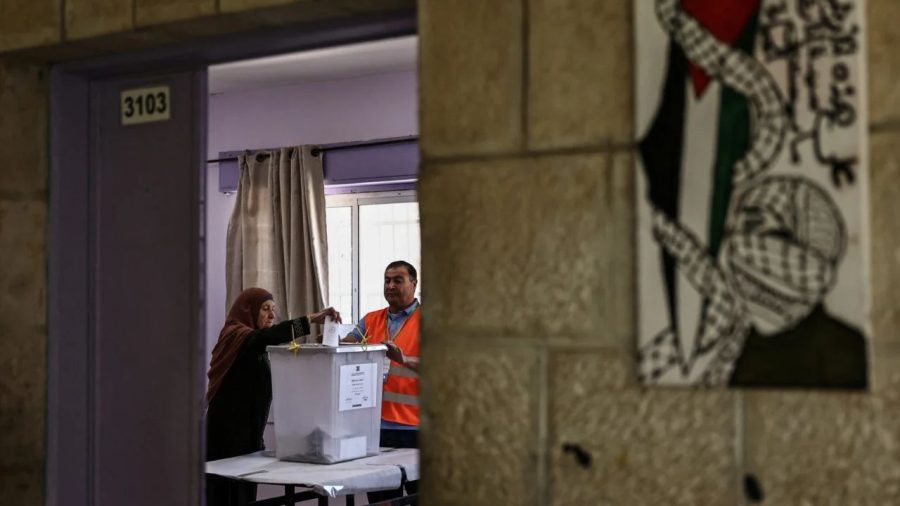
The upcoming Palestinian legislative elections, scheduled for November 28, will be Mohsen’s first chance to vote in a national election and the first Palestinian legislative poll since 2006.
For him, the election needs to address the main crises facing his generation, including unemployment, security, housing, education and healthcare.
“The first thing I want is to be able to find a stable job with a decent salary so I can support myself and my family, and the second thing is to have security,” he said.

Mohsen’s experience reflects the broader economic crisis in Gaza, where unemployment stands at approximately 80 per cent. The enclave’s economy has been devastated by years of Israeli blockade and war, which has killed more than 74,000 Palestinians.
His family also owns land east of Gaza’s Salah al-Din Street, in an area where Israel restricts access. As a result, Mohsen cannot reach the property. He hopes that Israel will withdraw from the area under the October 2025 ceasefire agreement, allowing reconstruction to begin.
For Mohsen, however, elections will have little meaning without tangible improvements.
“A candidate should put themselves in the people’s place and speak with the people’s voice, not someone else’s voice. They should speak for us, the young people who have been wronged for 20 years through wars and destruction. There needs to be an end to this,” he said.
Unlike Mohsen, 53-year-old Ghassan Marwan remembers the 2006 elections, which were won by Hamas.



Marwan, a former goldsmith who established a factory that supported his family, voted at a school in Nuseirat in 2006 for a list headed by independent politician Mustafa Barghouti. He remembers the election as a transparent and fair “democratic celebration” aimed at bringing stability, security and jobs.
“I witnessed a great deal of transparency and integrity. It was like a democratic celebration. But unfortunately, that experience was not repeated over the past 20 years,” Marwan said.
Two decades later, Marwan’s own circumstances have changed dramatically. In January 2024, the war destroyed both his home and factory, wiping out more than 30 years of hard work.
“After losing your home and your source of income, what else do you want? All you hope for is reconstruction, calm and security in the country,” he said.
Marwan said seeing his children living in tents instead of a permanent home causes him profound pain. His daily struggle now includes searching for and carrying water over long distances.
“After all these years, I am carrying water from far away. Am I going to remain in this situation? I am 53 today. In 10 years, I will be in my 60s, and I will not be able to carry this burden,” he said.
Such circumstances have also weakened public engagement with politics, Marwan said.
“Our interest in politics has declined, not because it does not concern us, but because of all the frustration and despair that have accumulated. People have become preoccupied with how to get by and secure their daily bread,” he said.
As the November 28 election approaches, Marwan remains torn between hope and scepticism.
“Sometimes I feel that talking about elections is almost a joke, because there are no clear conditions for holding them,” he said.
The Palestinian Central Elections Commission is organising the vote across the occupied West Bank, occupied East Jerusalem and Gaza. It estimates that 1.24 million Palestinians in Gaza are eligible to vote.
Jamil al-Khalidi, the commission’s regional director in Gaza, said the process faces major logistical and security challenges because of the extensive destruction and widespread displacement since the war began.
The commission has also prepared contingency plans to produce election materials locally in case of Israeli restrictions on imports.
Gaza-based political analyst and writer Iyad al-Qarra said the war had reshaped political expectations rather than eliminated them.
After nearly three years of displacement and loss, he said, political demands are increasingly focused on leaders capable of restoring normal living conditions rather than those offering slogans or managing administrative structures.
Al-Qarra said the central requirement is leadership capable of rebuilding Gaza, restoring infrastructure, healthcare and education, and creating conditions for sustainable livelihoods.
“There is a widespread desire for leadership that puts Gaza’s recovery at the top of its priorities, given the heavy price the Strip has paid,” al-Qarra said.