


Heavy rain has triggered deadly floods and landslides across Nepal, killing at least 21 people and leaving five missing, according to the National Disaster Risk Reduction and Management Authority, says Al Jazeera.
The death toll from rains and flooding in Thailand has risen to 23, authorities said on Tuesday, as waters receded from the hard-hit capital Bangkok, where the main airport operated in chaos. The government also approved a multi-million aid package, reports Reuters.
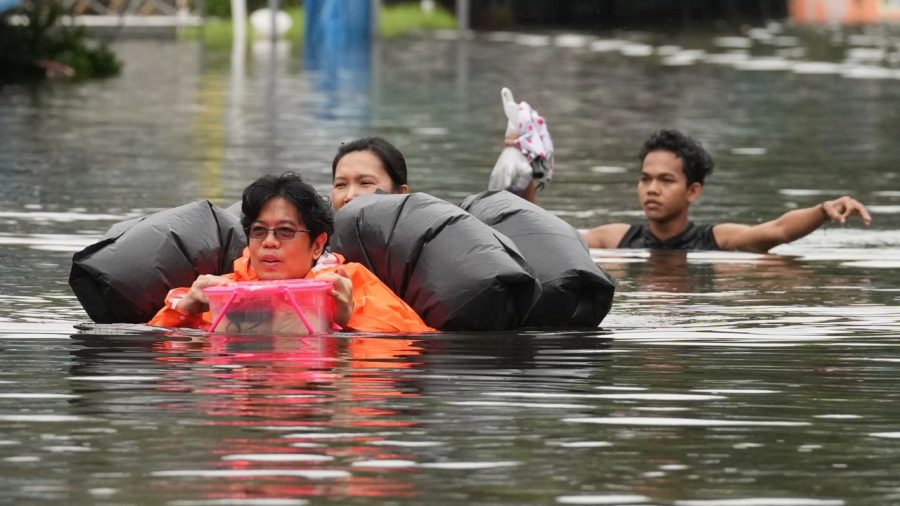
At least 23 people have died across the country since September 16, including four in Bangkok, the Interior Ministry said. Bangkok was among 42 provinces hit, with the floods causing an estimated $367 million in damage across two dozen provinces and threatening to weigh on the tourism-dependent economy.
The capital was swamped by around 320 mm (12.6 inches) of rain in three days last week, nearly as much as the sprawling, low-lying metropolis usually receives in the whole of September.
The city’s governor, Chadchart Sittipunt, said he expected floodwater to drain from Bangkok’s major roads within two days, although it would take up to a week to clear other inundated areas. “Recovery efforts are under way in areas where the water has gone down,” he said.

Although Bangkok’s main airports kept running, chaos ensued at Suvarnabhumi Airport, the country’s largest, where Thai Airways said its operations were crippled because half of its personnel could not get to work.
The flag carrier said it planned to cut about 30 flights, roughly 30 percent of its planned departures from Bangkok, on Tuesday, while it grappled with some 5,600 bags from its flights that remained stranded at the airport.




“Almost 100% of flights over the past two days were delayed, with fewer than 3% on schedule as operational capacity could not be sustained,” said the airline’s chief executive, Chai Eamsiri. He added that the reduction in flights from Bangkok would last for at least three days.
Emir Demiroez, who had flown in from Azerbaijan, was frantically searching the airport for his bags so that he could board his next flight to Malaysia.
“Nobody knows anything. Nobody can help us. We can’t find our baggage,” he said. “We have our second flight at 2 p.m., but I don’t know if we’ll get it.”
Although the inability of many staff to report for work disrupted operations, Thailand’s tourism minister said Thai Airways had also assigned its own employees to serve other airlines for which it provides contracted ground-handling services, to avoid facing penalty charges.
“This damages the country’s image,” Surasak Phancharoenworakul told reporters, singling out the airline for rebuke.
“We need to discuss how the management needs to work more proactively,” he said. “If they don’t want to do the job, then resign.”
Thai Airways did not immediately respond to an email seeking comment on Surasak’s remarks.
Tourism is a key driver of Thailand’s economy, which has lagged regional peers since the pandemic, with foreign arrivals down 3.12 percent year-on-year to 21.28 million visitors in the January to September period.
In a meeting on Tuesday, Thailand’s cabinet approved more than 4 billion baht ($119 million) to address the impact of the floods, Prime Minister Anutin Charnvirakul said. He added that a long-term drainage project costing 160 billion baht ($4.8 billion) had also been given the go-ahead.
The project, aimed at enhancing flood protection across the central region, Bangkok and its surrounding areas, will take eight years to complete, he said.