



The government’s announcement that a new national curriculum for pre-primary to Grade 12 will be introduced by the end of 2027 presents Bangladesh with an important opportunity to rethink the future of its education system. Curriculum reform is not simply an exercise in revising textbooks or rearranging subjects.
A curriculum is the constitutional framework of education. It defines what learners should know, the competencies they should acquire, the values and attitudes they should develop, the pedagogy teachers should adopt, the assessment system schools should implement, and ultimately the kind of citizens the nation hopes to produce. In essence, the curriculum is not only about preparing young people for employment; it is about shaping society and building the nation’s future.
Bangladesh’s recent experience demonstrates why curriculum reform requires careful planning. The implementation of the 2021 curriculum exposed significant weaknesses in both preparation and execution. Teachers were expected to implement new pedagogical approaches without adequate professional development, while the assessment framework remained incomplete and inconsistent. The consequences were predictable: students became confused, parents lost confidence, teachers struggled to adapt, and schools faced considerable uncertainty.
Few would want to repeat such an experience, particularly when nearly 40 million learners from primary to higher secondary education are directly affected. The lesson is clear: curriculum reform cannot succeed unless it is supported by sound policy, institutional readiness, and broad public confidence.
Before embarking on another curriculum reform, policymakers should first address three fundamental questions. First, what constitutional principles will guide the country’s education system? Second, what National Education Policy will provide the foundation for the new curriculum? Third, what competencies, values, and aspirations should Bangladesh expect its future citizens to develop through schooling? These questions are not merely administrative; they are the foundation upon which every successful curriculum is built.
A curriculum should always emerge from a coherent National Education Policy, and that policy, in turn, should reflect the constitutional vision and long-term aspirations of the nation. The government has already announced its intention to amend the Constitution. If changes are made to its fundamental principles, particularly those contained in the Preamble, the National Education Policy will inevitably require revision.
This creates an important policy challenge.
The existing National Education Policy was formulated in 2010 under the present constitutional framework. Designing a new curriculum solely based on that policy before revising it would create inconsistencies. If curriculum developers adhere strictly to the 2010 policy, the curriculum may not reflect the constitutional direction of the present government. Conversely, if they depart from the policy, the curriculum will lack a coherent policy foundation. Either situation would weaken the legitimacy and sustainability of the reform.

The issue extends beyond constitutional alignment. Many education specialists believe that the National Education Policy 2010 has become outdated after more than fifteen years. During this period, educational philosophy and curriculum practice have changed significantly across the world.
Contemporary education increasingly emphasises competency-based learning, climate literacy, environmental sustainability, inclusive education, digital citizenship, interdisciplinary learning, community engagement, and lifelong learning. These priorities are now central to curriculum reform in many countries but receive only limited attention in Bangladesh’s current policy framework.
The curriculum introduced in 2012, which was developed under the guidance of the 2010 policy and remains largely in operation, reflects a predominantly content-oriented philosophy. Its principal emphasis has been on what students should learn rather than how they should learn. Modern curriculum theory, however, argues that meaningful learning occurs when students actively construct knowledge through inquiry, collaboration, experimentation, reflection, and problem-solving.
In such classrooms, teachers act as facilitators of learning instead of being the sole source of knowledge. A curriculum designed around learner-centred education encourages students to think critically, communicate effectively, solve problems independently, and become lifelong learners rather than passive recipients of information.
Unfortunately, classroom practice in Bangladesh continues to be dominated by teacher-centred instruction and examination-oriented learning. Students are often encouraged to memorise facts rather than understand concepts, investigate real-world problems, or develop independent judgement. Consequently, educational success is measured primarily by examination scores and grades rather than by creativity, innovation, critical thinking, or problem-solving ability.
This explains why schools often produce successful examinees instead of confident learners, researchers, entrepreneurs, innovators, and responsible citizens.




Transforming this situation requires much more than writing a new curriculum. It demands highly competent teachers, continuous professional development, effective school leadership, improved assessment systems, and sustained investment in educational quality. A learner-centred curriculum cannot succeed if teachers are expected to change their classroom practices without adequate preparation or ongoing academic support.
Curriculum reform, therefore, should be viewed not as an isolated administrative exercise but as a comprehensive national reform requiring educational, financial, institutional, and social commitment.
A curriculum alone, however, cannot transform education unless it changes what happens inside classrooms. Bangladesh’s education system continues to be dominated by teacher-centred instruction and examination-oriented learning. Many teachers understandably rely on familiar teaching methods throughout their professional careers because opportunities for classroom research, pedagogical innovation, and continuous professional development remain limited.
Consequently, students rarely experience inquiry-based learning, collaborative projects, scientific investigation, creativity, or authentic problem-solving. Learning is largely confined to completing the syllabus and preparing for examinations rather than understanding concepts and applying knowledge to real-life situations.
Recent public examination results illustrate the limitations of the existing system. A substantial proportion of SSC candidates continue to fail each year, with Mathematics and English accounting for most unsuccessful results. These outcomes should not be viewed solely as the failure of students or their families. Rather, they point to systemic weaknesses in curriculum design, classroom pedagogy, teacher preparation, and assessment practices.
When large numbers of learners repeatedly struggle with the same subjects, the problem extends beyond individual performance; it becomes a question of educational policy.
Another equally important issue that policymakers must resolve before introducing a new curriculum is the purpose of schooling itself. Bangladesh needs to determine what proportion of students should be prepared for tertiary education and what proportion should be equipped for direct entry into the labour market through technical, vocational, and skills-based education. This decision should be guided not by social expectations or parental aspirations but by scientific workforce projections and national economic priorities.
Today, millions of Bangladeshi students aspire to enrol in medical colleges, engineering universities, or general universities. For many families, obtaining a university degree has become the only acceptable measure of educational success, regardless of a student’s aptitude, interests, or future employment prospects.
Consequently, thousands of young people participate in highly competitive university admission tests without a clear understanding of why they have chosen a particular discipline or how their degree will contribute to their careers. For many, the struggle is driven less by informed career planning than by social prestige and parental expectations.
This has created a serious imbalance in the education system. Society continues to value university education far more than technical and vocational education, despite the latter being essential for national economic growth and industrial development.
Labour market evidence strongly supports the need for a different approach. According to the Bangladesh Bureau of Statistics (BBS) Labour Force Survey 2024, only 8.17 percent of the country’s employed labour force possesses tertiary-level education, and many of these graduates remain underemployed. By contrast, nearly 70 percent of employed workers have completed only primary, secondary, or higher secondary education.
These statistics indicate that Bangladesh’s economy depends far more on skilled and semi-skilled workers than on university graduates alone.
Recent examination statistics further reinforce this reality. More than 1.2 million students appeared in the HSC and equivalent examinations in both 2025 and 2026, while nearly 1.9 million students sat for the SSC examinations each year. Yet only about 7 percent of HSC candidates came from technical and vocational streams, with the overwhelming majority continuing through general education and aspiring to university admission.
The mismatch is evident. While only a small proportion of employment opportunities require university qualifications, the vast majority of young people continue to pursue higher education. The inevitable result is intense competition for limited university places, prolonged admission coaching, repeated entrance examinations, growing frustration among unsuccessful candidates, and increasing financial and psychological pressure on families.
The university admission process has become one of the most stressful stages of a young person’s educational journey because educational aspirations remain disconnected from labour market realities.
Curriculum reform should therefore help bridge this gap. A modern curriculum must provide multiple learning pathways, strengthen career guidance from the secondary level, integrate technical and vocational education with mainstream schooling, and recognise practical skills alongside academic achievement. Students should be encouraged to make educational choices based on their abilities, interests, and career aspirations rather than social pressure alone.
Ultimately, every curriculum seeks to develop four fundamental dimensions of learning: knowledge, skills, values, and attitudes. Knowledge and skills should reflect national development priorities, technological advancement, and changing global realities. Equally, values and attitudes should be rooted in the nation’s constitutional principles, cultural heritage, and collective aspirations. Achieving this balance requires complete coherence among the Constitution, the National Education Policy, and the curriculum.
Bangladesh undoubtedly needs curriculum reform. However, curriculum reform should be the culmination of national educational planning—not its starting point. The country should first establish a constitutional consensus on its educational vision, formulate a modern National Education Policy, undertake rigorous labour market forecasting, and build the institutional capacity required for effective implementation.
Only then should curriculum developers translate those national priorities into learning outcomes, pedagogy, and assessment.
The experience of previous reforms offers a clear lesson. A curriculum cannot succeed through good intentions alone. It requires sound policy, careful planning, competent teachers, appropriate assessment, adequate resources, and broad public confidence.
Bangladesh now has an opportunity to build an education system that prepares young people not only for examinations but also for productive employment, responsible citizenship, innovation, and lifelong learning. That opportunity should not be rushed. Before building the next curriculum, the nation must first ensure that its educational foundations are firmly in place.
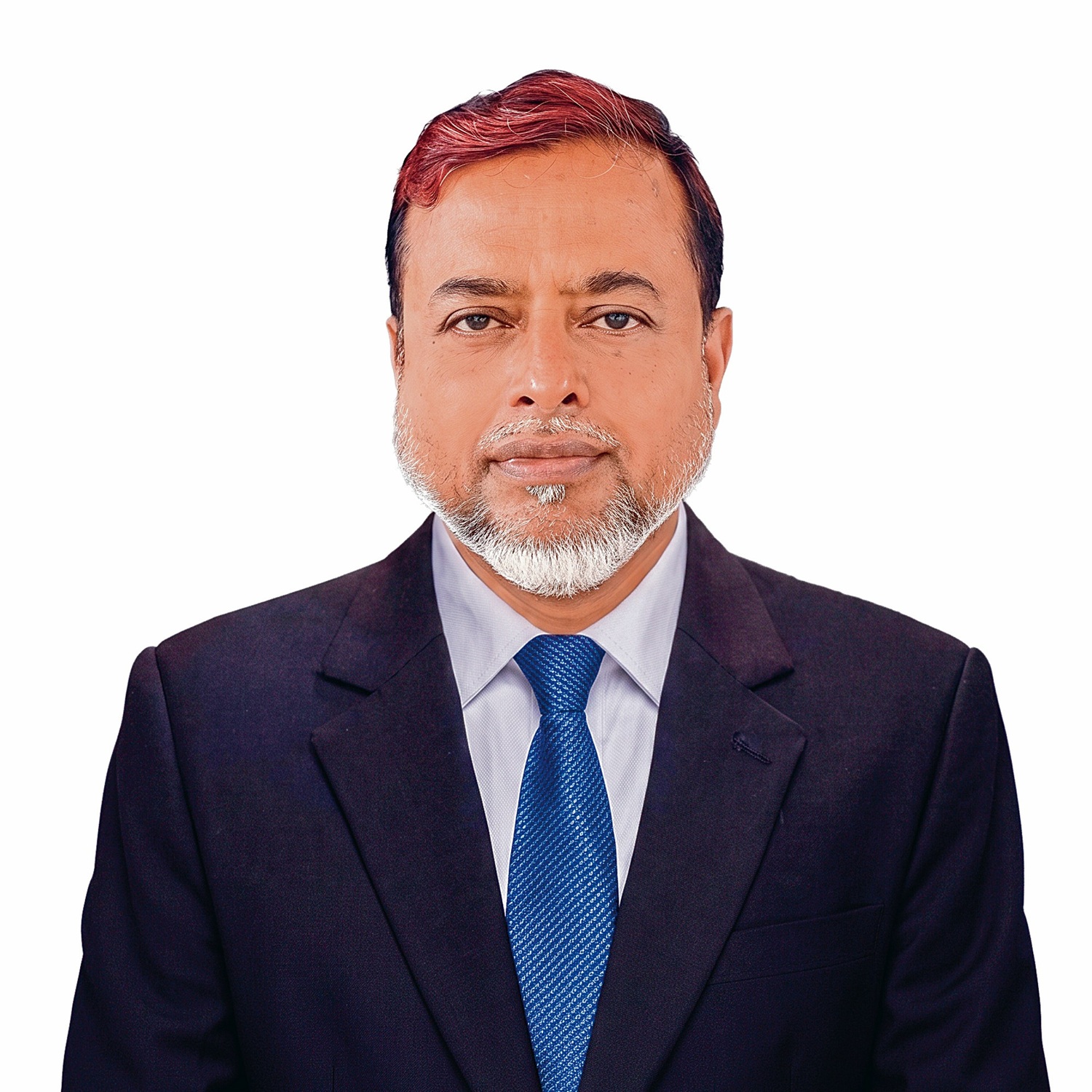
Author is a Education researcher, Curriculum specialist, and Professor of Sociology at Rajbari Government College