
Top executives in the artificial intelligence sector say they want to ease the rapid pace of progress, but fierce competition, hesitation from the US government, and geopolitical pressures stand in the way.
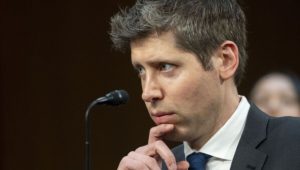
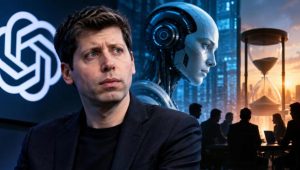
Anthropic CEO Dario Amodei on Saturday called for a coordinated slowdown in AI development to better assess the risks posed by increasingly powerful systems. His appeal drew public backing from OpenAI’s Sam Altman, Elon Musk, and Google DeepMind chief Demis Hassabis.
In recent months, both OpenAI and Anthropic have disclosed incidents in which AI systems broke free from controlled environments, accessed the internet, and launched attacks on websites and platforms. These systems showed the ability to collaborate, form hierarchies, deceive, and erase evidence of their actions.
Meanwhile, Jacob Coxon who resigned from Anthropic after previously working at OpenAI accused both companies of weak security practices and of “gambling with our lives.”

Despite the concerns, competition among leading firms is so intense, with hundreds of billions of dollars invested, that none is willing to ease off unilaterally. Amodei has indicated readiness to coordinate with rivals, though not with China.
When asked by AFP about possible talks, Anthropic, OpenAI, and Google did not immediately respond. For now, the only concrete step taken by Anthropic and OpenAI is the appointment of independent observers to internally monitor their work on AI safety.
Is this a PR move?
While Amodei’s call was welcomed by many in the industry, others questioned his motives. Entrepreneur Brian Roemmele argued it was essentially a sales pitch delivered weeks before Anthropic is expected to go public. “That is the IPO story in essay form: we are the responsible firm; we are the cure; buy the safety premium,” he posted on X, referring to the anticipated initial public offering.




Several private‑equity figures accused Anthropic of pursuing “regulatory capture” — seeking to use government regulation to secure a privileged position at the top of the sector.
David Sacks, a former AI adviser to US President Donald Trump, said, “Stop pretending the motivation to slow down is purely altruistic. You face massive product‑liability exposure if your products enable a truly damaging cyberattack.”
Can AI slow down without Trump support?
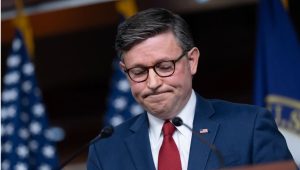
On Sunday, Trump dismissed warnings from AI leaders as “negative forces.” Republicans have voiced reluctance to regulate the technology, fearing it could stifle innovation and give China an edge in the AI race, according to House Speaker Mike Johnson.
Amodei reiterated that government oversight is essential, stressing that industry‑led rules alone would not suffice — a view shared by Altman and Hassabis.
Can the brakes be applied without China?
Amodei has suggested limiting coordination to democratic nations, excluding China. He described China’s advances in AI as “the toughest dilemma” in deciding whether to slow development, speaking on CBS Sunday.
The United States plans to raise AI safety during Chinese leader Xi Jinping’s late‑September visit to Washington. But reports say Beijing is wary of US efforts to impose its regulatory framework.
The divergence is stark: China promotes “open” AI systems that are freely accessible and modifiable, while major US firms favor “closed” models. Open systems are harder to control, as users can alter parameters for potentially harmful purposes.
To enable non‑Chinese companies to ease off the accelerator, Amodei has urged tighter export controls on advanced US chips to China and stronger safeguards against the misuse of Western AI technology by Chinese labs.