
Efforts to introduce artificial intelligence (AI) safety legislation in the United States have stalled after President Donald Trump dismissed warnings about existential risks from the technology as a “hoax”.
Despite calls for greater oversight from senior Democrats, some Republicans and prominent figures in the AI industry, opposition from the White House and deep divisions in Congress have effectively put legislative and executive action on hold, reports BBC.
Trump said on social media that fears of AI taking over the world or destroying humanity were unfounded, arguing that the only necessary safeguard was having a “strong and smart” president.
With Republicans holding majorities in both the House of Representatives and the Senate, lawmakers are unlikely to break ranks with the president to back restrictions. Any legislation passed by Congress would also require Trump’s signature, while his position has diminished hopes of executive action.
A further obstacle is time. The House is due to begin its recess at the end of the week and will not return until after the midterm elections in early November.
House Democratic Minority Leader Hakeem Jeffries called for the recess to be delayed, saying Congress should remain in session until decisive measures are taken to protect public safety and well-being.

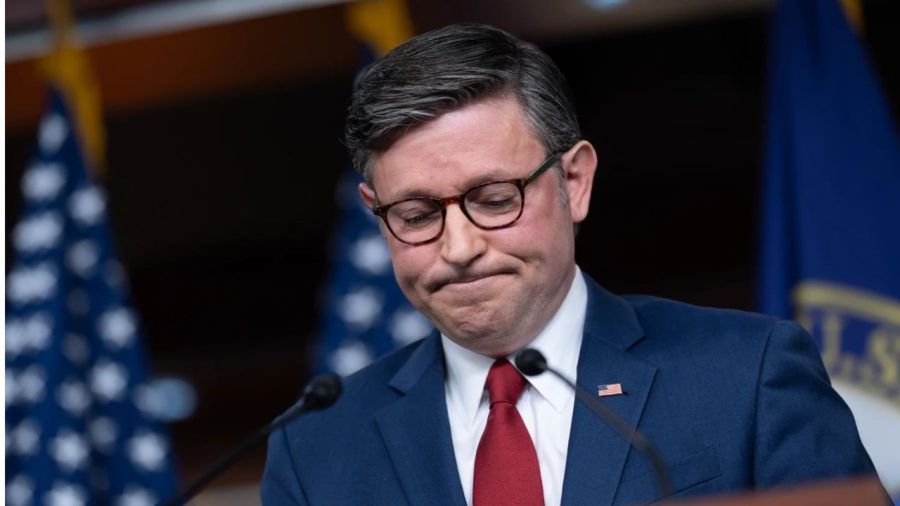
A group of House Democrats also sent a letter to Republican Speaker Mike Johnson seeking additional time to debate AI regulation. Republican Congresswoman Anna Paulina Luna, meanwhile, suggested on X that Congress hold a special session.
Johnson has indicated that he does not intend to delay the recess or call a special session, describing AI as a “very complex issue”.
He said Trump would soon meet AI executives at the White House to discuss corporate safety responsibilities and consider what role, if any, the government should play.
While Johnson stressed that AI companies must provide safe products and regulate themselves, he acknowledged that Congress could also have a role.




Congress divided over AI regulation
Lawmakers remain sharply divided over how AI should be regulated, with Democrats also split over the best approach.
Even if Democrats gain control of both chambers in the November elections, swift action is not guaranteed, as lawmakers would first need to agree on a common proposal.
Existing proposals on Capitol Hill range from independent reviews and a federal “kill switch” to a total moratorium on data centres proposed by Senator Bernie Sanders.
Republican Senate Majority Leader John Thune and Democratic Senator Amy Klobuchar are working on legislation that would establish federal oversight of certain AI companies.
Thune has stressed the need to address advanced threats while avoiding restrictions that could stifle innovation.
In the House, Democratic Congresswoman Lori Trahan and Republican Jay Obernolte have drafted the bipartisan Frontier Act. The bill would require independent audits of AI research laboratories and give the government authority to halt AI models considered to pose an “imminent catastrophic risk”.
Trahan warned that AI would eventually affect every aspect of society and called for immediate action, although she acknowledged that progress this week was unlikely.
AI industry backs self-regulation
Supporters of greater corporate autonomy continue to argue that AI companies should regulate themselves.
David Sacks, a senior AI adviser to Trump, told CBS News that warnings about existential risks from industry insiders amounted to an exaggerated “panic”.
Sacks said technology companies should bear full responsibility for ensuring their products are safe. He criticised Anthropic chief Dario Amodei for calling for a slowdown in AI development, arguing that companies unable to control their technology should either step aside or refrain from developing it.
Policy experts and other observers remain sceptical about the prospects of near-term federal action.
Asad Ramzanali, director of AI & Technology Policy at Vanderbilt University, said a safety and testing regime mandated by Congress would be ideal. In its absence, however, companies retain autonomy over their practices.
Trevor Traina, a technology executive and former diplomat, also questioned warnings from industry insiders. He suggested executives could be engaging in competitive posturing aimed at securing market dominance rather than responding to widespread public harm.
Alexandra Reeve Givens, head of the US non-profit Center for Democracy and Technology and a former government official, said meaningful federal AI regulation was unlikely in the foreseeable future.
She noted that the Trump administration’s voluntary assessment framework for AI tools remains secret and lacks clear standards based on the rule of law.
Givens said AI risks were not ungovernable, but argued that Congress faced the difficult task of developing tailored approaches to address the technology’s various risks amid a challenging political climate.