Ownership of battery-powered rickshaws in Dhaka is no longer the exclusive domain of low-income group people.
Government officials, schoolteachers, police personnel, and wealthy entrepreneurs are increasingly investing in the fast-growing sector, drawn by its lucrative, steady daily returns.
Leaders of the Greater Uttara Autorickshaw Owners’ Unity Council estimate that whilst professional drivers and garage operators account for roughly half of the city’s battery-powered rickshaw fleet, the remaining owners come from a broad spectrum of white-collar and business backgrounds.
Industry representatives say the absence of a formal regulatory framework, combined with the appeal of immediate cash yields, has fueled a wave of speculative investment.
Speaking to TIMES of Bangladesh, the Owners’ Unity Council President Abu Bakr revealed that a teacher at Uttara Milestone College currently owns a fleet of rickshaws alongside a dedicated charging garage.
He added that a bus and truck operator in Pakuria, who already nets between Tk30 and Tk35 lakh per month from haulage, owns more than 100 battery rickshaws and multiple storage facilities. Similarly, a wholesale poultry trader based in Gazipur reportedly operates a fleet of several hundred vehicles across Dhaka.
The organisation general secretary, Kamal Hossain Lal Chand, noted that the guarantee of steady daily cash flow continues to attract investors across all socio-economic strata.

“The police previously held several coordination meetings with owners, but no concrete action was taken. Currently, dialogue has broken down completely,” he said.
Allegations of police involvement
According to figures supplied by the owners’ association, several serving police personnel own and run rickshaw garages across the capital.
The association alleges that Abdur Rahim, a police constable, operates a garage in Manda Bagchapa housing 65 rickshaws. Other cited examples include Constable Manik (43 rickshaws), Sub-Inspector Golam Mustafa (50 rickshaws), and a CID Sub-Inspector named Shaheen (26 rickshaws).
In Turag’s Bhabanatek area, Constable Robin reportedly runs a facility housing 18 rickshaws, whilst Sergeant Baser of Faydebabad owns a garage catering for 38 vehicles. Similar police-linked storage and charging facilities have been identified in Mohammadpur, Mirpur, and Hazaribagh.
When contacted, all the named officers denied direct ownership of the vehicles or facilities, asserting that the businesses were owned and operated independently by relatives.

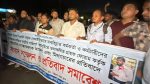


Mizanur Rahman, a garage owner in New Town, noted that while multiple discussions took place during the interim government’s tenure regarding vehicle ownership, key directives were never carried out.
“The police instructed the owners’ association to draft a comprehensive register of rickshaw owners, but no such list was ever compiled,” he said.
Regulatory policy expected within fortnight
In response to mounting public concern over gridlock, road safety, and illegal electrical tapping, authorities are preparing a national policy framework to bring the sector under formal oversight.
Dhaka Metropolitan Police (DMP) Additional Commissioner (Traffic) Anisur Rahman informed TIMES that the Local Government Division is currently drafting the regulations.
“The policy framework will be finalized within 15 days,” Anisur said.
He explained that the forthcoming policy will establish clear ownership criteria, cap the maximum number of vehicles permitted per owner, delineate designated operating routes, and introduce mandatory registration, licensing, and tax compliance procedures.
An estimated 50 to 80 lakh battery-powered autorickshaws currently operate across Bangladesh. Despite widespread bans on arterial routes, these vehicles continue to ply city streets and national highways.
In Dhaka alone, an estimated 15 lakh battery rickshaws are currently in service, with approximately 300 new units entering circulation every day.
The vehicles are manufactured locally in workshops across Genda in Savar, Hazaribagh, Kamrangirchar, Mirpur, and Uttara’s Baunia and Ranabhola areas.
Manufacturers estimate that fabricating a single battery-powered rickshaw costs between Tk1,30,000 and Tk1,50,000.
Data from the Power Division indicates that while only 3,300 charging hubs hold valid commercial licences, law enforcement and intelligence agencies have identified over 48,000 unauthorised charging stations operating across the capital.
Former DMP Commissioner Md Sarwar, who also served at Traffic Division, observed that while previous administrative meetings yielded clear operational directives, enforcement consistently faltered due to a lack of sustained follow-up.
Lucrative daily yields fuel demand
Expansive garages and charging hubs line the perimeter of residential hubs such as Mohammadpur’s Nabinnagar, Dhaka Udyan, Naboday Housing, Turag Housing, and Shani Akhra.
Noor Mohammad Riyad, who runs a charging facility in Nabinnagar, charges vehicle owners a flat fee of Tk200 per recharge cycle. Parking fees yield an additional Tk5 per day for new vehicles and Tk4 for older models.
At the vehicle level, owner-operators command substantial daily rents.
Kamal Hossain Lal Chand explained that garage operators charge drivers Tk450 per day for a new vehicle and Tk400 for an older model, a rate that includes roughly Tk120 in electricity overheads.
Drivers report earning net daily incomes of Tk500 to Tk700 after settling their vehicle hire fees. Operators across Maghbazar, Mirpur, Mohammadpur, Hazaribagh, and Kamrangirchar noted that earnings surge during public holidays, bad weather, and festive periods.
However, drivers also highlight growing operational bottlenecks.
Gafur Mia, a driver based in Nayatola, noted that worsening traffic congestion across the capital has drastically cut the number of passenger trips drivers can complete per shift, eroding overall take-home earnings.