I remember September 11, 2001, through the chronology of my youth. Our HSC results were published on September 6, and five days later, as we were thinking about universities, images from New York appeared on television. We were young enough to watch without fully understanding the world it would create. There was no Facebook in our lives, no Twitter, and internet access in Bangladesh was still limited. It would take me years to understand its political meaning.
Six years later, in 2007, I entered that post-9/11 world from the other side. I received a U.S. Department of State scholarship under the Near East and South Asia Undergraduate Exchange Program and studied at the University of Wisconsin-La Crosse. I was placed among students from Morocco and Egypt, and made lifelong friends from the USA, Iran, India, Pakistan, Jordan, Saudi Arabia, and elsewhere. I shared university life with an American roommate and watched a Muslim community function inside an American campus. During Ramadan, fasting became a source of curiosity and conversation.
Those encounters made geography personal. When I said I came from Bangladesh, many people knew India but not Bangladesh; sometimes Afghanistan came up in the conversation because both countries were in South Asia. I traveled from La Crosse to Milwaukee, Rochester, Minnesota, and Chicago, and experienced an America more complicated than the one available through television. Years later, I visited Los Angeles and New York and stood at Ground Zero. By then, I was also looking at 9/11 through the lens of cinema.

As a filmmaker and someone who teaches cinema history, I keep returning to one central question: what did 9/11 do to the American screen? Cinema does not simply record history. It arranges our emotional relationship to it. A director decides whose face receives the close-up, whose home we enter, whose fear is explained, and whose death remains anonymous. Over twenty-five years, those choices shaped how American cinema framed war, Muslims, Afghanistan, and the wars that followed.
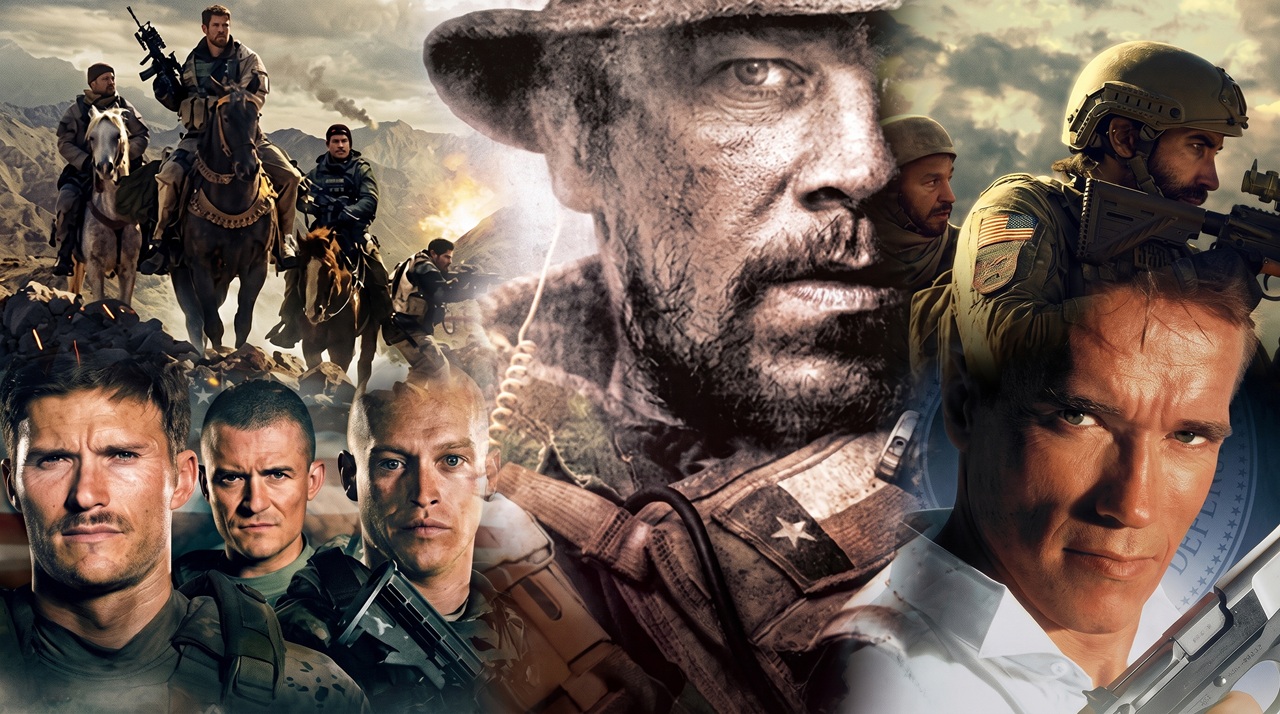
It would be historically wrong to say 9/11 created the Muslim villain. Black Sunday (1977), True Lies (1994), and Executive Decision (1996) had already made Arab or Muslim-coded terrorism familiar to American audiences. Older Hollywood also relied on Orientalist images of Arabs as fanatics, oil sheiks, exotic strangers, or violent outsiders. What changed after 2001 was not the invention of that language, but its emotional weight. Terrorism was no longer merely a thriller device; it had entered American memory.
The Twin Towers teaser for Spider-Man (2002) was withdrawn, while Lilo & Stitch (2002) replaced a climax involving a commercial aircraft in an urban landscape with a spacecraft sequence. Spike Lee’s 25th Hour (2002) did the opposite, allowing Ground Zero and the wounded city into the film. From there, Fahrenheit 9/11 (2004) turned the argument toward politics, challenging the Bush administration, the Iraq War, and the narratives used to justify America’s response.


Afghanistan soon occupied a far larger place in that imagination. 12 Strong (2018) looks back at the early intervention almost as an origin story: the attacks at home lead American Special Forces into Afghanistan, fighting beside Afghan allies. Lone Survivor (2013) shifts toward brotherhood and survival, but complicates the landscape when Afghan villagers protect Marcus Luttrell from the Taliban. The Afghan appears not only as an enemy, but as an ally, protector, and witness.
For me, Brothers (2009), directed by Jim Sheridan, remains especially revealing. Tobey Maguire’s Marine captain returns from captivity in Afghanistan, unable to explain what happened to him. Natalie Portman and Jake Gyllenhaal play family members forced to live with a war they never entered. Afghanistan follows the soldier home, entering marriage, fatherhood, guilt, and silence. The post-9/11 soldier is no longer simply a heroic body in combat; he can also be a damaged husband sitting at his own dinner table.
Kathryn Bigelow’s Zero Dark Thirty (2012) moves the camera into the intelligence machinery built around the hunt for Osama bin Laden. Secret sites, surveillance, interrogation, and obsession become part of the visual language of the era. Its torture sequences generated fierce debate over whether the film suggested coercive interrogation helped find bin Laden. That debate itself shows cinema’s power: most viewers will never enter a CIA black site, but a film can become the image through which they imagine one.
American Sniper (2014), though centered on Iraq rather than Afghanistan, reveals another tension. Chris Kyle receives family, memory, and psychological wounds, while many Iraqis remain threats or targets inside his field of vision. War Machine (2017) later turns Afghanistan into a satire and institutional confusion. The Outpost (2020) strips away much of the grand geopolitical language and concentrates on soldiers trying to keep each other alive. Heroism remains, but certainty fades.
After the American withdrawal from Afghanistan in 2021, Guy Ritchie’s The Covenant (2023) makes another turn. Afghan interpreter Ahmed saves American Sergeant John Kinley, and Kinley later returns because Ahmed and his family have been left behind. The direction of rescue changes. The Afghan is no longer simply the person America arrives to save or recruit; he saves the American first, and the obligation then belongs to America.
Looking back after twenty-five years, I do not think this history can be measured simply by counting how many Muslim characters Hollywood portrayed positively or negatively. The central issue is how Hollywood responds to the political anxieties of its time. During the Cold War, the Soviet Union supplied generations of spies and villains. Later, Russia returned, while North Korea, Iran, and terrorism entered the thriller vocabulary. In fantasy and superhero cinema, those fears can be displaced onto aliens, machines, or enemies from another world. In political cinema, however, the enemy often carries a passport, a nationality, a religion, or a geography that already means something to the audience. That is why the post-9/11 screen matters: it not only reflects fear but also gives fear a recognizable face.
Perhaps this interests me because my own encounter with post-9/11 America happened somewhere between those images. I met Muslims not as symbols but as friends and classmates, and Americans not as a single political idea but as roommates, teachers, students, and families. There is already important scholarship on Islamophobia, Arab and Muslim representation, the War on Terror, and post-9/11 cinema, but these twenty-five years still invite a broader question: how does cinema give geopolitical fear a face, and how does that face change when politics change? From watching the Twin Towers fall as a teenager in Bangladesh, to encountering America as a student, and later studying these films as a filmmaker and teacher, I have found that this question is the clearest way to understand the films discussed here. Perhaps that is where further research should begin.
Abu Shahed Emon (Filmmaker)