
Bangladesh plans to expand co-operation with Australia to further consolidate its local government system, improve public living standards, and strengthen democratic practices.
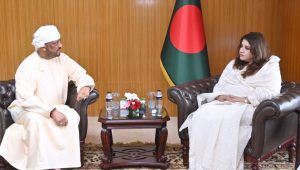
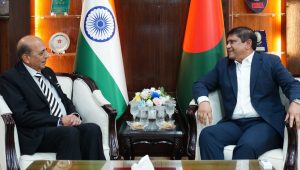
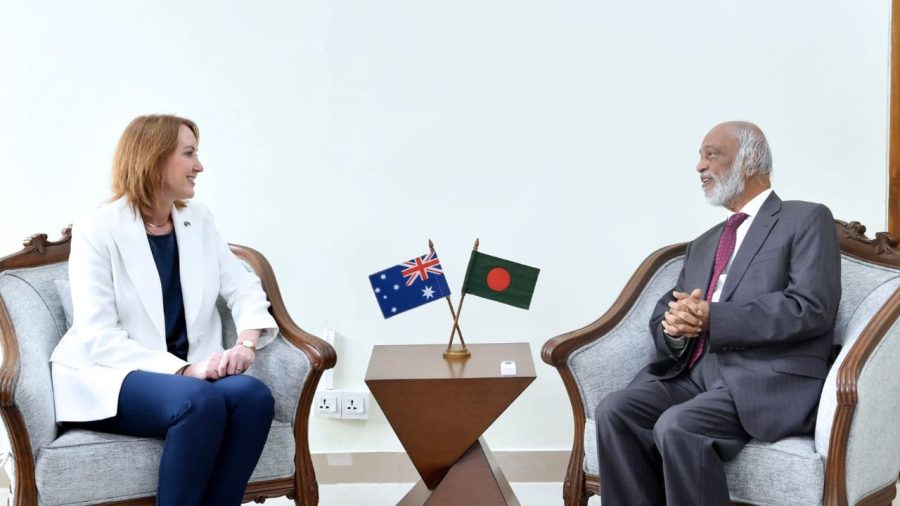
Local Government, Rural Development and Co-operatives Minister Abdul Moyeen Khan expressed this view during a courtesy meeting with Australian High Commissioner to Bangladesh Susan Ryle, at his Secretariat office in Dhaka on Tuesday.
State Minister for Local Government, Rural Development and Co-operatives Mir Shahe Alam was also present during the discussion.
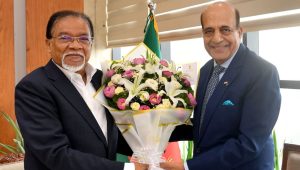
At the beginning of the meeting, the minister welcomed the high commissioner, who warmly congratulated him on assuming his important responsibilities in his new portfolio.

During the discussion, Moyeen Khan highlighted the key activities of local government bodies and emphasised their role in improving the lives of ordinary citizens.
He reiterated that the government is firmly committed to holding free, fair, and neutral local government elections.
The minister informed the high commissioner that the new government has passed five local government-related ordinances, which were originally issued by the interim government, into law in Parliament.



Under these five laws, governing City Corporations, Municipalities (Pourashavas), Upazila Parishads, District Councils (Zila Parishads), and Union Parishads, the previous provisions for party-nominated candidacies and elections using national party symbols have been completely abolished.
The bilateral meeting also saw detailed discussions on capacity building for local government institutions, decentralisation, the balance of power, women’s empowerment, addressing climate change, rural infrastructure development, safe water supply, and drainage systems.
Additionally, opportunities for mutual co-operation in higher education, skill development training, and the renewable energy sector were explored.
Susan Ryle emphasised the importance of strengthening existing bilateral relations and conveyed Australia’s interest in expanding co-operation in areas such as good governance and women’s empowerment.
Highlighting domestic challenges, Shahe Alam noted that rapid urbanisation has made waste management a critical challenge for the country.
He stressed the importance of turning waste into resources and utilising opportunities for waste-to-energy generation through modern technology and effective management.
The state minister added that increasing the use of renewable energy is essential to ensuring environmental protection and sustainable development.
He noted that Australia’s experience, technology, and investment could play a crucial role in Bangladesh’s efforts and called for increased technological co-operation and investment in waste management, waste-to-electricity generation, and renewable energy.
Following the meeting, the state minister briefed journalists regarding the bilateral discussions. Local Government Division Secretary Md Shahidul Hassan and other senior officials of the ministry were also present at the meeting.