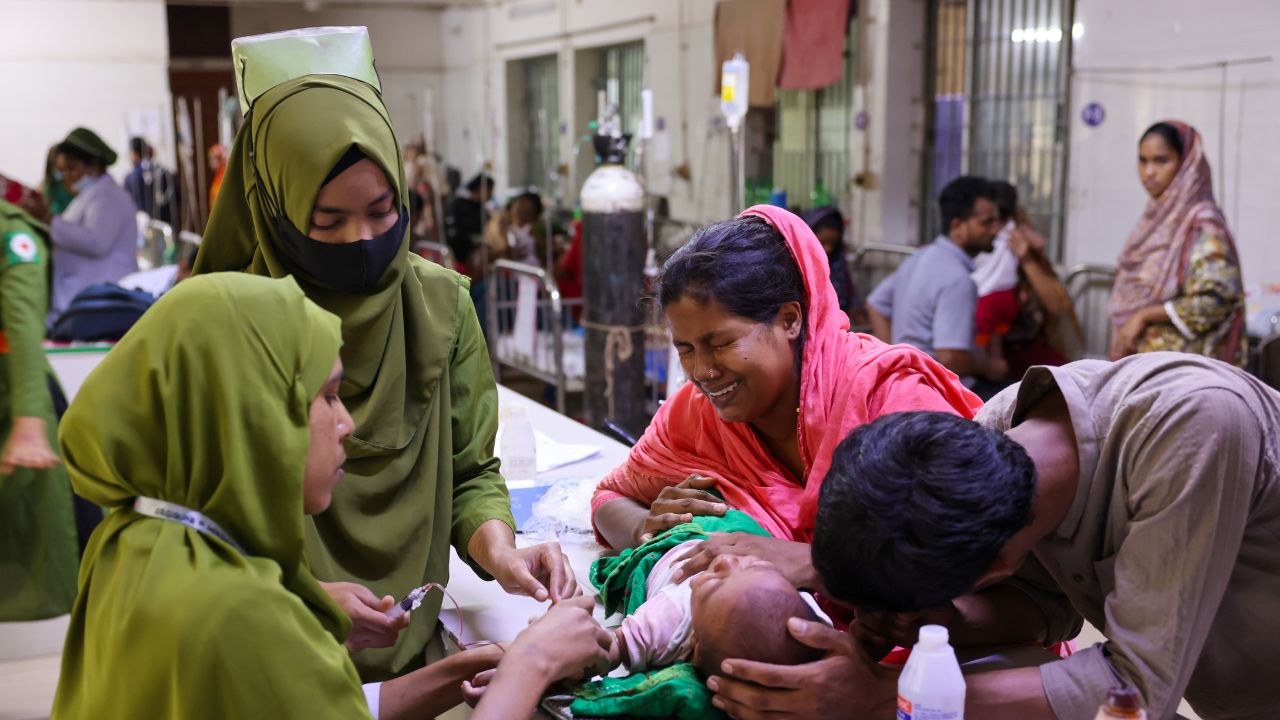



As Bangladesh battles a growing measles outbreak, United Medical College Hospital has expanded its specialised measles management system by introducing dedicated isolation facilities, intensive care services for critically ill children and subsidised treatment to improve access to care while limiting the spread of infection.
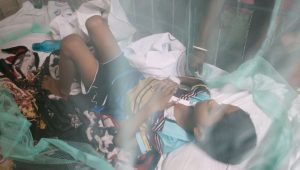
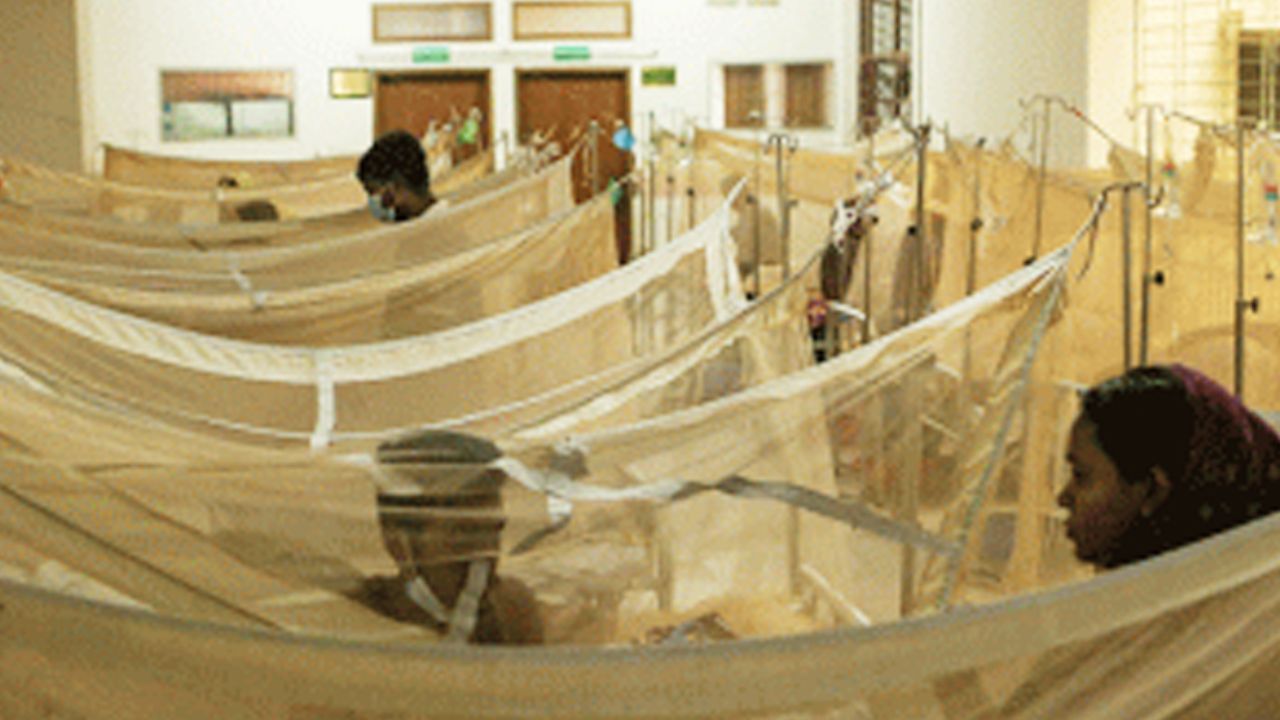
The hospital has established a separate isolation wing exclusively for measles patients and their attendants to minimise the risk of transmission within the facility.
Dedicated neonatal and paediatric intensive care units — NICU and PICU — have also been assigned to manage critically ill children requiring specialised treatment.
Hospital authorities said the facility is following World Health Organization (WHO)-recommended infection prevention and control protocols while maintaining uninterrupted emergency and critical care services.
Dr Azharul Islam Khan, director of Medical Services at United Healthcare, said the hospital quickly adjusted its operations to cope with the outbreak without affecting emergency and critical care services.

“The hospital rapidly reorganised its services to manage the measles outbreak while continuing all emergency and critical care services without interruption,” he said.
To make treatment more affordable, the hospital is providing cabin-level facilities to measles patients at ward-level charges.
Hospital officials said patients are being referred not only from Dhaka but also from underserved and remote parts of the country.


Since the specialised management system was introduced, nearly 50 measles patients have received treatment at the hospital. Fourteen have been discharged after recovery, while the others remain under treatment.
Hospital authorities said no measles-related deaths have been recorded among patients treated at the facility.
Multidisciplinary medical teams are treating the patients, while critically ill children are receiving one-to-one nursing support, officials said.
Dedicated NICU and PICU teams are overseeing patients who require ventilatory support, continuous monitoring and other intensive care interventions.
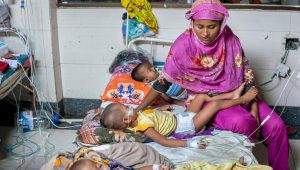
Officials said the current outbreak is predominantly affecting children, with many developing severe complications that required intensive care and strict isolation.
The growing number of critically ill paediatric patients has also increased pressure on specialised child healthcare services, they said.
They also reported seeing more severe measles cases than in previous years, with many patients requiring advanced supportive care throughout their treatment.
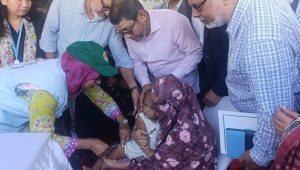
Dr Khan said containing the outbreak would require stronger coordination between public and private healthcare providers.
He stressed the importance of maintaining strict infection prevention measures, ensuring affordable treatment, increasing public awareness, following WHO-recommended clinical protocols and promptly isolating suspected measles patients.
Parents should seek immediate medical attention when a child develops a fever accompanied by a rash, he added.
“Children suspected of having measles should be evaluated promptly and kept away from other children to prevent further spread. Early diagnosis and treatment can help reduce the risk of serious complications,” Dr Khan said.
He added that a coordinated national response involving government and private healthcare providers would be essential to curb transmission and protect children as the outbreak continued.