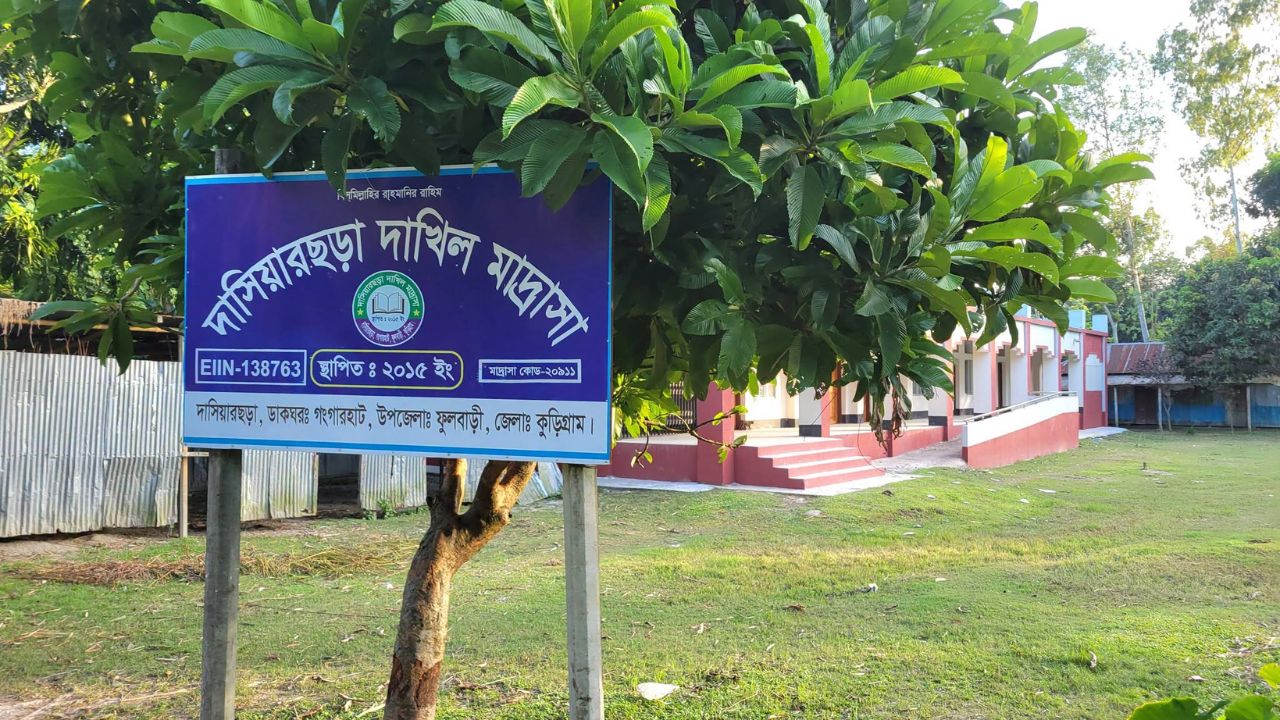

Twelve years after the historic exchange of “Chitmahals” between Bangladesh and India, residents of Dasiarchara in Kurigram’s Phulbari upazila remain entangled in persistent struggles. While infrastructure has improved, the promise of employment has yet to materialise.
Locals are now demanding jobs, the reopening of the centre, and the creation of a separate Union Parishad. Despite gaining national identity, many say they still face discrimination because of limited livelihoods, lack of industrialisation, and poor access to quality education and training.
The long‑awaited end to 68 years of statelessness came at midnight on 31 July 2015 under the Mujib‑Indira Land Boundary Agreement. As part of the deal, 111 Indian enclaves joined Bangladesh, while 51 Bangladeshi enclaves went to India. Citizenship marked a new chapter, but a decade later, many aspirations remain unmet.
Residents acknowledge improvements in roads, electricity, and basic services, but note that no industries have been established. Most remain dependent on agriculture, daily labour, or seasonal work.

For nearly three years, an IT training centre that once offered hope to local youth has remained locked due to bureaucratic complexities. The centre has deprived youth of vital skills, and dropout rates at secondary and higher levels remain high. Many young people leave the area in search of work.
Locals argue that infrastructure alone cannot transform lives without industrialisation, jobs, and better education and healthcare. They urge greater public and private investment.



Md Moinul Islam, a recent graduate, said the community lacks ICT education and urged the government to reopen the centre immediately.
Kauser, a school student, highlighted the absence of a playground, saying it could provide recreation and help keep youth away from drugs.
The struggle for livelihoods is reflected in the story of Mozaffar Ali, who works as a daily labourer in Dhaka.
“We must travel to Dhaka for work. There is no work here,” he said, adding that local shops have no demand for additional workers. He hopes at least one factory will be established so residents can earn a living without leaving their homes.
Another resident, Falaj Ali, said people currently have to travel to Phulbari for official work, making everyday tasks difficult. He believes a separate Union Parishad would make life much easier for local residents.
Three community clinics serve over 6,000 residents in the village, but only one has its own building and all provide only basic care. Minhajul Islam, a Community Health Care Provider, said a proper hospital would greatly improve services.
Responding to concerns, Phulbari Upazila Nirbahi Officer Dilara Akter said the ICT centre issue, saying it could reopen once government instructions are issued. Initiatives are underway to expand development, raise awareness, and enhance vocational and job‑oriented training opportunities, she added.