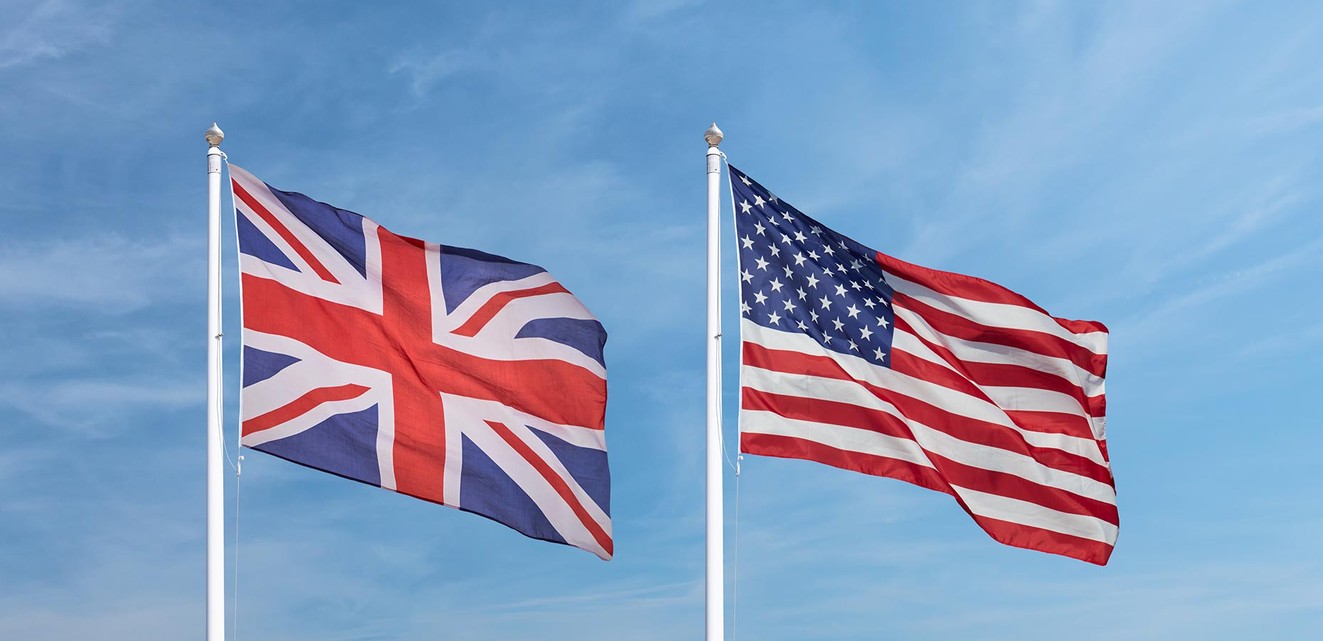

In his 1946 Iron Curtain speech, Winston Churchill coined the term ‘Special Relationship’ to highlight the ideological affinities between the UK and the US. Ever since, British prime ministers and American presidents have striven to uphold Churchill’s term. Accordingly, personal rapport has flourished between Margaret Thatcher and Ronald Reagan, Tony Blair and George W. Bush, Barack Obama and Gordon Brown, Donald Trump and Theresa May, and Keir Starmer were not as warm. However, the relationship between the UK and the US is not much about the personal bonding between premiers and presidents. Among other salient sectors, intelligence sharing, defense cooperation, and diplomatic support are core pillars of this special relationship. Debates and bets about the future of this relationship in the era of Trumpism persist. Will it survive the current tension between the UK and the United States?
The world is well aware of the mercurial traits Trump displays on the global stage. His omnipresent fickleness and bullishness toward allies and adversaries alike make him the unprecedentedly inconsistent US president and one of the world’s most talked-about leaders. Precisely because of his personality, the UK-US relationship has experienced periods of strain since his first term. Trump is an aberration; he considers the Queen and the King of England to be his equals, not his counterparts, the British Prime Ministers. The British understood his drift and treated him accordingly. As a result, he had the good fortune to make two full state visits to the UK. None of this personality projection actually matters. What matters most is that the British have been a cooperative partner in advancing the United States’ national security interests and in sharing human and electronic intelligence around the globe under all US administrations; that is the strength and glue that has kept this relationship buoyant since World War II. Therefore, it is worth reflecting on how the special relations between Britain and America have evolved to gain a better perspective.
In the realm of intelligence gathering and sharing, the Five Eyes, founded during WWII and comprising the US, UK, Canada, Australia, and New Zealand, is a unique group. Under this arrangement, the British in particular provided the US with intelligence on the Soviets’ activities and intercepted Soviet electronic surveillance in Europe. Without such intelligence sharing, defeating the Soviet Union, ending the Cold War, and curbing the spread of communism would have taken longer and been more difficult. The British involvement and close working relations with the US also led to the transformation of military strategies and national security technologies globally.

One may argue that Five Eyes has its fair share of intelligence failures, too. The Iraq War of 2003 is a great example. The infamous September Dossier, or Iraq Dossier, produced by the Tony Blair government in 2002 and 2003, claimed that Iraq possessed weapons of mass destruction (WMD) – biological and chemical weapons; that they posed a threat to the security of the Middle East. This intelligence assessment was one of the primary rationales for the US and the UK, along with other allies, to invade Iraq. Eventually, no WMD was ever discovered. As a result, the ill-fated military operation ended up costing thousands of lives, billions of dollars, and causing the destruction of the land, which still carries its disruptive lingering effects. The US and the UK both took the hit for getting the Iraq intelligence wrong, but their relations nevertheless endured.
The US-UK defence cooperation is a hallmark of their Special Relationship. Both countries conserve military and defence-industrial cooperation, especially in the nuclear sector. This cooperation began during the Cold War to counter Soviet nuclear development and deployment. Take the Nuclear Non-Proliferation Treaty (NPT), for another example: it was developed with strong involvement from the UK and the US and now has 190 countries as signatories. It is a groundbreaking nuclear arms control treaty that has largely succeeded in limiting the number of countries that possess nuclear weapons.




Among bilateral, multilateral agreements, and security alliance systems, the UK-US special relationship is unlike any other. The North Atlantic Treaty Organisation (NATO) is an important security alliance of which the UK is a founding member. Hence, the UK is home to approximately 11000 U.S. military personnel, and the U.S. has 3 active air bases and about two dozen defence and intelligence sites there. The UK has participated in many NATO-led operations – from Afghanistan to Iraq. The UK often joins the U.S. to combat global terrorism and regional militias. For example, under the Biden administration, the U.S. and the UK launched strikes against Houthi targets in Yemen to protect Red Sea shipping in 2024.
When it comes to US-UK support in the diplomatic world, the two are often birds of a feather. Take the United Nations, for instance. The UK and the US are founding permanent members of the UN. Both are also members of the powerful UN Security Council, and their voting and veto records there are often in sync. Aside from some contemporary exceptions – the UK formally recognised Palestine as a state, while the US has not – the UK and the US often maintain mutual support on pressing global issues and conflicts at the UN.
President Trump has been critical of outgoing British Prime Minister Keir Starmer for refusing to join US military operations in Iran, branding him ‘no Winston Churchill.’ The incoming British Prime Minister, Andy Burnham, is not an internationally known figure. Trump has only a faint idea of him. When asked about him, his response was, “I think he is a mayor of a town.” This suggests that Trump, who places himself on a par with the King of England, might maintain his aloofness toward Burnham as well. However, the depth and breadth of this special relationship have been profoundly solid for decades. Therefore, the US-UK special relationship is likely to survive regardless of who the US president is, and it benefits both countries.
The writer is a Doctoral Researcher, International Relations, Universiti Sains Malaysia (USM)