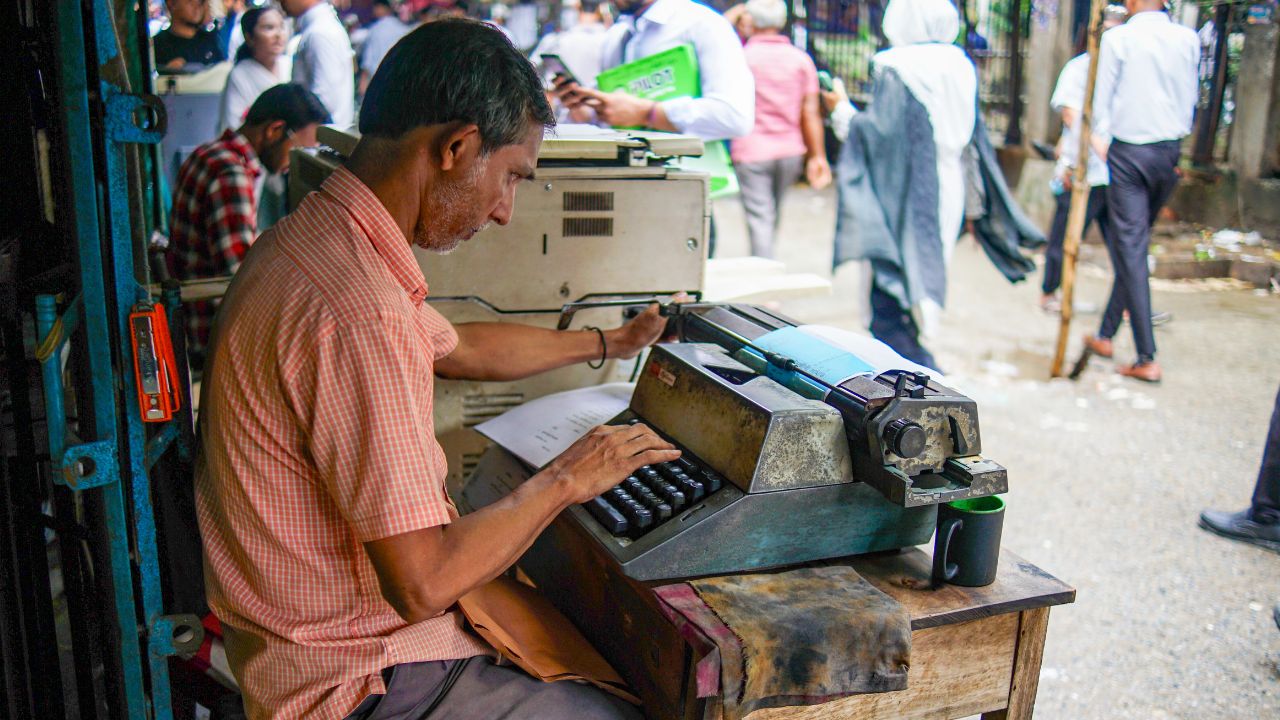

It is 2:30pm. In front of a photocopy shop behind the Chief Metropolitan Magistrate Court complex in Dhaka, Dhiman Pal sits on an old wooden stool. On the table before him rests a 25-year-old Optima typewriter.
Once its body gleamed with a shiny finish. Now, through the faded gloss, patches of rust have appeared, as if time itself has etched lines of age onto its surface.
For 25 years, this typewriter has been Dhiman Babu’s most faithful companion. When he bought it, he was 31. Now he is 56. In the years between, the world has transformed.
Computers have arrived, the internet has come, and smartphones have reshaped the way people work. But on Dhiman Babu’s table, the old typewriter continues to sound its familiar rhythm.
Running his fingers gently over the keys, he says, “This was my first earning partner.” The name “Optima” is engraved on the machine. After the Second World War, due to legal complications in East Germany, the name “Olympia” could not be used, and the brand was born.

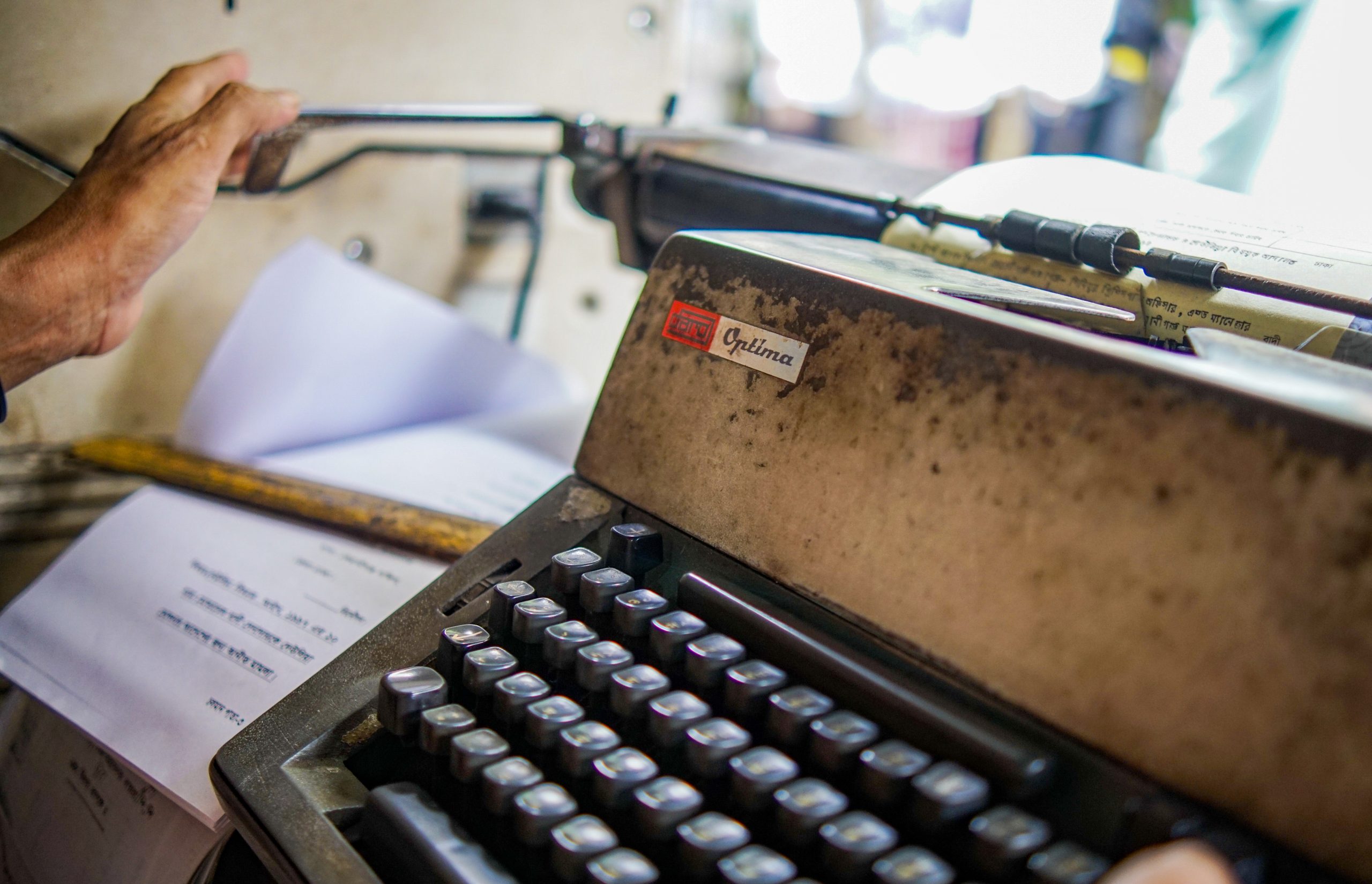
These all-metal typewriters were exceptionally durable. Known for their smooth and reliable typing, they were once widely used in government offices, courts, newspaper offices, and commercial establishments.
With regular care and oiling, an Optima typewriter can remain functional for 50 to 70 years. Dhiman Babu’s machine stands as living proof of that claim.
This is not a portable model. It is a full-sized office typewriter: The Optima M-16. Heavy, metallic, and sturdy. It is as if a piece of Germany’s industrial heritage from the era of division still survives in a corner of Dhaka’s court area.



The demand for typewriters in the court area has now nearly vanished. In an age of computers, printers, and software, the need for manually typed documents has greatly diminished.
Yet, every day, a few people still come to Dhiman Babu. Some out of long habit, others believing that a typewritten page carries a touch of sincerity and authenticity that a computer’s flawless print cannot replicate.
Despite its rusted body, the machine does not stop. Every month, Dhiman Babu oils it, checks the springs, and refills the ribbon with ink by hand. Because for years now, ribbons for Optima typewriters have not been available in the market.
When asked why, while everyone else has turned to computers, he still clings to a typewriter, Dhiman Babu falls silent for a moment.
Then, with a faint smile, he says, “The computer keyboard has no rhythm. Every letter has a weight. On a typewriter, you can feel that weight. On a computer, everything is silent, almost ghostly.”
Apart from the court area, a small world of typewriters still survives in Motijheel. Beneath a shed on 4 DIT Avenue, just a short distance from the Secretariat, 11 typists work side by side on benches.
Despite the dominance of computers, at least five of them still work on old typewriters. The click-clack fills page after page with letters, as if their daily struggle continues in defiance of time.
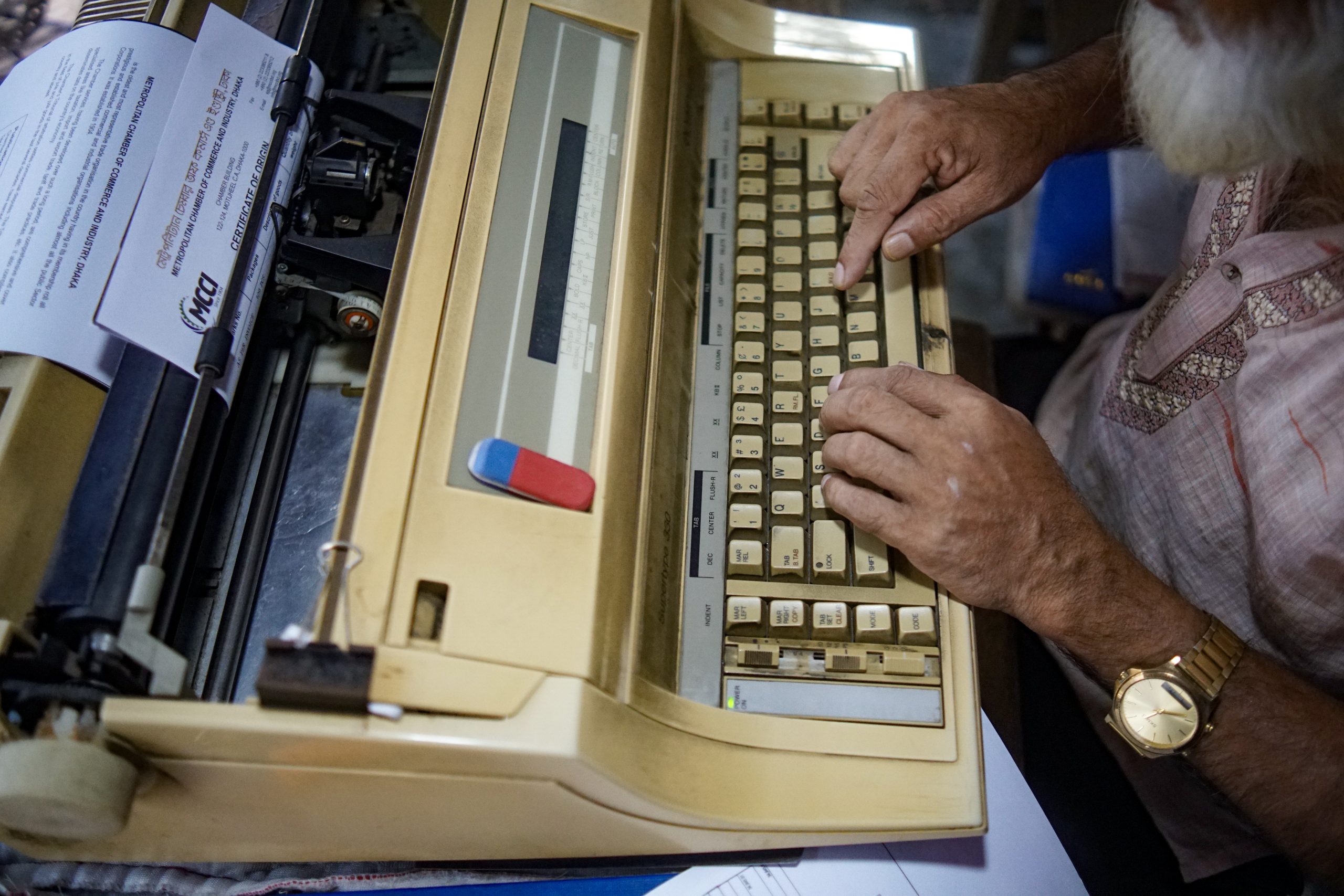
Among them is Hossain Bhai, or at least, that’s what everyone calls him. He is in his 60s, with a gold watch on his wrist and his trusted typewriter before him. He has been typing with the same skill for nearly three decades. With a smile, he says, “We repair whatever breaks ourselves.”
Slowly, typewriters are disappearing. They will soon find a place in museums or private collections. Thus, a profession that was once an essential part of courts, secretariats, and government offices now stands at the edge of history.
But for Dhiman Pal and Hossain Bhai, the rhythm of the keys continues, a quiet defiance against the silence of the digital age.